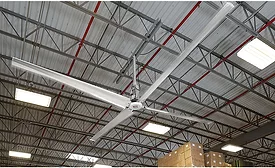
In recent years, an increasing number of industrial facilities have added high-volume, low-speed (HVLS) fans to make their HVAC systems work more efficiently.
Although National Heatstroke Prevention Day may have passed (July 31), the danger of heatstroke is still present – especially for young children who are left unattended in cars.
July 22, 2016, was a hot day in Poplar Bluff, Missouri. By late afternoon, the heat index had spiked to about 110 degrees. That was right around the time 23-year-old landscaper Tyler Halsey – whose shift had begun nine-and-a-half hours earlier at 7 – succumbed to heat stress. He was hospitalized with a core body temperature of more than 108 degrees and died the next day.
NIOSH and OSHA recently released the redesigned, co-branded OSHA-NIOSH Heat Safety Tool App. This version replaces the app previously created by OSHA in 2011. The app calculates the heat index at outdoor worksites using the smartphone’s geolocation capabilities to pull current weather conditions from the National Oceanic and Atmospheric Administration (NOAA) satellites.
We all learned in science class that homeostasis is the self-regulating process by which our bodies maintain stability. One of the most important functions of homeostasis is the regulation of body temperature, which is called thermoregulation.
Athletics scholars have studied heat-related illnesses (HRIs) and their impact on athletes of all ages at all levels. Their discoveries can help safety professionals prevent HRIs in the workplace.
According to the Southeast Regional Climate Center, last summer we saw sweltering weather conditions, with record-breaking heat in more than 40 U.S. cities. New workers, temporary workers or those returning from time off are especially susceptible to heat-induced illnesses.
Each June as part of National Safety Month, the National Security Council encourages extra care and precaution in maintaining personal and work safety. As you can imagine, heat is one of the biggest safety concerns in the summer.
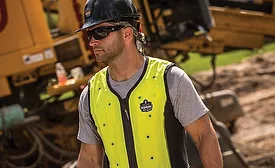
Based on the popularity of its innovative Chill-Its®6685 Cooling Vest, Ergodyne has released a new dry evaporative cooling product today. The Chill-Its® 6686 Dry Evaporative Cooling Hat is a lightweight and low-maintenance cooling solution that comfortably manages heat stress.
Heat-related illnesses such as heat stroke and heat exhaustion can be deadly or debilitating. Other illnesses such as heat cramps and heat rash are painful conditions that can increase a worker’s risk of injury.