Every day in the United States, 11 workers are seriously injured or die from a 100% preventable injury—heat stress. The World Bank estimates that annual US heat-induced labor productivity losses were over $76 billion in 2010 and are on track to exceed a whopping $584 billion by 2030!
With the summer months right around the corner and temperatures warming up around the US, workers in a variety of industries are making adjustments to their personal protective apparel kit.
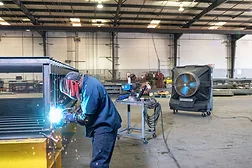
A manufacturing plant has been dealing with hot machinery and punishing Texas heat. The buildings are made of tin with little insulation. That means it gets really hot. They solved this issue with evaporative coolers.
Most companies employ measures to mitigate heat stress on the job. These may include hydration, lighter clothing and PPE, more frequent breaks, and monitoring urine color. And while all of these are important, the truth is that these measures alone won’t cool down a body that has begun to overheat.
Garney Construction trialed a new continuous monitoring smart PPE system, comprised of sensors worn on the arm of its workers and technology that collects data to signal when the worker may be headed for trouble while working in the heat.
It's that time of year again: As the mercury rises, so too does the risk of heat stress for employees on industrial worksites. This is nothing new for safety leaders. What is new, of course, is the external environment, which differs in ways that would have been unimaginable in previous summers.
Summer may be officially over, but for many of us, the heat’s still on! In fact, just this July, the National Oceanic and Atmospheric Administration (NOAA) issued a La Niña Watch. That means it’s likely that much of the country may see above average or significantly above average temperatures well into fall.
The coronavirus (COVID-19) brings new and unprecedented risks to the workplace, one of the most notable being the exposure and transmission of the disease among people who are in close proximity to one another. However, the transmission of the virus is not the only risk that workers face in the time of the COVID-19 pandemic.