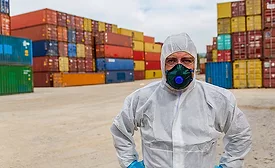
Global chemical companies are helping to fight the virus pandemic by stepping up production of hand sanitizers, polymers for personal protective equipment, bleach for disinfectants, and cleaning products.
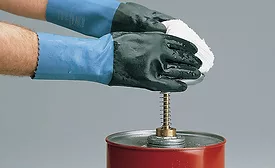
As the Safety Services Manager for a safety supply company, I am commonly asked by customers to help determine which chemical resistant gloves are appropriate for a given work application.
Hazard Communication (1910.1200) OSHA’s hazard communication standard was the second most-frequently cited agency standard in FY 2018.
January 7, 2019
This occupational safety and health standard is intended to address comprehensively the issue of classifying the potential hazards of chemicals, and communicating information concerning hazards and appropriate protective measures to employees, and to preempt any legislative or regulatory enactments of a state, or political subdivision of a state, pertaining to this subject.
DuPont Personal Protection introduced DuPont™ Tychem® gloves, a collection of gloves designed for chemical exposure protection. Now workers can wear Tychem® garments with Tychem® gloves for a complete protection system.
Although emerging occupational safety and health products can help make your job easier and keep your workers safer, keeping up with new developments in the field can be challenging. ISHN helps you save time by gathering all of the OSH product information and presenting it in a quick, easy format.
Class action lawsuits regarding reproductive health rights were recently filed against Walmart, the U.S.’s largest private employer, in Illinois, New York and Wisconsin. Many other employers such as Amazon, Merck and Novartis face similar lawsuits, too, relating to pregnancy discrimination, failure to provide reasonable accommodations and violations of EEOC rules.
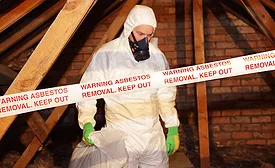
An OSHA health compliance officer (an industrial hygienist -- IH) recently put me in an ethical dilemma. While conducting “side-by-side” air sampling as the employer’s representative during an OSHA inspection, I observed that the OSHA IH was not sampling for asbestos correctly.
From the oil industry to mining, agriculture to research, any working environment that puts employees in close proximity to occupational hazards such as potentially harmful chemicals must make workplace safety a priority. The food processing and packing industries are no exception.
When turnaround season comes to your facility, managers and turnaround personnel face a big dilemma: How do you successfully and safely complete the turnaround on a tight schedule?
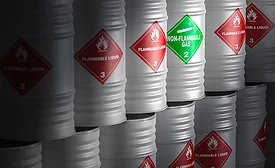
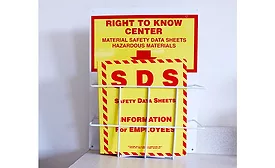
OSHA’s hazard communication standard requires employers with hazardous chemicals in the workplace to implement a formal hazard communication program that includes processes for managing and maintaining safety data sheets, container labels, chemical inventory lists, a written HCS plan, and employee training on OSHA’s standard specific to the employer’s work environment.