The U.S. Chemical Safety Board (CSB) is investigating the chemical release Friday in Atchison, Kansas that forced thousands of residents to shelter in place and caused at least 85 people to seek medical attention for respiratory problems.
The U.S. Chemical Safety Board (CSB) has released its 2017–2021 Strategic Plan, which includes an updated mission and vision statement that will guide the activities and objectives of the CSB.
The EPA says it is taking swift action to carry out requirements in the Frank R. Lautenberg Chemical Safety for the 21st Century Act to reform the Toxic Substances Control Act and to reduce exposure to certain persistent, bioaccumulative, and toxic (PBT) chemicals.
OSHA has released two fact sheets that stress the importance of tracking metrics and investigating potential hazards to prevent workplace injuries, illnesses and fatalities.
Individuals who are exposed to high temperatures or flames and those who must handle flammable liquids are at increased risk for burns of the hand and wrist. Burns are most frequently sustained at home (72%), whereas 5% occur in relation to motor vehicle accidents and 9% are work-related, The most common type of burn injury to the wrist and hand is a scald injury, usually from a hot water source, followed by flame burns, flash burns from explosion of flammable gases or liquids, and contact burns.
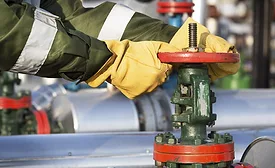
General requirements: Employers shall select and require employees to use appropriate hand protection when employees' hands are exposed to hazards such as those from skin absorption of harmful substances; severe cuts or lacerations; severe abrasions; punctures; chemical burns; thermal burns; and harmful temperature extremes.
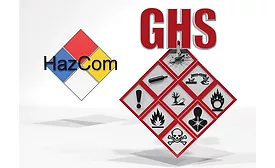
On March 26, 2012 the much anticipated revision to OSHA’s Hazard Communication Standard (29 Code of Federal Regulations (CFR) 1910.1200) was published in the Federal Register.
CSB: Communication, maintenance shortcomings behind 2014 Freedom Industries chemical spill
September 28, 2016
The Chemical Safety Board’s (CSB) final report into the massive release of chemicals into this valley’s primary source of drinking water in 2014 concludes Freedom Industries failed to inspect or repair corroding tanks, and that as hazardous chemicals flowed into the Elk River, the water company and local authorities were unable to effectively communicate the looming risks to hundreds of thousands of affected residents, who were left without clean water for drinking, cooking and bathing.
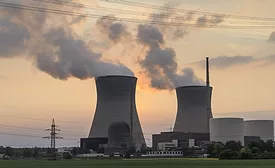
A team of risk experts who have carried out the biggest-ever analysis of nuclear accidents warn that the next disaster on the scale of Chernobyl or Fukushima may happen much sooner than the public realizes.
An effective HAZCOM program depends on the credibility of management's involvement in the program; inclusion of employees in safety and health decisions; rigorous worksite analysis to identify hazards and potential hazards, including those which could result from a change in worksite conditions or practices; stringent prevention and control measures; and thorough training.