Before any welding is conducted outside of a designated welding area, a responsible individual must inspect the area and identify precautions to be taken preferably on a written Hot Works permit. Fire extinguishers must be ready for immediate use. A fire watch lasting at least 30 minutes after the welding or cutting operations is required if more than a minor fire might develop.
General hazards of welding include impact, penetration, harmful dust, smoke, fumes, heat and light radiation. Welding “smoke” is a mixture of very fine particles (fumes) and gases. Many of the substances in the smoke can be extremely toxic.
Sparks and spatter fly off from the welding arc. Hot metal and sparks blow out from the cutting flame. The workpiece and equipment get hot. The flying sparks and hot metal, slag, spatter, hot workpiece, and hot equipment can cause burns.
The personal and economic toll of eye injuries at work is alarming. According to the U.S. Bureau of Labor Statistics, more than 20,000 workplace eye injuries happen each year. Injuries on the job often require one or more missed work days for recovery. In fact, OSHA reports that workplace eye injuries cost an estimated $300 million a year in lost productivity, medical treatment and worker compensation.
There is one overlooked question that people from small communities to large cities across North America should ask themselves: “Is my loved one safe at work today?” This spring, the American Society of Safety Engineers (ASSE) is building on that critical question and encouraging people to get involved in one or more of several workplace safety campaigns that can make a difference in reducing risks.
Ralph Butler was the most senior skilled trades electrician at Freightliner’s Cleveland, North Carolina, assembly plant. He and a co-worker were responsible for maintaining equipment on the loading docks. On July 13 they were troubleshooting a dock leveler.
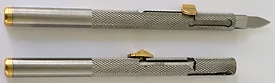
The safety knife Company has designed a scalpel knife designed for intricate knife applications.
The ReAkta Scalpel is a spring-loaded retractable knife that can be fitted with a wide variety of scalpel blades.
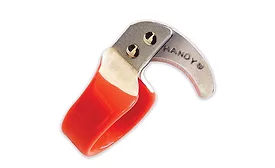
The Handy Safety Knife™ ring knife provides safety managers an innovative, safe and efficient alternative to conventional box cutters and utility knives.
The first use that comes to mind when you think of knives is food and kitchen applications, but most workplaces use box cutters and utility knives. Knife safety is important in all industries.
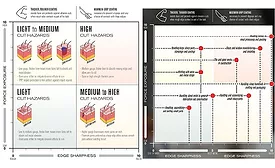
Over the years, the industry has struggled to equate cut resistance with actual risk. The recent updates to the ANSI 105 and EN 388 standards will provide a more uniformed approach to assessing the cut resistant performance of gloves across the globe.