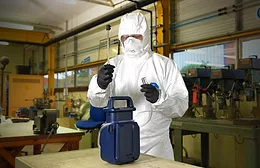
It is important, as part of pre-construction protocols to identify hazardous building materials before beginning a restoration or remediation project. Although there are many hazardous building materials, the most common include asbestos, lead, mercury, polychlorinated biphenyls (PCB), chlorofluorocarbons, and radioactive sources.
Many industries once used asbestos in a wide range of products, from insulation to fire retardants. It is now understood that exposure to this dangerous mineral can lead to fatal diseases, such as mesothelioma and lung cancer.
Each year, members of the cancer community recognize Mesothelioma Awareness Day (MAD) by spreading awareness about the disease. Mesothelioma is a preventable type of cancer caused by exposure to asbestos. Today, laws prohibit new uses of asbestos in the U.S, but construction workers continue to be at risk of exposure from old uses of the mineral.
Lingering asbestos persists as a threat to homeowners, construction workers, and even agricultural workers. However, in industrial settings, newly manufactured materials and products may also contain asbestos, as the U.S. limit is at one percent.
Workplace toxins that are inadvertently tracked by employees into their homes serve “as an intriguing example of how occupational conditions can have broader public health consequences,” according to scientists who’ve studied the problem.
In Eliminating Take-Home Exposures: Recognizing the Role of Occupational Health and Safety in Broader Community Health, researchers reframe the problem as one arising from unsanitary worker behavior – the current thinking – to a larger issue that needs to be viewed through an ecosocial lens in order to institute effective prevention.
Hours of service regulations for truckers, workplace violence prevention and hazardous materials that endanger bees and people were among the top regulatory stories during 2019.
A mistrial was declared today after a California state court jury deadlocked on whether Johnson & Johnson was responsible for the asbestos-related cancer of a woman who blamed her illness on longtime use of contaminated baby powder.
Soon after starting a sixth day of deliberations, jurors in Los Angeles Superior Court told Judge Margaret L. Oldendorf that they were at an impasse, with eight of 12 favoring an award of damages to the plaintiff, Carolyn Weirick.
The entire 22-member Editorial Board of the International Journal of Occupational and Environmental Health resigned this morning after a months-long struggle with the Journal’s new owners who have “have acted in a profoundly unethical fashion” and have moved the worker-oriented publication to a more corporate focus.