After getting ejected from the National Transportation Safety Board’s (NTSB) investigation into the crash of one of its vehicles, Tesla – along with everyone else – will learn the probable cause of the incident when the agency discloses it in a meeting next month.
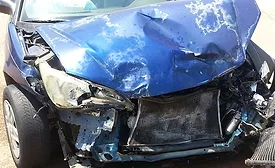
On March 23, 2018, a 2017 Tesla Model X electric-powered passenger vehicle, crashed while traveling southbound on US Highway 101 in Mountain View, California.
Data released last week by the U.S. Department of Transportation’s National Highway Traffic Safety Administration (NHTSA) showed highway crash fatalities in the U.S. down 2.2 percent for the first 9 months of 2019 compared to the first 9 months of 2018. An estimated 26,730 people died in motor vehicle traffic crashes through September 30, making the third quarter of 2019 the eighth consecutive year-to-year quarterly decline in fatalities since the fourth quarter of 2017.
National Safety Council stresses that the goal is always zero deaths
December 20, 2019
The National Safety Council (NSC) estimates that 115 people may be killed on the roadways during the Christmas holiday driving period, and an additional 163 may be killed during the New Year’s holiday driving period. That number would likely be significantly higher if not for seat belts. This low-tech, highly effective motor vehicle safety feature is estimated to save 245 lives over the same driving periods.
NSC: This short-sighted decision puts convenience above safety
December 1, 2019
“Forty thousand people died in 2018 on American roadways. Forty thousand died the year before. How many more people need to die in crashes to help FCC commissioners understand that support for this proposal will cost lives? Technology to advance safety has the potential to save thousands of lives each year, and having dedicated spectrum allows transportation industry players to test promising services without the threat of harmful interference from Wi-Fi users."
The National Safety Council (NSC) estimates that 417 people may die and another 47,500 may be seriously injured in car crashes on U.S. roads this Thanksgiving holiday period. Holidays traditionally are a time of travel for families across the United States. Many choose car travel, which has the highest fatality rate of any major form of transportation based on fatalities per passenger mile.
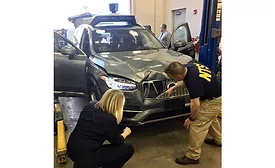
There was plenty of blame to go around in the report released yesterday by the National Transportation Safety Board (NTSB) into its investigation of an automated test vehicle crash last year, but most of it was assigned to Uber, the company conducting the test.
A pedestrian was killed in the March 18 collision in Tempe, Arizona involving an Uber Advanced Technologies Group (ATG) vehicle - a 2017 Volvo XC90, modified with a proprietary developmental automated driving system.
State and local governments and metro planning organizations are among the entities who can apply for up to half a million dollars each to use in developing, refining, and deploying safety tools that address specific roadway safety problems.
The funds – which will be disbursed by the U.S. Department of Transportation – are intended to help the awardees use innovative data tools and information to improve roadway safety.
Integrating autonomous vehicle policies into your fleet safety management systems; a restaurant manager dies from a toxic mix of cleaning chemicals and no U.S. mine earns Pattern of Violation status. These were among the top stories featured on ISHN.com this week.
Many of us already drive personal or company vehicles with automated features such as lane departure warning and automatic emergency braking. While automation clearly improves safety, it also presents new issues for safety professionals. Companies need to integrate policies on vehicles with automated features into their current fleet safety management systems.
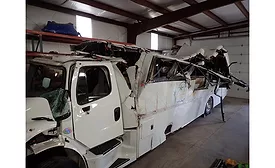
The bus driver was familiar with the area. No mechanical defects have been discovered in the vehicle. The incident occurred in daylight.
The National Transportation Safety Board (NTSB) investigators have so far been unable to determine what caused a tour bus to leave the roadway in Garfield County, Utah on September 20th, during a Los Angeles – to – Salt Lake City run.