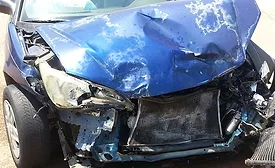
Grade inflation in school makes it difficult to distinguish who is actually achieving in the classroom. The federal government’s vehicle safety rating system suffers the same problem.
Today, 98 percent of all vehicles tested receive four or five stars for crashworthiness. Consumer advocates and safety experts say it’s time to raise the bar for the New Car Assessment Program, which hasn’t been updated in nearly 10 years.
Older workers (those ages 55 and older) bring extensive skills, knowledge, and experience built over the course of a lifespan. On the flip side, their driving may be affected by age-related physical and mental changes – many of them perfectly normal changes.
Employers cannot avoid the issue of aging drivers because by the year 2020:
In Washington, D.C., a new Trump administration plan to relax safety rules for truck drivers has rekindled old heartaches for families across the country.
On a sunny Labor Day morning in Oklahoma, Linda Wilburn’s younger son, 19-year-old Orbie, hopped into his 1994 red Camaro and headed east from Weatherford on Interstate 40. The college freshman, excited about his new rental house, needed to collect more stuff from his parent’s place, 10 miles away.
Picnics. Family gatherings. Barbecues. Plenty of adult beverages and now, legal marijuana. During the long Labor Day weekend, many Americans will enjoy themselves in many different ways – some of which will hamper their ability to drive safely.
That’s where tens of thousands of law enforcement officers across the U.S. (who won’t get days off over the holiday) come in. They’ll be enforcing a crackdown on impaired drivers, spearheaded by the National Highway Traffic Safety Administration (NHTSA).
Driving is a grown-up activity that requires our full attention, yet a lot of people do it while doing…something else. While texting is the most alarming distraction – and the one that garners the most attention these days – it’s not the only activity that endangers motorists. Eating and drinking, talking to people in your vehicle, fiddling with the stereo, entertainment or navigation system and talking on the phone – even hands free – can all divert your attention away from the task of safe driving.
A worker dies during a safety drill; safety certification for highway construction workers and California fast tracks a regulation to protect workers from wildfire smoke. These were among the top stories featured on ISHN.com this week.
Because the pickup truck that collided with a group of motorcyclists in New Hampshire last month had a gross vehicle weight rating under 26,001 pounds, its driver was not required to have a CDL.
That’s one of the findings in a preliminary report issued by the National Transportation Safety Board (NTSB), which is investigating the June 21 accident that killed seven motorcyclists and injured three others.
The National Transportation Safety Board (NTSB) this week published an updated list of the safety recommendations associated with the agency’s 2019 – 2020 Most Wanted List of Transportation Safety Improvements following the recent closure of eight safety recommendations.
Of the eight closed safety recommendations; four (P-17-003, H-15-020, A-09-092, and H-09-018) were closed with acceptable action taken, one (P-18-003 ) was closed with acceptable alternate action taken, one (M-16-028) was closed with a status of exceeds recommended action, and safety recommendation H-12-029 was unfortunately closed with unacceptable action taken.
The Secretary of Labor resigns, NIOSH introduces a new chemical management banding strategy and U.S. states get ranked by happiness. These were among the stories featured on ISHN.com this week.
Parents who view off-highway vehicles (OHVs) as suitable for drivers too young to have drivers’ licenses should take note: they can be just as dangerous as street-legal vehicles.
OHVs include all-terrain vehicles (ATVs), recreational off-highway vehicles (ROVs), and utility task vehicles (UTVs).
The Consumer Federation of America (CFA) is alerting parents and all off-highway vehicle (OHV) riders to not allow their children to drive adult-size OHVs and to use caution when allowing them to ride OHVs.