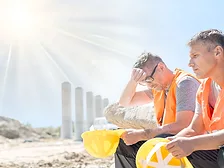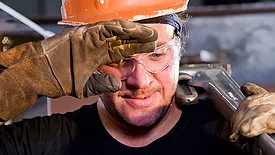
It’s paramount to know the exact temperature on your jobsite to protect workers in hot conditions. At higher temperatures, a change of even a few degrees can be a warning sign.
OSHA unveils Top Ten Safety Violations for FY 2022 at NSC Congress
September 21, 2022
The Occupational Safety and Health Administration announced Tuesday its preliminary Top 10 most frequently cited workplace safety standards for fiscal year 2022.
Coinciding with Construction Suicide Prevention Week, a task force is calling on construction industry employers, trade groups and other stakeholders to join OSHA’s Suicide Prevention Safety Stand-Down, Sept. 5-9, 2022.
It is important, as part of pre-construction protocols to identify hazardous building materials before beginning a restoration or remediation project. Although there are many hazardous building materials, the most common include asbestos, lead, mercury, polychlorinated biphenyls (PCB), chlorofluorocarbons, and radioactive sources.
In the construction industry, we face various safety barriers, highlighting the importance of implementing companywide rules, regulations, and safeguards at construction sites to protect our workers from accidents and injury.
Experts lead “Heat Stress on the Hill” event in support of the Asunción Valdivia Heat Illness and Fatality Prevention Act
July 28, 2022
On Tuesday, July 19, 2022, United States legislators, labor leaders, PPE manufacturers, and safety experts met at the Rayburn House Office Building in Washington, D.C. to advocate for heat safety and the Asunción Valdivia Heat Illness and Fatality Prevention Act.
As a standard part of virtually every project, foundation work may not stand out to crews as particularly risky — and that can be dangerous. Concrete construction hazards are both common and severe, so they deserve your attention.
As temperatures and the risk of heat illness rise in Alabama, Georgia, Florida and Mississippi, the U.S. Department of Labor’s Occupational Safety and Health Administration reminds employers and workers not to ignore the dangers of working in hot weather – indoors and out.
With the summer months quickly arriving, we are looking forward to BBQs and lots of good times outdoors. But it also means that some of us will be working in the sun and heat, performing our jobs with occupational safety hazards not found in the cooler seasons.
Wearing a hard hat or helmet is essential when there is a risk of head injury, but this equipment can also increase a person’s body temperature. We lose most of our body heat through our heads. Managers need to do everything they can to protect their workers in the field, keeping them as cool and comfortable as possible.