ISHN logo
search
cart
facebook twitter linkedin youtube
  • Sign In
  • Create Account
  • Sign Out
  • My Account
ISHN logo
  • NEWS
    • Today's News
    • Global Safety News
    • Government Regulations
  • PRODUCTS
    • Product Innovations
    • Featured Products
  • TOPICS
    • Environmental Health and Safety
    • Facility Safety
    • Workplace Health
    • Occupational Safety
    • PPE
    • More Topics
  • CONSTRUCTION
  • TECHNOLOGY
  • COLUMNS
    • Best Practices
    • Dave Johnson: What’s going on
    • Editorial Comments
    • Leading Safety
  • MULTIMEDIA
    • ISHN Podcast
    • Videos
    • Cold Stress Education Quiz
    • Webinars
    • White Papers
  • MORE
    • Buyer's Guide
    • Newsletters
    • Convention Companion
    • Polls
    • Events
    • ISHN Store
    • Sponsor Insights
  • EMAGAZINE
    • eMagazine
    • Archived Issues
    • Contact
    • Advertise
  • JOIN TODAY!
PPESafety TechnologySustainability in Health and SafetyConstruction Industry Safety and Health

Weather monitors gather real-time heat stress readings on your jobsite
By John Heniff
Weather monitors

Photo credit: Magid

September 23, 2022

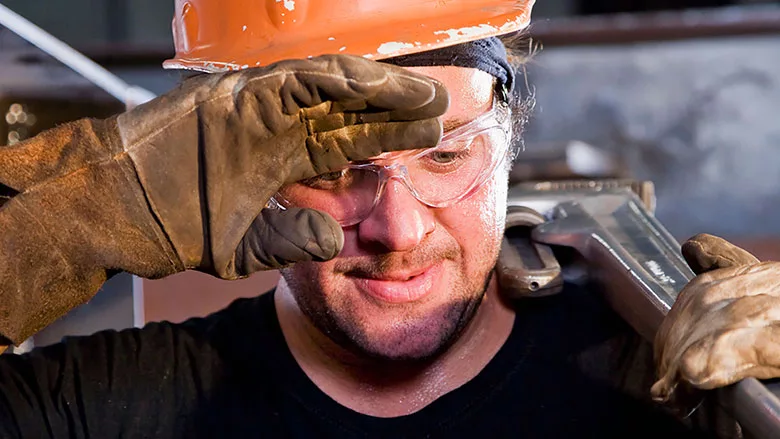
It’s paramount to know the exact temperature on your jobsite to protect workers in hot conditions. At higher temperatures, a change of even a few degrees can be a warning sign that you need to alter their workday activities to prevent the development of heat illnesses. To keep workers protected, you need a measurement tool that will calculate the most accurate temperature of your jobsite.

Comparing temperature measurements

Being aware of the weather forecast helps you know if you should expect any hazardous conditions like extreme heat. But a standard environmental thermometer can only track the local temperature and doesn’t take factors like humidity or wind into account. To get a more detailed calculation, agencies like NIOSH and OSHA recommend using the heat index to track environmental conditions. This measures relative humidity combined with air temperature to indicate what it feels like to be outside. However, this reading is measured in the shade and is only relevant for a general geographic area. Unless your group is lucky enough to spend most of their workday out of the sun, they may be working in an area that is far warmer than the heat index indicates.

Microclimates and how they influence local temperatures

Adding to concerns about general air temperature, any area of your jobsite may contain manufactured or natural elements that create what’s called a microclimate. Microclimates are weather conditions within a specific area that differ from the larger area around them. Neither the heat index nor an environmental thermometer will reliably provide an accurate measurement of a microclimate.     Heat stressors like soil, bodies of water, trees, metal parts, machinery, cement, or asphalt can reflect or trap heat on your jobsite. This means that even if an environmental thermometer or the heat index says it’s 80⁰ F, your workers’ jobsite can feel much hotter and add more heat stress to their bodies. For maximum accuracy and safety, instead of a standard environmental thermometer or heat index, heat safety experts recommend using a Wet Bulb Globe Temperature (WBGT) monitor.

How does a WBGT work? 

A WBGT monitor gathers up-to-the-minute heat stress readings to calculate the most accurate environmental temperature for an immediate area. By utilizing technologies such as a temperature sensor within a 1-inch black globe, the monitor gathers information in direct sunlight to track weather factors such as:

  • Heat Index
  • Relative Humidity
  • Air & Dewpoint Temperature
  • Barometric Pressure
  • Solar Radiation
  • Wind Direction & Speed
  • Wind Chill
  • Altitude

When environmental conditions reach a configured threshold, some monitors will even set off visual and audible alarms to alert nearby workers that they are working in a warning zone and they should adjust their work rate. Adjustments can be made by modifying work-to-rest ratios, taking additional hydration breaks, or adjusting their length of time in the heat, among other measures. You can determine heat stress warning zones when first configuring your monitor while inputting how heavy or light your team’s workload is, the heaviness or lightness of their PPE and clothing, and whether the jobsite is outdoors or indoors. Certain models allow for a vane mount installation that can track indoor wind sources such as a ceiling fan, too. 

Understanding thermal work limits

In addition to various weather factors, some WBGT trackers can measure the Thermal Work Limit (TWL) of an area. TWL ratings are measurable limits for safe work determined by environmental conditions like relative humidity, wind speed, and ambient temperature. Though TWL ratings are not required by United States work agencies, many countries outside of the U.S. require them when tracking heat stress. So if your WBGT monitor can track TWL ratings, you can use guides available from the manufacturer as well as interventions for each zone to keep your workers safe. 

Environmental monitoring as part of a comprehensive heat safety plan

Understanding the most accurate temperature of your jobsite is only one aspect of a comprehensive heat safety plan. The National Heat Safety Coalition, now the Heat Safety & Performance Coalition (HSPC), published a consensus document in 2021 after consulting with an interdisciplinary roundtable of world-renowned experts to create a go-to guide to help safety managers, employers, and industrial hygienists protect their workers from heat stress. In addition to environmental monitoring and ensuring that workers are hydrating throughout the day, the document outlines several recommendations, including: 

  • Providing heat safety education and training resources so workers understand risks and symptoms of heat illness
  • Preparing workers’ bodies for the heat over the course of 5-7 days through the process of heat acclimatization
  • Using health tracker devices or digital applications that monitor heart rate or body temperature
  • Creating or designating a cooling area where workers can rest, cool, and hydrate away from the heat
  • Preparing workers for emergency situations so they know what to do if they see a coworker exhibiting symptoms of heat illness
  • Providing workers with body cooling PPE that will keep them cool for hours and can be easily reactivated throughout the day

A WBGT monitor is the latest technology to add to a modern industrial heat safety plan. Make sure you have all the pieces in place so you can create an all-encompassing protection plan for your workers. 


KEYWORDS: extreme weather safety heat safety heat stress weather hazards

Share This Story

Looking for a reprint of this article?
From high-res PDFs to custom plaques, order your copy today!

John Heniff is a safety copywriter at Magid — proud U.S. manufacturer and distributor of head-to-toe PPE since 1946. For more information about Magid’s safety products and expertise, visit magidglove.com or call 800-444-8030.

Recommended Content

JOIN TODAY
to unlock your recommendations.

Already have an account? Sign In

  • forklift safety

    Exploring the latest technologies in forklift safety

    With more staff and more stock in warehousing now more...
    Workplace Training Strategies
    By: Josh Cramer
  • welding

    All about welder’s flash or arc eye

    A flash burn is a painful inflammation of the cornea,...
    Environmental Health and Safety
  • dangerous jobs

    The 10 most dangerous jobs in the U.S.

    On-the-job deaths have been rising — hitting the highest...
    Transportation Safety
    By: Benita Mehta
Manage My Account
  • eMagazine Subscriptions
  • ISHN Newsletter & Other Newsletter Alerts
  • Online Registration
  • Manage My Preferences
  • Subscription Customer Service

More Videos

Sponsored Content

Sponsored Content is a special paid section where industry companies provide high quality, objective, non-commercial content around topics of interest to the ISHN audience. All Sponsored Content is supplied by the advertising company and any opinions expressed in this article are those of the author and not necessarily reflect the views of ISHN or its parent company, BNP Media. Interested in participating in our Sponsored Content section? Contact your local rep!

close
  • man wearing the the Sundström SR200 Full Face Mask Respirator
    Sponsored byOHD

    5 Fit Testing Mistakes That Could Cost You

  • This image shows Magid AcuSpex polarized blue mirrored safety glasses.
    Sponsored byMagid Glove and Safety

    Construction PPE Guide: What Crews Need for Each Task

  • lone worker in confined space
    Sponsored byAlphasense Ltd.

    GET THE LEAD OUT of your Safety Oxygen Sensors!

Popular Stories

SpaceX 7 launch

OSHA Investigating Fatal Fall at SpaceX Starbase

Worker Impairment

How to Tell When a Co-Worker is Impaired? A Safety Pro’s Challenge

Automated loading dock equipment

After March 2026 Rivian Death, Safety Managers Reassess Loading Dock Systems Under OSHA's Warehouse Emphasis Program

top 10 most dangerous jobs

Poll

Seasonal Readiness

With the federal heat stress prevention rule on the horizon, which area of your safety program needs the most attention?
View Results Poll Archive

Products

Surviving an OSHA Audit A Management Guide, 2nd Edition

Surviving an OSHA Audit A Management Guide, 2nd Edition

See More Products

ISHN Podcasts

Related Articles

  • CPRW chart.jpg

    Understand your jobsite safety climate strengths & weaknesses

    See More
  • harmful dust, fumes, and sprays

    How to determine what type of respiratory protection you need for your jobsite

    See More
  • De-stress from heat stress: Train your team on hazards and prevention

    See More

Related Products

See More Products
  • download (1).jpg

    Safety Rebels Real-World Transformations in Health and Safety

  • 1118645685.jpg

    Advanced Safety Management: Focusing on Z10 and Serious Injury Prevention, 2nd Edition

See More Products

Events

View AllSubmit An Event
  • March 4, 2015

    ACGIH® TLV® for Heat Stress and Strain in the Context of Heat Stress Management webinar

    While the Heat Stress and Strain TLV® is designed for exposure assessment, it exists in the context of an integrated heat stress management program. This webinar will outline the components of a heat stress management program to illustrate how the TLV® can be used for exposure assessment and the development of controls.
View AllSubmit An Event

Related Directories

  • Da Brim

    Da Brim's construction helmet brims keep your team cool and promote heat stress safety with innovative PPE. All brims and visors are UPF50+, water resistant and designed specifically for construction and climbing safety helmets. Offered in different brim widths with hi-vis and reflective options available for added safety.
×

Become a Leader in Safety Culture

Build your knowledge with ISHN, covering key safety, health and industrial hygiene news, products, and trends.

JOIN TODAY
  • RESOURCES
    • Advertise
    • Contact Us
    • Directories
    • Manufacturing Division
    • Store
    • Want More
  • SIGN UP TODAY
    • Create Account
    • eMagazine
    • Newsletters
    • Customer Service
    • Manage Preferences
  • SERVICES
    • Marketing Services
    • Reprints
    • Market Research
    • List Rental
    • Survey/Respondent Access
  • STAY CONNECTED
    • LinkedIn
    • Facebook
    • YouTube
    • X (Twitter)
  • PRIVACY
    • PRIVACY POLICY
    • TERMS & CONDITIONS
    • DO NOT SELL MY PERSONAL INFORMATION
    • PRIVACY REQUEST
    • ACCESSIBILITY

Copyright ©2026. All Rights Reserved BNP Media, Inc. and BNP Media II, LLC.

Design, CMS, Hosting & Web Development :: ePublishing