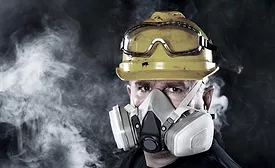
OSHA standard 1910.132 provides general requirements for personal protective equipment (PPE). What are an employer’s training requirements for worker PPE? The standard reads: 1910.132(f)
Training. 1910.132(f)(1) The employer shall provide training to each employee who is required by this section to use PPE. Each such employee shall be trained to know at least the following:
On January 16, 2007, OSHA’s Director of Enforcement, Richard Fairfax, explained in a letter of interpretation requirements for first aid, CPR, and bloodborne pathogens exposure training. Does everyone need to be trained? What if there is a career rescue squad within five miles of the workplace?
Incidents can occur on a daily basis -- including injuries, illness, chemical spills and more. To manage these events effectively and stop them at the root cause, technology is key.
Do you know what kind of energy is transformed into electrical energy within the cells of a battery? Do you know which law states that unlike charges attract?
A serious movement is afoot to systematize the concept of “safety culture.” The International Labour Organization has put forward a definition of a “preventative safety and health culture,” and ISO is apparently discussing prospective prescriptive requirements for a “positive culture.”
Incidents can occur on a daily basis -- including injuries, illness, chemical spills and more. To manage these events effectively and stop them at the root cause, technology is key.
Training from J. J. Keller & Associates, Inc. introduces the basics of electrical hazards in the workplace and emphasizes safety responsibility of all employees
January 14, 2016
J. J. Keller & Associates, Inc., a leader in safety and regulatory compliance, announced today the introduction of a new training program to safeguard unqualified employees against common workplace electrical hazards.
Two retired Navy SEALs, Jocko Willink and Leif Babin, recently published their book Extreme Ownership – How U.S. Navy SEALS Lead and Win1, which presents the application of their leadership skills in the battle of Ramadi, Iraq, and then turning these skills into leading in business and organizational situations.