As high school and college students get ready to put away the books and start summer jobs, OSHA hopes its #MySafeSummerJob program will help keep them safe in their new endeavors.
#MySafeSummerJob offers information for both employers and employees about occupational safety for young people – who generally have less experience and training and a lower awareness of hazards than older workers.
After an analysis of 25 OSHA heat-related illnesses — 14 fatal and 11 nonfatal — the Centers for Disease Control suggested that employers start screening their workers for heat stress when the heat index reaches 85 degrees Fahrenheit rather than the 91 F OSHA currently recommends. Heat stress covers a wide variety of potential illnesses, including life-threatening heat stroke.
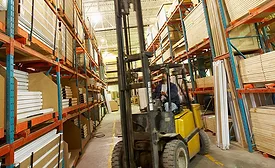
An employee of a Philadelphia company had his leg amputated after it was run over – twice – by a forklift driven by a fellow employee. That July 2015 incident resulted in lawsuits against several companies and ultimately, in a $9 million settlement.
Here are four things you can learn from that incident.
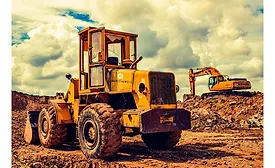
Construction is a high hazard activity. Workers face serious dangers posed by heavy machinery, sharp objects, falling objects, falls from heights, asbestos, silica, electrocutions, among many other hazards. It's in the best interest of workers and construction companies to ensure the highest safety standards.
During Small Business Week, May 5-11, we celebrate entrepreneurs across the country for their willingness to take a risk and follow a dream. According to the U.S. Small Business Administration, we have plenty to celebrate: more than half of Americans either own or work for a small business, and they create about two out of every three new jobs in the U.S. each year.
Manufacturers across the nation are facing an industry-wide workforce shortage. Between the aging workforce and fewer graduates seeking careers in the trades, the gap is growing, rapidly. The struggle to attract and retain talent is evident. Industry leaders are asking: How do manufacturers in the modern age create an appealing culture for the next generation?
Having a detailed fall protection plan is essential to providing a safe work environment for employees working at heights. While OSHA only requires a written fall protection plan for employees engaged in specific types of work who can demonstrate that it is infeasible or hazardous to use conventional fall protection equipment (See 1926.501(b)(2), (b)(12), and (b)(13)), CPWR feels that the use of a plan is beneficial to the safety of all workers at risk for a fall.
Featuring options like lightweight cotton, AMTEX TC and FlexTex for motion, Mount Vernon FR offers more choices of flame resistant fabrics that stand up to hot weather.
As temperatures continue to rise and with summer quickly approaching, look to Mount Vernon FR for flame resistant fabrics that make it easier for your employees to work safely in hot weather conditions.
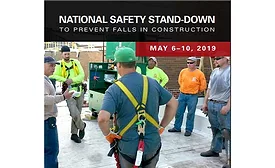
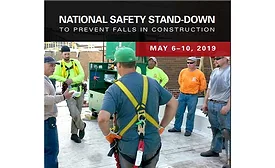
OSHA and its partners are hosting events throughout the country this week for the sixth annual National Safety Stand-Down to Prevent Falls in Construction. Employers and workers will pause to talk about fall hazards, OSHA compliance, and industry best practices to prevent falls. The 2019 poster is available on OSHA's publications page.
OSHA's National Safety Stand-Down Week to Prevent Falls in Construction runs May 6-10, 2019, in conjunction with the North American Occupational Safety and Health (NAOSH) Safety Week.
Anyone interested in educating employees in fall hazards, or other job hazards, can participate.
 RSS
RSS