The Alaska Occupational Safety and Health Division issued 14 citations and $270,723 in penalties to Trident Seafood Corporation after two workers were seriously injured by unguarded machinery. Inspectors found that the company failed to provide machine guarding on augers, conveyors, sprocket wheels, and chains.
Improved air quality in the Los Angeles region is linked to roughly 20 percent fewer new asthma cases in children, according to a USC study that tracked Southern California children over a 20-year period.
The research expands on the landmark USC Children’s Health Study, which found that children’s lungs had grown stronger in the previous two decades and rates of bronchitic symptoms decreased as pollution declined throughout the region.
Two federal agencies are taking steps to speed up the introduction of vehicles equipped with automated driving systems (ADS) on U.S. roads. The U.S. Department of Transportation’s National Highway Traffic Safety Administration (NHTSA) and Federal Motor Carrier Safety Administration (FMCSA) have issued advance notices of proposed rulemaking (ANPRM) “on the removal of unnecessary regulatory barriers” to the use of ADS in the U.S.
OSHA is eliminating a construction industry requirement that it says will “lessen the compliance burden of employers without jeopardizing the safety of employees.”
In a final rule published in the Federal Register on May 14, the agency says employers will no longer have to post maximum safe-load limits of floors in storage areas when constructing single-family dwellings or wood-framed multi-family structures.
An Alaska floatplane company has suspended its operations, after its planes were involved in two fatal crashes in one week.
The pilot and a passenger of a Taquan Air plane died Monday afternoon when the plane crashed in Metlakatla Harbor, south of Ketchikan.
Uniforms are the unsung heroes of the workplace. They give team members a sense of pride and unity. They contribute to a polished, professional appearance for the organization as a whole. And they can even help protect employees against potentially life-threatening hazards.
New York City continued its string of construction industry fatalities on Saturday, when a 49-year-old worker fell 30 feet to his death at a Madison Avenue worksite.
The city’s Department of Buildings issued a full stop-work order for the site after the incident, which occurred shortly before noon.
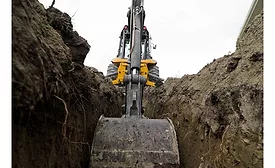
They tend to happen more on Mondays. They can occur in an instant. And trench deaths kill about 25 workers a year, according to the Bureau of Labor Statistics (BLS). About 75 percent of those deaths are due to cave-ins, which are largely preventable through cave-in protection and soil analysis. The remainder are mainly caused by struck-bys or electrocutions – also largely preventable.
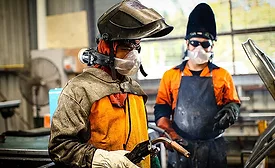
When it comes to workplace safety, welders are well aware that their profession is one of the most dangerous. Welders face an array of hazards from electric shock, retinal damage, ocular melanoma, or serious burns.
OSHA wants to hear from employers about how they’ve been using control circuit-type devices to isolate energy and about evolving technology for robotics.
The information request is for a possible update of the agency’s Control of Hazardous Energy (Lockout/Tagout (LOTO) standard.