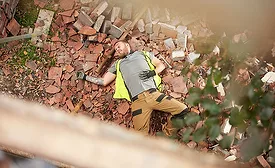
OSHA has cited roofing company Aspen Contracting Inc. – based in Lee’s Summit, Missouri – and subcontractor J Cuellar LLC – based in West Bend, Wisconsin – for exposing employees to dangerous fall hazards at a Fountain, Colorado construction site. The companies face proposed penalties totaling $147, 998.
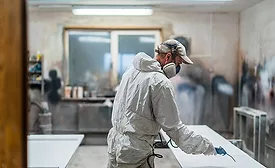
In the United States, workers required to wear respiratory protection must pass an annual respirator fit test. Fit tests help companies ensure worker safety by verifying a respirator can provide an OSHA-mandated and standardized level of protection.
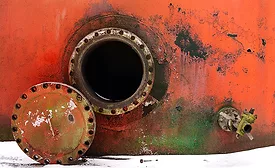
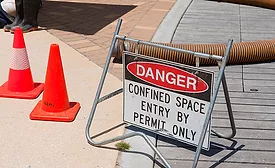
29 CFR 1910.146: OSHA Confined Space Standard – General Industry
January 3, 2019
The standard applies to all general industry places of employment, including agricultural services, manufacturing, transportation and utilities, wholesale trade, food stores, hotels and other lodging, health services, museums, botanical gardens and zoos.
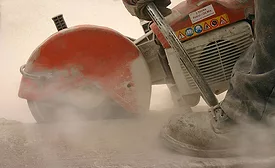
The standard applies to all occupational exposures to respirable crystalline silica, except where employee exposure will remain below 25 μg/m3 as an 8-hour TWA under any foreseeable conditions and those occurring during agricultural operations covered under 29 CFR part 1928 and and exposures that result from the processing of sorptive clays.
OSHA 1926.1201 Safety and Health Regulations for Construction: Confined Spaces in Construction
January 3, 2019
Any entity doing construction work, such as building a new structure or upgrading an old one, must follow the construction confined space rule. Because the new rule applies to all employers who perform construction activities in a confined space, safety managers in all industries should become familiar with the standard.
ANSI/ASSP/ISO 45001— 2018 Occupational Health and Safety Management Systems – Requirements with Guidance for Use
January 3, 2019
Experts say 45001 is not easy to apprehend when read as a normal book, especially if you are not familiar with the ISO framework of 9001 and 18001. You have to realize the interconnections between specific clauses. Experts advise finding a good training course to help realize the standard’s full potential. You may also want to consider employing consultancy services to assist.
NFPA-70E®-2018 Standard for Electrical Safety for Employee Workplaces®
January 3, 2019
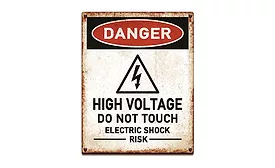
NFPA 70E® Standard for Electrical Safety in the Workplace® provides requirements for establishing a workplace that is safe from unacceptable risks associated with using electricity while working. Safety processes, policies, procedures and program controls reduce the risks associated with using electricity to an acceptable level.
OSHA requires that fall protection be provided at elevations of four feet in general industry workplaces, five feet in shipyards, six feet in the construction industry and eight feet in long shoring operations. In addition, OSHA requires that fall protection be provided when working over dangerous equipment and machinery, regardless of the fall distance.
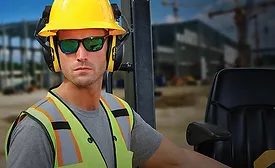
This article aims to recap basic information about hearing protection and how to help prevent long-term hearing loss. This is an important topic that should be reinforced in order to ensure workers are provided a comprehensive and efficient hearing protection products and programs.
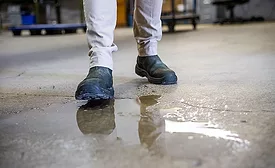
Few employees may ever take notice of a freshly cleaned, well-maintained floor. Unfortunately, too few also tend to notice uneven surfaces that cause trips or spilled materials that can make floors slippery. That’s one of the reasons why it’s up to employers to make sure that these types of hazards are eliminated.