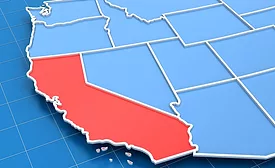
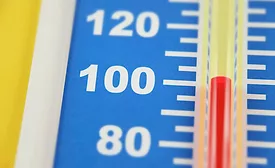
The HIP Network is a voluntary public/private partnership established to increase both employers' and employees' awareness of the hazard of heat illness and the importance of heat illness prevention measures to prevent fatalities and serious illnesses in California workplaces.
Army researchers have developed an application that helps unit leaders better predict the likelihood of heat illness for both training and operations.
The Heat Strain Decision Aid is an app for both computers and tablets that conducts simulations of heat stress so that planners can effectively set out time tables that allow soldiers to work while also protecting them from overexertion, which can lead to debilitating, even deadly heat-related conditions, according to a release.
After an analysis of 25 OSHA heat-related illnesses — 14 fatal and 11 nonfatal — the Centers for Disease Control suggested that employers start screening their workers for heat stress when the heat index reaches 85 degrees Fahrenheit rather than the 91 F OSHA currently recommends. Heat stress covers a wide variety of potential illnesses, including life-threatening heat stroke.
The state of California continues to place obligations for preventing employee heat stroke onto employers. In 2015, California heat stroke law clarified that cooldown periods or “recovery periods” must be paid, by state law.
The human body can’t handle excessive heat. The processes that keep us alive work best within a certain temperature window. That’s generally between about 36° and 37° Celsius (96.8° to 98.6° Fahrenheit), depending on the person.
ISHN Magazine recognizes the most innovative personal protection equipment and occupational health and safety products of 2019
May 13, 2019
Thousands of ISHN subscribers voted online for the most innovative personal protection equipment (PPE) and occupational health and safety products, and now the results of ISHN's 2019 Readers' Choice Awards are in!
Cooperating with OSHA gets two employees fired – and their employer found guilty of retaliation; health experts want asbestos banned and the Association Health Plans program gets a defeat in court. These were among the top occupational safety and health stories featured on ISHN.com this week.
It’s a safety tool that you can launch from your computer, yet the National Institute for Occupational Safety and Health (NIOSH) promises that its Aerial Lift Hazard Recognition Simulator offers realistic workplaces – complete with hazards.
An employee of a Philadelphia company had his leg amputated after it was run over – twice – by a forklift driven by a fellow employee. That July 2015 incident resulted in lawsuits against several companies and ultimately, in a $9 million settlement.
Here are four things you can learn from that incident.
On a summer morning near Dayton, Ohio, a temporary worker began his first day with a commercial roofing company around 6:30 a.m. Mark Rainey, 60, was assigned to a crew to rip off and dispose of an old bank-building roof. Within hours, as the heat index reached 85 degrees, his co-workers noticed the new guy was “walking clumsily,” then became ill and collapsed, according to documents from OSHA.
 RSS
RSS