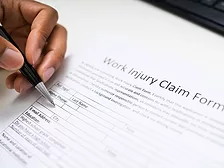
There are basic concepts about workers’ compensation that everyone within an organization should know so that everyone works together toward getting the injured employee and the company back to 100% or, at least, to pre-injury status.
OSHA is implementing an enforcement initiative on heat-related hazards, developing a National Emphasis Program on heat inspections, and launching a rulemaking process to develop a workplace heat standard.
When new materials and innovations are introduced to an industry, it’s important for companies to embrace and utilize them to their advantage. According to Business Unit Director Bruce Todtfeld, that’s exactly what Keen Utility is doing.
In the earliest days of OHS, disputes of who was responsible for the payment of a workplace injury or illness was settled by litigation. Every US state eventually passed workers’ compensation insurance law to establish a no-fault system where responsibility for injury/illness payment nearly always falls upon the employer.
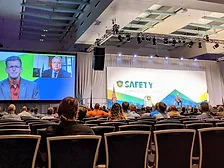
OSHA reveals Top Safety Violations for fiscal year 2021 at NSC Safety Congress
October 14, 2021
OSHA announced its preliminary Top 10 most frequently cited workplace safety standards for fiscal year 2021 at the 2021 NSC Safety Congress & Expo in Orlando, Florida. Patrick Kapust, deputy director of OSHA's Directorate of Enforcement Programs, presented the list virtually on Tuesday, Oct. 12.
Most workers in the United States are protected from retaliation for raising workplace health and safety concerns and for reporting work-related injuries or illnesses. While these protections have been in place for decades, the COVID-19 pandemic has led to a record number of complaints from covered employees claiming retaliation by their employer. Since
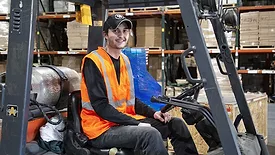
An efficient and functioning warehouse should run like a well-oiled machine. Everything should be in its place, and everyone should know where to go at all times. Of course, that only works on paper. Once we introduce humans and the problem of human error into the equation, things start to go awry.
OSHA has recommended that Tootsie Roll Industries pay more than $136,000 in fines after a machine at its Chicago plant cut off part of an employee’s finger this year, according to The Associated Press.
Growing productivity has come with an increasing waste problem for manufacturing and heavy industry. The industrial sector produces more garbage than ever, and the task of disposing of it is often difficult, unsafe and inefficient. Failing to manage refuse properly can also come with significant consequences — fines, environmental damage and long-term health problems.
We credit industrial automation with productivity, efficiency, and safety gains, citing manual handling reduction and a reduction in musculoskeletal injury as a first-stage safety benefit. Yet, advanced technologies bring new opportunities for improved worker safety beyond manual handling, requiring an adaptation in our safety thinking.
 RSS
RSS