ISHN logo
search
cart
facebook twitter linkedin youtube
  • Sign In
  • Create Account
  • Sign Out
  • My Account
ISHN logo
  • NEWS
    • Today's News
    • Global Safety News
    • Government Regulations
  • PRODUCTS
    • Product Innovations
    • Featured Products
  • TOPICS
    • Environmental Health and Safety
    • Facility Safety
    • Workplace Health
    • Occupational Safety
    • PPE
    • More Topics
  • CONSTRUCTION
  • TECHNOLOGY
  • COLUMNS
    • Best Practices
    • Dave Johnson: What’s going on
    • Editorial Comments
    • Leading Safety
  • MULTIMEDIA
    • ISHN Podcast
    • Videos
    • Cold Stress Education Quiz
    • Webinars
    • White Papers
  • MORE
    • Buyer's Guide
    • Newsletters
    • Convention Companion
    • Polls
    • Events
    • ISHN Store
    • Sponsor Insights
  • EMAGAZINE
    • eMagazine
    • Archived Issues
    • Contact
    • Advertise
  • JOIN TODAY!
Today's Safety NewsGlobal Safety NewsWorkplace Health

Ebola containment strategy succeeding in Liberia
February 23, 2015

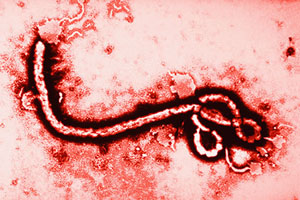
Ebola virusThe CDC’s Rapid Isolation and Treatment of Ebola (RITE) strategy is helping to end the Ebola epidemic in Liberia, according to new data reported in this week's Morbidity and Mortality Weekly Report (MMWR).

The strategy—a rapid, coordinated response to Ebola cases in remote areas—is now being used in Sierra Leone and Guinea.

Getting closer to zero cases

"Whether it's traveling by air, jeep, canoe, or walking many miles on foot to find every case of Ebola, the RITE teams are helping Liberia get closer to zero cases than ever before," said CDC Director Tom Frieden, M.D., M.P.H. "It's critical that we continue to support these teams – and to expand their work into Sierra Leone and Guinea to help to get the epidemic under control there as well."

RITE was developed by the U.S. Centers for Disease Control and Prevention (CDC) and the Liberian Ministry of Health and Social Welfare. The strategy focuses on maintaining investigation- and response-ready health teams (RITE teams) poised to deploy to remote areas as soon as a report of a suspected Ebola case is received. The teams take the lead in coordinating the assistance from the central Ministry and international partners needed to plan, manage, and track a response effort. The teams have the expertise and basic supplies needed to:

  • Rapidly isolate and treat Ebola patients, either by establishing facilities in the community or safely transporting patients to existing Ebola Treatment Units (ETUs)
  • Collect patient blood samples and transport them to labs for Ebola confirmation
  • Ascertain the index case – that is, the first person to bring Ebola into the community – to understand importation and transmission patterns
  • Identify all generations of cases (i.e., the first generation is people infected by the index patient, the second generation is people infected by those in the first generation, and so on)
  • Train community teams in safe burial practices
  • Observe contacts of Ebola patients for 21 days from the death or ETU admission of the last case to ensure the outbreak is over.

Before and after

Compared to six outbreaks in Liberia that began before RITE was implemented, six outbreaks after RITE lasted less than half as long, had a lower death rate, had shorter chains of transmission, and had nearly three times as many Ebola patients enter isolation and receive treatment.

The RITE strategy launched in early October 2014. By November, the strategy had expanded to include the packaging of "RITE kits" for rapid delivery to affected counties. These kits contain commodities essential for the first 14 days of response:  oral rehydration solution, antimalarial medication and antibiotics, personal protective equipment, and construction materials for building temporary isolation and treatment facilities.

To measure the effectiveness of the RITE strategy, CDC and Liberian Ministry researchers analyzed data from 12 outbreaks in remote areas of Liberia: six that began between July 16 and October 1, before the RITE strategy; and six that began after the October 1 initiation of the RITE strategy.

There were striking differences:

The median time between symptom onset in the first reported case and an alert received by the county health teams was 40 days for the early outbreaks compared with 22 days for the later outbreaks.

The median duration of the early outbreaks was 53 days compared with 25 days for the later outbreaks.

The median number of generations of cases (circles of transmission from the index case) was three for the early outbreaks compared with 1.5 for the later outbreaks. Four of the six outbreaks before the development of the RITE strategy remained undetected until they were in at least the third generation of transmission. After RITE was implemented, five of the six subsequent outbreaks were detected in the first or second generation.

The proportion of patients in each outbreak that was isolated and treated increased from a median of 29 percent in the early outbreaks to 80 percent in the later outbreaks.

The proportion of laboratory-confirmed cases increased from a median of 41 percent in the early outbreaks to 80 percent in the later outbreaks. This happened because a larger proportion of case-patients reached treatment facilities and sample collection in the field improved as part of the RITE strategy.

The case-fatality rate was 89 percent in the early outbreaks compared with 50 percent in the later outbreaks.

Podcast - http://www2c.cdc.gov/podcasts/player.asp?f=8635745

KEYWORDS: epidemic infectious disease

Share This Story

Looking for a reprint of this article?
From high-res PDFs to custom plaques, order your copy today!

Recommended Content

JOIN TODAY
to unlock your recommendations.

Already have an account? Sign In

  • forklift safety

    Exploring the latest technologies in forklift safety

    With more staff and more stock in warehousing now more...
    Workplace Training Strategies
    By: Josh Cramer
  • welding

    All about welder’s flash or arc eye

    A flash burn is a painful inflammation of the cornea,...
    Environmental Health and Safety
  • dangerous jobs

    The 10 most dangerous jobs in the U.S.

    On-the-job deaths have been rising — hitting the highest...
    Occupational Safety
    By: Benita Mehta
Manage My Account
  • eMagazine Subscriptions
  • ISHN Newsletter & Other Newsletter Alerts
  • Online Registration
  • Manage My Preferences
  • Subscription Customer Service

More Videos

Sponsored Content

Sponsored Content is a special paid section where industry companies provide high quality, objective, non-commercial content around topics of interest to the ISHN audience. All Sponsored Content is supplied by the advertising company and any opinions expressed in this article are those of the author and not necessarily reflect the views of ISHN or its parent company, BNP Media. Interested in participating in our Sponsored Content section? Contact your local rep!

close
  • man wearing the the Sundström SR200 Full Face Mask Respirator
    Sponsored byOHD

    5 Fit Testing Mistakes That Could Cost You

  • This image shows Magid AcuSpex polarized blue mirrored safety glasses.
    Sponsored byMagid Glove and Safety

    Construction PPE Guide: What Crews Need for Each Task

  • lone worker in confined space
    Sponsored byAlphasense Ltd.

    GET THE LEAD OUT of your Safety Oxygen Sensors!

Popular Stories

SpaceX 7 launch

OSHA Investigating Fatal Fall at SpaceX Starbase

Automated loading dock equipment

After March 2026 Rivian Death, Safety Managers Reassess Loading Dock Systems Under OSHA's Warehouse Emphasis Program

psychology in the workplace

Most Workplaces Measure Psychological Safety, Ignoring Psychosocial Risks

top 10 most dangerous jobs

Poll

Seasonal Readiness

With the federal heat stress prevention rule on the horizon, which area of your safety program needs the most attention?
View Results Poll Archive

Products

Surviving an OSHA Audit A Management Guide, 2nd Edition

Surviving an OSHA Audit A Management Guide, 2nd Edition

See More Products

ISHN Podcasts

Related Articles

  • DOL awards $5M to help fight workplace discrimination, harassment; empower working women in Nigeria, Liberia

    See More
  • How one company limited spread of Ebola in its part of Liberia

    See More
  • CDC: More needs to be done to contain Ebola

    See More

Related Products

See More Products
  • 1119906652.webp

    Alive and Well at the End of the Day: The Supervisor's Guide to Managing Safety in Operations, 2E

See More Products

Events

View AllSubmit An Event
  • May 28, 2026

    The Mental Health Crisis in Construction

    ON DEMAND: Each year, about 1,000 construction workers die from on-the-job incidents – but more than 5,000 die from suicide and 11,000 from overdoses.
View AllSubmit An Event
×

Become a Leader in Safety Culture

Build your knowledge with ISHN, covering key safety, health and industrial hygiene news, products, and trends.

JOIN TODAY
  • RESOURCES
    • Advertise
    • Contact Us
    • Directories
    • Manufacturing Division
    • Store
    • Want More
  • SIGN UP TODAY
    • Create Account
    • eMagazine
    • Newsletters
    • Customer Service
    • Manage Preferences
  • SERVICES
    • Marketing Services
    • Reprints
    • Market Research
    • List Rental
    • Survey/Respondent Access
  • STAY CONNECTED
    • LinkedIn
    • Facebook
    • YouTube
    • X (Twitter)
  • PRIVACY
    • PRIVACY POLICY
    • TERMS & CONDITIONS
    • DO NOT SELL MY PERSONAL INFORMATION
    • PRIVACY REQUEST
    • ACCESSIBILITY

Copyright ©2026. All Rights Reserved BNP Media, Inc. and BNP Media II, LLC.

Design, CMS, Hosting & Web Development :: ePublishing