Texting away from the wheel
Working – even walking – is a risk when you’re distracted
From the time we get out of bed, we check our phones 221 times a day – an average of every 4.3 minutes, according to The New York Times.
The stats are staggering, but not really surprising: three billion text messages are sent every day. Americans ages 18 to 29 send or receive an average of 88 texts per day. Ninety-one percent of mobile users look up information while in the middle of a task. Sixty-four percent of American adults owned a smartphone of some kind in 2015, up from 35 percent in 2011.
Sixty-eight percent of smartphone owners use their phone at least occasionally to follow along with breaking news events, with 33 percent saying that they do this frequently, according to the Pew Research Center.
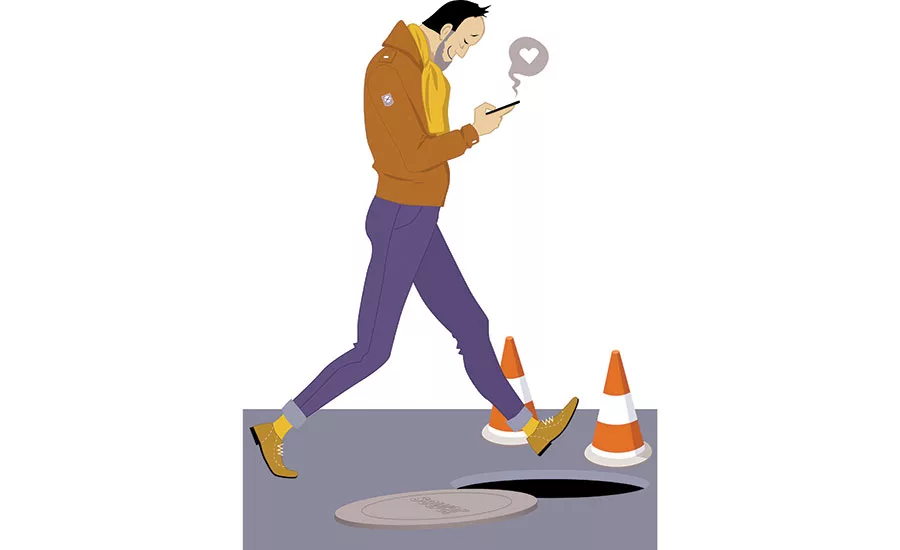
The potential for distraction is obvious. We all know the dangers of texting while driving. Texting while walking turns out to be dangerous, too. More than 250 people arrived at Ohio emergency rooms to be treated for injuries incurred while walking and using a cellphone or other mobile devices, according to research by an Ohio State professor. Pedestrians talking or texting on cellphones were much more likely to walk in front of cars than those not using phones, according to this research.
Traumatic events
If simply walking and texting or talking on a cell can be injurious, the risk of cell texting or talking in many job environments is obvious. Here are several examples:
A forklift operator was moving stacks of pallets in a storage yard when he heard his message alert go off. He didn’t even think about the risk of checking his text. He looked down for a moment to select and read the text.
In that moment a co-worker suddenly walked in front of the forklift. The operator didn’t see him until he heard the man scream. The operator lost his job for violating his company’s rules on cellphone use, and his actions caused the death of a co-worker and friend.
A machine operator was texting her boyfriend during lunch. She continued texting back in the production area, though her company prohibits it. “Everybody does it,” she said. The operator worked her machine for a while and then noticed she had a text from her boyfriend. “It happened so fast,” she said. As she tried to reply, she somehow dropped the phone into her machine. Her immediate reaction was to reach in and grab it before it got eaten by the machine, or worse, jammed up production.
She tried to grab the phone off of the machine’s conveyor, but her hand was crushed when it was caught between the conveyor belt and the roller. “I’ll have to live with that split second decision for the rest of my life,” she said.
A maintenance technician was in a waste treatment room, adding some chemicals to a process and doing a little cleaning up. His supervisor was working on the other side of the plant and said he would text the maintenance tech on what to do next. Then the tech heard his phone beep. He knew he wasn’t supposed to use the phone in areas containing chemicals, but he never understood why, so he went ahead and checked the text.
The tech answered a call from another maintenance worker while he was on his way to meet his supervisor. When they started going over plans, the tech’s eyes started burning and he couldn’t see. He got his supervisor to guide him to an eye wash station to flush his eyes. He had gotten lime on his phone in the waste treatment area and then rubbed his eyes after using the phone later. “Now I know why I wasn’t supposed to use it in the chemical area,” he said.
Employees who work in areas containing hazardous substances already understand not to eat, drink or apply makeup in these areas due to the risk of contamination. Now they must add not using their phones to this list of banned practices in hazardous areas.
Policy or no policy
Even if no company policies exist regarding cellphone use and texting, using your phone for texting, updating social media or even checking the weather or latest sports scores while performing any kind of hazardous job function or driving is dangerous, pure and simple, and should not be attempted.
Common sense tells you what job tasks are dangerous enough that being distracted, even for a moment, could cause injuries or worse, as well as property damage. Even in non-hazardous situations, say sitting in front of a computer screen for eight hours, when you send and receive personal text messages or scan your cell screen for news, sports, weather, videos, Google alerts, Facebook posts or Twitter tweets, you’re not doing what you’re paid to do.
Texting is a form of presenteeism. You are at your job, but you’re not present, you’re not mindful, nor productive. It’s similar to chatting it up at the water cooler or engaging in horseplay.
To avoid unsafe acts involving cellphones at work, safety experts say employees must recognize and reject the excuses we all make for texting when we know it can be unsafe. As with other at-risk behaviors, employees must be willing to speak up when they see co-workers putting themselves in harm’s way by texting while performing their job duties.
And it takes two to text. If you are on the receiving end of prohibited or unsafe texts being sent at work, don’t respond. Tell your family, friends, co-workers, etc. in person that texting at work is unsafe and inappropriate and that you will not participate.
Looking for a reprint of this article?
From high-res PDFs to custom plaques, order your copy today!