ISHN logo
search
cart
facebook twitter linkedin youtube
  • Sign In
  • Create Account
  • Sign Out
  • My Account
ISHN logo
  • NEWS
    • Today's News
    • Global Safety News
    • Government Regulations
  • PRODUCTS
    • Product Innovations
    • Featured Products
  • TOPICS
    • Environmental Health and Safety
    • Facility Safety
    • Workplace Health
    • Occupational Safety
    • PPE
    • More Topics
  • CONSTRUCTION
  • TECHNOLOGY
  • COLUMNS
    • Best Practices
    • Dave Johnson: What’s going on
    • Editorial Comments
    • Leading Safety
  • MULTIMEDIA
    • ISHN Podcast
    • Videos
    • Cold Stress Education Quiz
    • Webinars
    • White Papers
  • MORE
    • Buyer's Guide
    • Newsletters
    • Convention Companion
    • Polls
    • Events
    • ISHN Store
    • Sponsor Insights
  • EMAGAZINE
    • eMagazine
    • Archived Issues
    • Contact
    • Advertise
  • JOIN TODAY!
Oil and Gas Industry Safety & Health

Investigating unknown health hazards

NIOSH aims to gain more accurate exposure data
By Maureen Paraventi
health hazards
April 18, 2016

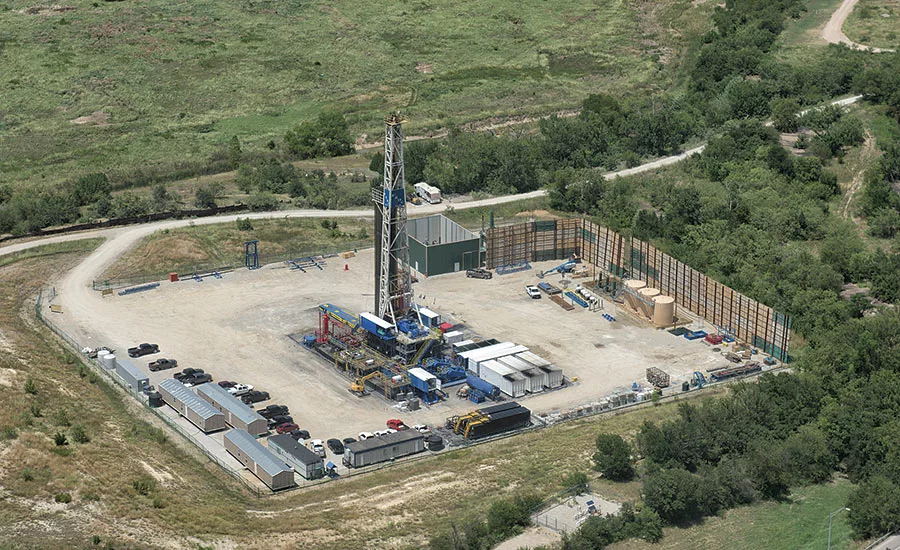
Accurately measuring oil workers’ exposures to potentially toxic materials has long been problematic. Continuous sampling, in particular, was impossible because the equipment necessary for 24-hour sampling was too bulky to be delivered to remote sites in a timely manner.1

Previous research found that the highest exposures are among the workers performing extraction activities. But those are not the only operations that present a risk. Workers can come into contact with hydrocarbon gases and vapors via engines that power equipment emitting diesel exhaust, manual tank monitoring, and sampling and fluid transfer activities. Exposure to silica dust is possible in numerous operations. This includes hydraulic fracturing, a process which requires transferring sand and mixing it with water before injecting the mixture deep underground to help extract gas from the rock formation.1

Why measurements matter

Determining the specific exposure levels associated with different jobs in the oil and gas field is challenging but necessary: with that information, controls can be designed for particular tasks and workers can enjoy a greater degree of protection.

To that end, researchers at NIOSH are leaving the lab and heading out into the field to gain more accurate exposure measurements, and they’re doing so using a new portable field laboratory.

This mobile, data-gathering unit has several advantages over conventional laboratories, at least when it comes to oil industry research:

1) All of the necessary equipment is self-contained in the laboratory, enabling researchers to perform 24-hour air sampling. Researchers can use high-tech instruments such as chromatographs right at a well site to identify the exposure levels of volatile gases and vapors. Gas chromatographs analyze the specific chemical composition of the air in real time, eliminating the need to send samples to a laboratory.

2) Researchers can ride to the well site along with their sensitive, expensive monitoring equipment, instead of entrusting it to a third party and hoping that it arrives intact, as they had to do in the past.1

Potential health risks to U.S. oil and gas extraction workers suffer from a dearth of published information. NIOSH says this is an area that needs further research, “particularly in material inventory, exposure characterization, and surveillance.”2

In addition to the toxins mentioned above, there are other suspected health hazards that remain to be quantified, such as high or low temperature extremes, noise, hydrogen sulfide, heavy metal exposure, and naturally occurring radioactive material (NORM).

Combination exposures also being studied

Back in the (conventional) lab, NIOSH researchers also are using controlled experiments to study the potential health hazards of combined occupational exposure to two air contaminants in hydraulic fracturing (“fracking”) operations: silica dust and diesel exhaust (which has been classified as a possible carcinogen by both NIOSH and EPA.) As the first study of its kind to examine the combined effects of these substances, NIOSH expects this research to fill a critical gap in exposure knowledge.1

Also on NIOSH’s oil-and-gas research “to do” list: another first-of-its-kind study, this one aimed at investigating the health effects of breathing in unrefined (crude) oil. Crude oil releases potentially toxic gases and vapors into the air, posing the risk of inhalation. Researchers have developed an innovative system that can generate the same type of gases generated during some oil and gas operations. They hope that their findings lead to improved understanding of potential hazards and protection for oil workers.1


1. http://www.cdc.gov/niosh/research-rounds/resroundsv1n8.html

2. http://www.cdc.gov/niosh/programs/oilgas/risks.html

Share This Story

Looking for a reprint of this article?
From high-res PDFs to custom plaques, order your copy today!

Maureen Paraventi is Web Editor of ISHN.

Recommended Content

JOIN TODAY
to unlock your recommendations.

Already have an account? Sign In

  • forklift safety

    Exploring the latest technologies in forklift safety

    With more staff and more stock in warehousing now more...
    Workplace Training Strategies
    By: Josh Cramer
  • welding

    All about welder’s flash or arc eye

    A flash burn is a painful inflammation of the cornea,...
    Environmental Health and Safety
  • dangerous jobs

    The 10 most dangerous jobs in the U.S.

    On-the-job deaths have been rising — hitting the highest...
    Construction Industry Safety and Health
    By: Benita Mehta
Manage My Account
  • eMagazine Subscriptions
  • ISHN Newsletter & Other Newsletter Alerts
  • Online Registration
  • Manage My Preferences
  • Subscription Customer Service

More Videos

Sponsored Content

Sponsored Content is a special paid section where industry companies provide high quality, objective, non-commercial content around topics of interest to the ISHN audience. All Sponsored Content is supplied by the advertising company and any opinions expressed in this article are those of the author and not necessarily reflect the views of ISHN or its parent company, BNP Media. Interested in participating in our Sponsored Content section? Contact your local rep!

close
  • man wearing the the Sundström SR200 Full Face Mask Respirator
    Sponsored byOHD

    5 Fit Testing Mistakes That Could Cost You

  • This image shows Magid AcuSpex polarized blue mirrored safety glasses.
    Sponsored byMagid Glove and Safety

    Construction PPE Guide: What Crews Need for Each Task

  • lone worker in confined space
    Sponsored byAlphasense Ltd.

    GET THE LEAD OUT of your Safety Oxygen Sensors!

Popular Stories

SpaceX 7 launch

OSHA Investigating Fatal Fall at SpaceX Starbase

Worker Impairment

How to Tell When a Co-Worker is Impaired? A Safety Pro’s Challenge

Automated loading dock equipment

After March 2026 Rivian Death, Safety Managers Reassess Loading Dock Systems Under OSHA's Warehouse Emphasis Program

top 10 most dangerous jobs

Poll

Seasonal Readiness

With the federal heat stress prevention rule on the horizon, which area of your safety program needs the most attention?
View Results Poll Archive

Products

Surviving an OSHA Audit A Management Guide, 2nd Edition

Surviving an OSHA Audit A Management Guide, 2nd Edition

See More Products

ISHN Podcasts

Related Articles

  • health hazards

    Investigating unknown health hazards

    See More
  • Five steps to avoiding hidden health hazards of cookouts & campfires

    See More
  • OSHA warns of occupational health hazards from food flavorings (11/30)

    See More

Related Products

See More Products
  • 9781138749573.jpg

    Occupational Health and Safety Management: A Practical Approach, Third Edition

See More Products

Related Directories

  • e-Hazard

    E-Hazard is dedicated to building an electrical safety culture with you. Our electrical engineering services and training will prepare your team for any electrical safety needs or concerns. E-Hazard can help with electrical training, arc flash studies, electrical audits, electrical safety programs, LOTO, infrared scanning, NFPA 70B, consulting and much more.
×

Become a Leader in Safety Culture

Build your knowledge with ISHN, covering key safety, health and industrial hygiene news, products, and trends.

JOIN TODAY
  • RESOURCES
    • Advertise
    • Contact Us
    • Directories
    • Manufacturing Division
    • Store
    • Want More
  • SIGN UP TODAY
    • Create Account
    • eMagazine
    • Newsletters
    • Customer Service
    • Manage Preferences
  • SERVICES
    • Marketing Services
    • Reprints
    • Market Research
    • List Rental
    • Survey/Respondent Access
  • STAY CONNECTED
    • LinkedIn
    • Facebook
    • YouTube
    • X (Twitter)
  • PRIVACY
    • PRIVACY POLICY
    • TERMS & CONDITIONS
    • DO NOT SELL MY PERSONAL INFORMATION
    • PRIVACY REQUEST
    • ACCESSIBILITY

Copyright ©2026. All Rights Reserved BNP Media, Inc. and BNP Media II, LLC.

Design, CMS, Hosting & Web Development :: ePublishing