ISHN logo
search
cart
facebook twitter linkedin youtube
  • Sign In
  • Create Account
  • Sign Out
  • My Account
ISHN logo
  • NEWS
    • Today's News
    • Global Safety News
    • Government Regulations
  • PRODUCTS
    • Product Innovations
    • Featured Products
  • TOPICS
    • Environmental Health and Safety
    • Facility Safety
    • Workplace Health
    • Occupational Safety
    • PPE
    • More Topics
  • CONSTRUCTION
  • TECHNOLOGY
  • COLUMNS
    • Best Practices
    • Dave Johnson: What’s going on
    • Editorial Comments
    • Leading Safety
  • MULTIMEDIA
    • ISHN Podcast
    • Videos
    • Cold Stress Education Quiz
    • Webinars
    • White Papers
  • MORE
    • Buyer's Guide
    • Newsletters
    • Convention Companion
    • Polls
    • Events
    • ISHN Store
    • Sponsor Insights
  • EMAGAZINE
    • eMagazine
    • Archived Issues
    • Contact
    • Advertise
  • JOIN TODAY!
Environmental Health and SafetyEHS Conventions

Assessments of residential and workplace environmental microbiology exposure

Report from AIHce 2016

By Dave Johnson
May 19, 2016

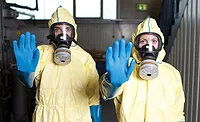
A Monday morning session at the AIHce studies the risks of microbiology exposure.Workers in many different jobs may be exposed to various infectious biological agents either intentionally or accidentally.

Work-related infectious disease is referred to as disease that is caused or aggravated by occupational exposure to biological agents including bacteria, fungi, viruses and parasites (helminths, protozoa) through human, animal and/or environmental contact. The risk of infection depends on the pathogenicity of the biological agent of occupational aetiology, worker susceptibility, dose required to initiate infection, the mode of transmission, route of entry into the body and the presence of reservoirs or vectors.

Although biological hazards in the work environments have been around for more than a century, several events in the past decade, such as severe acute respiratory syndrome (SARS) and the 2009 influenza A (H1N1) pandemic, have renewed concerns of workers safety.

During the past two decades, occupationally acquired hepatitis B, human immunodeficiency virus (HIV) infection, multidrug-resistant tuberculosis (MDR-TB) and viral haemorrhagic fevers, among others, have killed or debilitated thousands of workers, however the exact numbers of fatal infections is not known, according to NIOSH 

Work-related infection has been reported in the literature as the third-leading cause of occupational disease. Globally, an estimated 320 000 workers die annually from infectious diseases caused by bacterial, viral, animal and insect related biological hazards. The rate of infection varies widely by occupational setting and group.

For example, healthcare workers (HCWs) who are most often at the frontline of outbreaks of emerging agents and infectious patients are more at risk. The World Health Organization estimates the global burden of diseases as a result of work exposure among this group to be 40% for Hepatitis B and C infections and 2.5% for HIV infections, with 90% of occupational exposures being in the developing countries.

Challenges to identifying work-­related infections

Although some work-related infectious diseases occur almost exclusively in certain occupations others are less connected to the work environment. The interactions between the worker, biological agent and the environment are complex. The link between disease and work is often obscured by the lack of distinctive characteristics of work-related infectious diseases leading to missed diagnosis and under-reporting.

Diseases may also be missed as workers may not always have access to occupational healthcare; occupational health doctors may not have access to proper diagnostic tools; monitoring programs may not cover the entire workforce, or may be restricted to certain diseases; and some industries may prioritize food safety over occupational health issues.

In addition, the relatively long incubation period (several weeks) between exposure and onset of disease means that establishing a relation between infection and work may be problematic. Rare occupational infections may easily be missed unless there is a high index of suspicion combined with an understanding of infectious diseases. This is further compounded in diseases which can occur in both the work and non-work environments.

Contemporary and emerging issues

The resurgence of certain diseases and the emergence of new or previously unrecognized microorganisms is gaining momentum.  In most situations, mixed ­exposures occur in the workplace, leading to difficulty in identifying the causative agent.Also, different ­occupational groups may have similar exposure ­patterns.

Overuse or misuse of antibiotics has resulted in certain microorganisms such as Methicillin-resistant Staphylococcus aureus developing resistance to some anti-microbial agents. This jeopardizes the containment of infection and treatment of the disease (e.g. multi and extreme drug resistant TB) which not only increases the incidence and severity of illness but also the health costs. In addition, extreme weather patterns as a consequence of climate change may result in outbreaks of water-, mosquito- and rodent-borne diseases; posing a threat to emergency service and relief aid workers.

Work-related infectious diseases involve a broad spectrum of pathogenic agents across various occupational groups. It is known that workers die annually from occupationally acquired infections, however the mortality figures are mere estimates due to problems engendered by the lack of association between disease and workplace exposure.

KEYWORDS: health care workers infectious disease occupational exposure

Share This Story

Looking for a reprint of this article?
From high-res PDFs to custom plaques, order your copy today!

Djohnson new pic 7.10.22

Dave Johnson was chief editor of ISHN from 1980 until early 2020. He uses his decades of expertise to write on hot topics and current events in the world of safety. He also writes and edits at Dave Johnson’s Writing Shop LLC and is editor-at-large for ISHN. Find him at https://www.facebook.com/Dave-Johnsons-Writing-Shop-101316571547263/, and on LinkedIn at https://www.linkedin.com/in/daveljohnsoneditor/.

Recommended Content

JOIN TODAY
to unlock your recommendations.

Already have an account? Sign In

  • forklift safety

    Exploring the latest technologies in forklift safety

    With more staff and more stock in warehousing now more...
    Workplace Training Strategies
    By: Josh Cramer
  • welding

    All about welder’s flash or arc eye

    A flash burn is a painful inflammation of the cornea,...
    Environmental Health and Safety
  • dangerous jobs

    The 10 most dangerous jobs in the U.S.

    On-the-job deaths have been rising — hitting the highest...
    Occupational Safety
    By: Benita Mehta
Manage My Account
  • eMagazine Subscriptions
  • ISHN Newsletter & Other Newsletter Alerts
  • Online Registration
  • Manage My Preferences
  • Subscription Customer Service

More Videos

Sponsored Content

Sponsored Content is a special paid section where industry companies provide high quality, objective, non-commercial content around topics of interest to the ISHN audience. All Sponsored Content is supplied by the advertising company and any opinions expressed in this article are those of the author and not necessarily reflect the views of ISHN or its parent company, BNP Media. Interested in participating in our Sponsored Content section? Contact your local rep!

close
  • man wearing the the Sundström SR200 Full Face Mask Respirator
    Sponsored byOHD

    5 Fit Testing Mistakes That Could Cost You

  • This image shows Magid AcuSpex polarized blue mirrored safety glasses.
    Sponsored byMagid Glove and Safety

    Construction PPE Guide: What Crews Need for Each Task

  • lone worker in confined space
    Sponsored byAlphasense Ltd.

    GET THE LEAD OUT of your Safety Oxygen Sensors!

Popular Stories

SpaceX 7 launch

OSHA Investigating Fatal Fall at SpaceX Starbase

Worker Impairment

How to Tell When a Co-Worker is Impaired? A Safety Pro’s Challenge

Automated loading dock equipment

After March 2026 Rivian Death, Safety Managers Reassess Loading Dock Systems Under OSHA's Warehouse Emphasis Program

top 10 most dangerous jobs

Poll

Seasonal Readiness

With the federal heat stress prevention rule on the horizon, which area of your safety program needs the most attention?
View Results Poll Archive

Products

Surviving an OSHA Audit A Management Guide, 2nd Edition

Surviving an OSHA Audit A Management Guide, 2nd Edition

See More Products

ISHN Podcasts

Related Articles

  • Accurate and efficient assessments of working posture

    See More
  • Culture assessments seldom part of M&As

    See More
  • PELs

    OSHA’s exposure limits are dangerously out of date

    See More
×

Become a Leader in Safety Culture

Build your knowledge with ISHN, covering key safety, health and industrial hygiene news, products, and trends.

JOIN TODAY
  • RESOURCES
    • Advertise
    • Contact Us
    • Directories
    • Manufacturing Division
    • Store
    • Want More
  • SIGN UP TODAY
    • Create Account
    • eMagazine
    • Newsletters
    • Customer Service
    • Manage Preferences
  • SERVICES
    • Marketing Services
    • Reprints
    • Market Research
    • List Rental
    • Survey/Respondent Access
  • STAY CONNECTED
    • LinkedIn
    • Facebook
    • YouTube
    • X (Twitter)
  • PRIVACY
    • PRIVACY POLICY
    • TERMS & CONDITIONS
    • DO NOT SELL MY PERSONAL INFORMATION
    • PRIVACY REQUEST
    • ACCESSIBILITY

Copyright ©2026. All Rights Reserved BNP Media, Inc. and BNP Media II, LLC.

Design, CMS, Hosting & Web Development :: ePublishing