ISHN logo
search
cart
facebook twitter linkedin youtube
  • Sign In
  • Create Account
  • Sign Out
  • My Account
ISHN logo
  • NEWS
    • Today's News
    • Global Safety News
    • Government Regulations
  • PRODUCTS
    • Product Innovations
    • Featured Products
  • TOPICS
    • Environmental Health and Safety
    • Facility Safety
    • Workplace Health
    • Occupational Safety
    • PPE
    • More Topics
  • CONSTRUCTION
  • TECHNOLOGY
  • COLUMNS
    • Best Practices
    • Dave Johnson: What’s going on
    • Editorial Comments
    • Leading Safety
  • MULTIMEDIA
    • ISHN Podcast
    • Videos
    • Cold Stress Education Quiz
    • Webinars
    • White Papers
  • MORE
    • Buyer's Guide
    • Newsletters
    • Convention Companion
    • Polls
    • Events
    • ISHN Store
    • Sponsor Insights
  • EMAGAZINE
    • eMagazine
    • Archived Issues
    • Contact
    • Advertise
  • JOIN TODAY!

A Rockford Systems blog post

Press brake safeguarding basics
Rockford Systems
May 12, 2017

Press Brakes are currently a hot topic in the “Machine Safeguarding” arena. OSHA regulations consider press brakes to be a 1910.212 machine, saying to the employer; “one or more methods of machine guarding shall be provided to protect the operator and other employees in the machine area from hazards such as those created by point of operation, in-going nip points, rotating parts, flying chips, and sparks” … 1910.212 requirements are good place to start, but they leave out the details of exactly how to go about safeguarding any particular machine. Therefore, a reference to an ANSI Standard like B11.3 on press brakes is often used to identify specific safeguarding alternatives. ANSI B11.3 may however need some help from ANSI B11.19 on safeguarding methods, to provide a complete picture of how to go about protecting people.

Older press brakes, like those manufactured in the mid-1980’s and before, were mechanical (flywheel-type) machines, some of which are still in use today. Because the stopping times on mechanical press brakes are long, equally long light curtain safety-distances result, making that safeguarding device impractical in many cases.

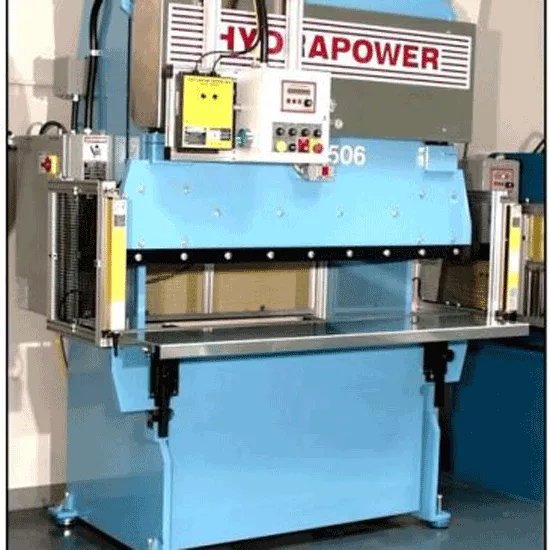
Press brakes manufactured after the mid-1980’s are much more likely to be hydraulic. Hydraulic press brakes allow for a wider variety of safeguarding options than mechanical press brakes do, and offer faster stopping-times, resulting in closer safety-distances where light curtains or two-hand controls are used.

A common method of safeguarding press brakes is with a vertically mounted infra-red light curtain. Hydraulic press brakes allow for short stopping times so that a light curtain can be mounted relatively close to the dies.

Two-hand controls on press brakes are often used in the sequence-mode of operation where the actuators bring the machine down and stop before the dies close, allowing just enough die-space to feed the part. The part is placed in the remaining die-opening, then a foot-switch is used to make the bend and return the machine to its full-open position.

Safety distance is required for both light curtains, and two-hand controls. That distance must be calculated with a stop-time measurement (STM) device on a quarterly basis. STM readings must be documented to show safety inspectors.

ANSI B11.3 which was updated in 2012, offers two completely new categories of protection for hydraulic press brakes: Active Optical Protective Devices (lasers) and Safe Speed Safeguarding. Active Optical Protective Devices (AOPDs) detect hands and fingers in a danger area. The biggest attraction for AOPDs are for jobs where the operator must hand hold small parts up close to the dies. A unique feature of AOPDs is that that they are designed to be mounted with zero safety distance, unlike light curtains that must be mounted at a calculated safety-distance, as outlined in ANSI B11.3. Safe Speed Safeguarding is based on a ram speed of 10mm per second or less, providing that speed is carefully monitored. Again, these two new methods of protection can only be applied to hydraulic press brakes (and potentially Servo-Drive Press Brakes).

The backs of press brakes cannot be left wide open. Two hazards exist often exist here. The first is reaching the dies from the back. The second is the possibility of a multi-axis back gauge moving and creating pinch points. As to exactly what is required on the back of equipment often depends on local OSHA interpretation. The very least, an awareness barrier, like a railing, chain, or cable with a “Danger” or “Warning” sign, complete with Pictograms, not just verbiage. (see photo)

For local OSHA interpretations that won’t accept awareness barriers, a full perimeter guard may be the answer for the back of a press brake. That guard can either be bolted into position, or if it’s movable, an electrical interlock switch can be installed to make sure it stays closed.

As with any industrial machine, Lockout/Tagout on Press Brakes must strive for “Zero Energy State” to and within each piece of equipment using both locks and tags.

Also mentioned in the ANSI standard is die safety blocks; please see our related blog post on “Demystifying Die Safety Blocks.”

Please call 1-800-922-7533 or visit rockfordsystems.com for more information.

KEYWORDS: machine guarding workplace safety

Share This Story

Looking for a reprint of this article?
From high-res PDFs to custom plaques, order your copy today!

Recommended Content

JOIN TODAY
to unlock your recommendations.

Already have an account? Sign In

  • forklift safety

    Exploring the latest technologies in forklift safety

    With more staff and more stock in warehousing now more...
    Facility Safety
    By: Josh Cramer
  • welding

    All about welder’s flash or arc eye

    A flash burn is a painful inflammation of the cornea,...
    Environmental Health and Safety
  • dangerous jobs

    The 10 most dangerous jobs in the U.S.

    On-the-job deaths have been rising — hitting the highest...
    Government Safety Regulations
    By: Benita Mehta
Manage My Account
  • eMagazine Subscriptions
  • ISHN Newsletter & Other Newsletter Alerts
  • Online Registration
  • Manage My Preferences
  • Subscription Customer Service

More Videos

Sponsored Content

Sponsored Content is a special paid section where industry companies provide high quality, objective, non-commercial content around topics of interest to the ISHN audience. All Sponsored Content is supplied by the advertising company and any opinions expressed in this article are those of the author and not necessarily reflect the views of ISHN or its parent company, BNP Media. Interested in participating in our Sponsored Content section? Contact your local rep!

close
  • man wearing the the Sundström SR200 Full Face Mask Respirator
    Sponsored byOHD

    5 Fit Testing Mistakes That Could Cost You

  • This image shows Magid AcuSpex polarized blue mirrored safety glasses.
    Sponsored byMagid Glove and Safety

    Construction PPE Guide: What Crews Need for Each Task

  • lone worker in confined space
    Sponsored byAlphasense Ltd.

    GET THE LEAD OUT of your Safety Oxygen Sensors!

Popular Stories

SpaceX 7 launch

OSHA Investigating Fatal Fall at SpaceX Starbase

Automated loading dock equipment

After March 2026 Rivian Death, Safety Managers Reassess Loading Dock Systems Under OSHA's Warehouse Emphasis Program

psychology in the workplace

Most Workplaces Measure Psychological Safety, Ignoring Psychosocial Risks

top 10 most dangerous jobs

Poll

Seasonal Readiness

With the federal heat stress prevention rule on the horizon, which area of your safety program needs the most attention?
View Results Poll Archive

Products

Surviving an OSHA Audit A Management Guide, 2nd Edition

Surviving an OSHA Audit A Management Guide, 2nd Edition

See More Products

ISHN Podcasts

Related Articles

  • Rockford Systems

    Press Brake and Power Press Safety is topic of next Rockford Systems mini-webinar

    See More
  • Rockford Systems

    Rockford Systems partners with Lazersafe® to safeguard press brake operators from serious injury

    See More
  • Rockford Systems

    Rockford Systems combats hydraulic press and press brake injuries with upgraded encoder-based safety control system

    See More

Related Products

See More Products
  • 3E

    Safety Professional's Reference and Study Guide, Third Edition

See More Products
×

Become a Leader in Safety Culture

Build your knowledge with ISHN, covering key safety, health and industrial hygiene news, products, and trends.

JOIN TODAY
  • RESOURCES
    • Advertise
    • Contact Us
    • Directories
    • Manufacturing Division
    • Store
    • Want More
  • SIGN UP TODAY
    • Create Account
    • eMagazine
    • Newsletters
    • Customer Service
    • Manage Preferences
  • SERVICES
    • Marketing Services
    • Reprints
    • Market Research
    • List Rental
    • Survey/Respondent Access
  • STAY CONNECTED
    • LinkedIn
    • Facebook
    • YouTube
    • X (Twitter)
  • PRIVACY
    • PRIVACY POLICY
    • TERMS & CONDITIONS
    • DO NOT SELL MY PERSONAL INFORMATION
    • PRIVACY REQUEST
    • ACCESSIBILITY

Copyright ©2026. All Rights Reserved BNP Media, Inc. and BNP Media II, LLC.

Design, CMS, Hosting & Web Development :: ePublishing
