Lessons from a semi-driverless vehicle
You can get numb to tech warnings & stimuli
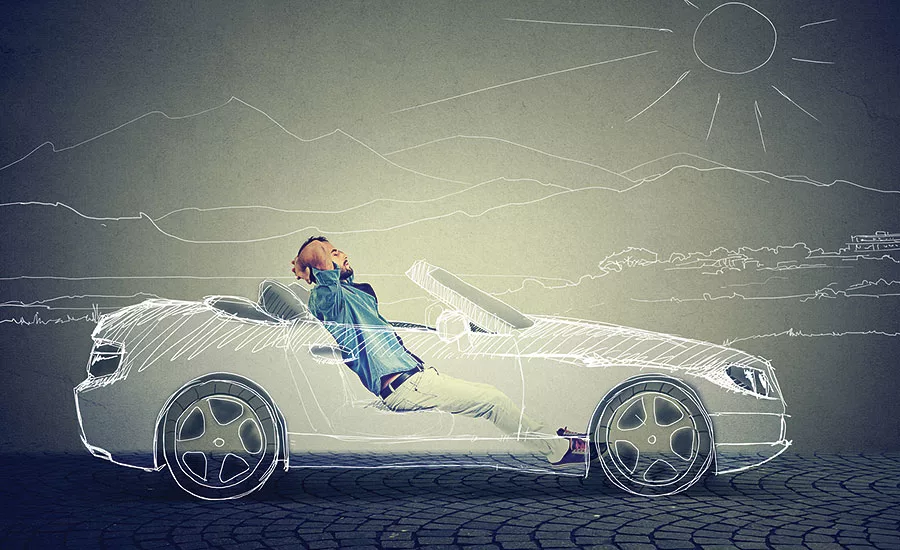
Not long ago I bought a new car. It had been a while. While I was on the sidelines, the auto industry has been experiencing unprecedented transformation. One researcher claims there will be ten million self-driving cars on the road by 2020, with one in four cars being self-driving by 2030.
As I learned on the dealer’s lot, maybe we’re 30-40 percent of the way there. Many of you, I’m sure, now drive vehicles that offer lane-keeping, automatic braking, and adaptive cruise control functionality. It’s the first stage of automated driving — autonomous braking, self-parking, or sensors that clue a driver in to a nearby obstacle
An awakening
Semi-autonomous driving is something of an awakening for the uninitiated, like me. Yes, the salesman had quickly run through the sensor technology. I half listened, leaving me on the road wondering what was triggering beeps, vibrations and warning messages. Time to park the car and read the instruction manual, where I learned:
- A stability system helps stabilize the vehicle during cornering if the vehicle turns more or less than what was intended. It helps maintain traction on slippery surfaces by regulating engine output and selectively applying the brakes.
- If a vehicle is detected ahead of me when the detection-at-a-distance system is turned on, the system maintains, accelerates or decelerates my vehicle’s set speed to keep the vehicle’s set following interval from the vehicle ahead.
- If a vehicle detected ahead of me slows down abruptly, or if another vehicle cuts in front of me, a beep sounds and BRAKE warning message appears on the multi-information display.
- A departure mitigation system alerts and helps me if the system determines a possibility of my vehicle unintentionally crossing over detected lane markings while driving between 45-60 MPH. Get too close to detected lane markings without a turn signal activated and a message flashes on the multi-information display – LANE DEPARTURE. Steering wheel torque and vibrations are applied to help my vehicle stay in the lane. Braking may also be applied if the lane lines are solid and continuous.
Not off the hook
OK, so the vehicle is smarter than I am. But in the semi-driverless mode of today, I still have responsibilities, as the vehicle manual makes clear:
- If my vehicle gets too close to detected left or right side lane markings without a turn signal activated, the system provides visual and tactile alerts.
Here the manual presents an “Important Safety Reminder:” The above system is for my convenience only. It is not a substitute for my vehicle control. The system does not work if I take my hands off the steering wheel or fail to steer the vehicle.
- When a potential collision with a detected oncoming vehicle is determined, a BRAKE message flashes on that multi-information display, warning lights flash, a beep sounds, and the steering wheel vibrates.
The second “Important Safety Reminder:” This system is designed to reduce the severity of an unavoidable collision, according to the manual. “It does not prevent collisions nor stop the vehicle automatically. It is still my responsibility to operate the brake pedal and steering wheel appropriately according to the driving conditions.”
I’m also advised to pay close attention when I read these messages in the driver’s guide:
- “DANGER – You WILL be KILLED or SERIOUSLY HURT if you don’t follow instructions.”
- “WARNING – You CAN be KILLED or SERIOUSLY HURT if you don’t follow instructions.”
Getting too comfortable
Within days I was comfortable with the car’s artificial intelligence. Psychologists would say I became habituated – experiencing diminishing physiological or emotional responses to a frequently repeated stimulus.
Automobiles today are stimulating almost to the point of information overload. My instrument panel malfunction indicators tell me if brake fluid is low; the brake system has a problem; oil pressure is low; battery is not charging; there’s a problem with one of the airbags or seat belt tensioners; a problem with tire pressure; a problem with automatic lighting control or low beam headlights; parking sensors are blocked; there’s a problem with the collision mitigation braking system; or I have a problem with the electric power steering.
Condition indicators tell me: a door is open; fasten my seat belt; I’m low on fuel; washer fluid level is low; tire pressure is low; and scheduled maintenance for your vehicle is due.
Habituation can lead to complacency, which can lead to operating on auto-pilot. Not a good thing when you’re behind the wheel — or for anyone working on a construction site, assembly line, up on a roof or down in a trench.
When I’m on auto-pilot, I let sensor technology take over. I forget warnings and important safety reminders in the manual, and ignore those dashboard icons, symbols and alerts.
Safety requires vigilance
Let’s be clear: The data so far suggests self-driving cars will reduce the number of traffic accidents by upward of 90 percent. Just like smart factories that leverage the Industrial Internet of Things to reduce workplace accidents thanks to machine sensors, robot sensors, wearable devices with warnings and health status read outs, and PPE embedded with sensors and nanotechnology to alert workers to malfunctions, the need for repairs or new PPE, or escalating risk situations, such as confined space entry problems and ergonomic and firefighting over-exertions.
The future will be safer, on the road and in the workplace. But with the abundance of techno-stimuli coming at us, beware of habituation and complacency. Training will be crucial, as will alertness and situational awareness. Technology is changing almost everything – almost. Safety will always require vigilance.
Looking for a reprint of this article?
From high-res PDFs to custom plaques, order your copy today!