Fast first aid treatment depends on knowing injury cause, severity
Cooling the burn
Not long after toddlers take their first tentative steps, they’re likely to be told, “Don’t touch the hot stove.” Either by heeding that warning or sadly through their own experience, they learn that a hot stove may burn them.
Identifying potential sources of burns, guarding or segregating them when possible, teaching employees to take proper precautions and using appropriate personal protective equipment (PPE) are all steps that can be used to help minimize the chance of burn injuries.
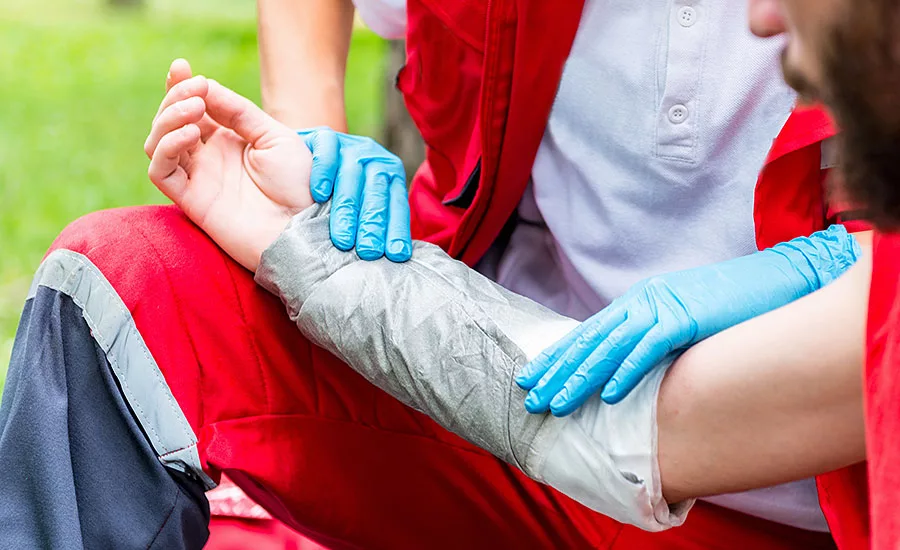
When the unplanned happens, the faster first aid is rendered, the better. Knowing specifically what caused a burn helps those rendering first aid to provide the most help to minimize the chance of further injury.
Thermal burns
Thermal burns are caused by hot objects, flames, fire, steam, hot or molten liquids. They are the most common type of burn, accounting for more than half of all burns, according to the Bureau of Labor Statistics.
The temperature of the heat source, the amount of time it is in contact, and the body parts affected all play a role in the severity of a thermal burn injury and the type of treatment that will be necessary.
-
First Degree Burns are the least severe. Only the outer layer of skin is damaged, but it will be red and painful. It may also be slightly swollen. When touched, the affected area will temporarily turn white.
Cold, wet compresses can be used to cool the burned area and help to relieve pain. Ice should not be used because it may further damage the skin. Non-prescription pain relievers such as ibuprofen or acetaminophen and burn relief creams can also be used as needed for pain and healing. -
Second Degree Burns are more severe. These burns cause blisters and skin that is splotchy, red and very painful. It is also more likely than first degree burns to be swollen.
Cold water can be used to help cool areas with second degree burns, but care must be taken to avoid popping or breaking blisters. Ointments, creams and other topical treatments should not be applied. Professional medical attention may be necessary in some cases. -
Third Degree Burns are the most severe and can be life-threatening. Both the top layers of skin and the underlying tissue are damaged, but will not feel painful because the nerves in the affected area have also been damaged. Skin will appear charred or white.
After calling 9-1-1, treat for shock. Do not remove any burned clothing to prevent further skin damage. If possible, elevate burned areas above the heart and cover all burned areas with sterile dressings.
Chemical burns
Chemical burns are caused by contact with hazardous substances such as corrosives and solvents. Usually, burns appear soon after contact, but in some cases, symptoms may not appear for several hours after exposure.
The symptoms of chemical burns can vary depending upon the nature of the chemical, the location of the burn, the length of contact, cuts or wounds in the affected area and other factors. External burns may appear red, black or white.
Check safety data sheets to confirm the type of first aid treatment for chemical burns and prepare for that treatment ahead of time. In some cases, such as contact with elemental metals, phenols or dry lime, using water may cause a more serious injury and the skin should instead be covered with mineral oil or treated in another specific way until professional medical attention can be provided.
For external chemical burns that can be drenched with water, drench the area with cool running water for 10 to 20 minutes while removing contaminated clothing or jewelry, unless they are stuck to the skin. Do not apply ointments or gels. Cover burned areas loosely with sterile dressings. Depending upon the severity, professional medical attention may be needed.
Electrical burns
Live electrical current, electrical arcs and lightning are the most common sources of industrial electrical burns. Because the human body conducts electricity, even seemingly minor contact with electrical sources can be harmful.
Unlike thermal and chemical burns, electrical burns may not be apparent on the skin; but internal tissues and organs may be severely damaged. The jolt that often accompanies an electrical shock can also cause people to fall or be thrown from an area causing fractures, contusions and other injuries.
- Arc Burns occur when electrical energy travels from an area of high resistance to an area of low resistance producing high heat and pressure. Electrical arcs also cause flash burns that damage to large areas of skin.
- Voltage Burns are caused by contact with a power source. High voltage electrical sources (those more than 500 volts) can damage internal organs and tissue, but may not cause excessive external skin damage. Low voltage burns (500 volts or less) can harm the skin, but do not have enough energy to harm tissues or organs.
- Flame Burns accompany other types of electrical burns. They are the result of objects in the area being ignited by the electrical source, causing a live flame.
First aid for electrical burns is different than the initial treatments rendered for thermal or chemical burns. If the electrical source is lightning, high voltage or an electrical arc, call 9-1-1. Then, stay at least 20 feet from the victim and do not touch them until the electrical source is removed or turned off.
Recognizing the types of burns that could occur and providing first aid responders with the training and supplies to properly address the specific types of burn injuries that they may face will speed response and can prevent more severe injuries.
Looking for a reprint of this article?
From high-res PDFs to custom plaques, order your copy today!