Insights into effective safety communication

Photo credit: Orbon Alija / E+ / Getty Images Plus
Typically, most safety communication occurs face to face between a person responsible for safety, and an employee engaged in performing their work. This usually involves a situation where the worker may possibly be exposed to a physical hazard or be engaged in some form of at-risk behavior. The safety specialist (communicates) brings this to the worker’s attention and then may suggest ways to correct this. The effectiveness of this interchange is dependent on a cogent understanding of communication, and is especially relevant based on construction work site conditions.
Communication may become challenging due to environmental factors such as noise, weather, physical distances, etc. The need for effective communication may increase due to work site variability such as almost daily changing conditions, multiple organizations’ workforces working contiguously, as well as a multitude of other factors. One of these applies to the project’s management structure and responsibility, safety oversight obligation and their associated positional power.
Project supervision is responsible for overseeing the ongoing construction efforts by effectively enabling as well as managing the construction of the structure. Worker safety is assigned to the organization’s safety function. The safety practitioner visits the site at some predetermined interval, spends a few hours conducting an inspection, looking for physical hazards as well as worker unsafe behavior. He discusses some of this with workers but must bring any shortcoming to the attention of supervision for correction. He generally does not have the authority to terminate workers for noncompliance. Much of this require effective communication skills.

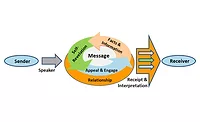
Figure 1: Essential Elements of Communication | Courtesy of Peter Furst
Verbal communication basics
Communication is a dynamic process and is influenced by the personality, experience, and capability of the parties involved, as well as the context in which it takes place. It is also affected by their perception, and perspicacity. Typically, there is a source (sender) transmitting information (thoughts, feelings, ideas, insights, direction) through a channel to the destination (one or more recipients). For the communication to be effective the spoken words must have shared meaning in order to be understood by the recipient.
The verbal communication (message) is transmitted through a channel to the recipient. The recipient will respond through the feedback channel indicating agreement, understanding, or ask for clarification. Actually, the communication process has five essential elements. These are source, message, channel, receiver, feedback and is influenced by five underlying ones.
Communication basic elements
Source or sender creates the verbal massage, encodes it and transmits it to the receiver(s). The speaker also consciously or unconsciously conveys the message though tone of voice as well as body language.
Message is made up of words intended to grasp and focus the recipient’s attention. The message also consists of the way you say it, with your tone of voice, your body language, and your appearance.
Receiver(s) acquires the message from the sender, analyzes, and interprets it. The interpretation may or may not match the sender’s intention and will ‘color’ the verbal or nonverbal reaction or response as feedback. The sender should look for this reaction.
Feedback is a message intentionally or unintentionally given by the receiver to the sender. This tells the sender if the message was accurately or inaccurately received, and will generate a reaction by the sender. It also might generate the need for clarifications.
Channel is the way the message is conveyed both verbal and nonverbal between the sender and the receiver(s). Spoken channels include face-to-face and telephone, conversation, as well as voice mail messages. Written channels include letters, memorandums, publications, e-mail, text messages, tweets, signage, etc.
Salient appurtenant elements
There are additional factors which influence or impact the effectiveness of communication as well as its outcome. The positional status and personal relationship of the parties will probably have a bearing in the reaction or response to the message. The work climate will also be a factor, as will the environment where the exchange occurs. Other pertinent issues involve context as well as any perceived or actual interference may to some extent impact the outcome.
Position of the parties (boss to follower) certainly will be an important factor in the response of the recipient to the message.
Relationship of the parties to each other (friendship, respect, trust, etc.) certainly will have an impact of the communication process.
Communication is a dynamic process and is influenced by the personality, experience, and capability of the parties involved, as well as the context in which it takes place.
Environment includes the work climate both physical and/or psychological that exists where communication occurs. Factors such as the relationship of the people involved, the content of the message, as well as other relevant factors will affects the response or reaction to the exchange.
Context of the communication can be formal or informal and involves the setting, scene, and expectations of those involved. For example, it may depend on what happened before the exchange, or how they may feel about the work or the organization. Context often relates to what people expect from each other, and hinges on environmental cues. So, context influences the message, it timing and effectiveness.
Interference is sometimes referred to as ‘noise’, and is anything that blocks or impacts the meaning of the message. Receiving and understanding the message may also be impacted by psychological noise, which happens when one’s thoughts interferes with one’s attention to what one is hearing or reading. Noise, good or bad may interfere with normal encoding and decoding of the message as well.
Nonverbal communication
Communication is usually thought of as the spoken or written language. Dr. Albert Mehrabian’s research in the 1960s proposed that tone of voice and body language played a pivotal role in supporting and enhancing the verbal message or potentially hindering it. Body language includes eye contact, facial expression, social distance, touch, gestures, etc. Tone of voice represents volume, tempo, pitch, pauses, and inflection, all of which communicate emotion, attitude, or feeling. These serve as clues and carry subtle messages which may indicate concern, friendliness, warmth, compassion, interest, zeal, support, kindness, understanding, empathy, thoughtfulness, etc. and are critical to effective communication.
Some of the elements of nonverbal communication have been discussed in a previous column, “Communication leads to Engagement” in the ISHN magazine November/December 2023 issue. That article discusses the important role body language and tone of voice plays in the recipient’s understanding as well as acting upon the information received. It also discusses some of the various elements of body language and tone of voice.
Communication enables performance
As mentioned above, project supervision is responsible to meet the project schedule by ensuring that work is put in place at the planned rate. They achieve this through effective management and positional power (power will be discussed in next month’s column). They have to onboard experienced, and capable workers, motivate and enable them, as well as hold them accountable to ensure they meet production goals. If performance does not meet expectations (goals), then supervision must either modify the plan or replace less productive workers.
The workforce reports to project supervision, understand they must meet performance (putting work in place) goals and those who cannot meet expectations will eventually be replaced. The safety practitioner responsible for worker safety may make weekly or random project visits and may spend only a few minutes with any one worker. He may suggest different ways to engage is safe work practices, but usually doesn’t have the power (authority) to terminate them for unsafe behavior. If the workers perceive the suggested behavioral changes will negatively impact their ability to meet production goals, they in all likelihood will comply as long as he is present and revert back to their unsafe behavior later on.
The safety practitioner will have to determine if the unsafe behavior was due to bad habits in which case, he may suggest ways to perform the task safely. To ensure compliance he will have to convince workers to permanently modify their approach by utilizing effective and compelling communication. He will also have to convince supervision to randomly spot check that worker, to ensure safe practices are maintained.
If the safety practitioner determines the expected production goal exceeds that worker’s capability resulting in risk his risk taking then he will have to convince the supervisor to change that worker’s production goal or reassign that worker to another task so as to match their capability to the task demand. This also requires superior communication practices to convince the parties to understand, accept and engage in recommend changes.
Conclusion
If project staff seem to focus on production and recognize the exceeding of performance goals. They will create a work climate that encourages it. The workforce may perceive the encouragement of deviation from expected work practices and eventually to become encouraged to the taking of shortcuts. This will result in at risk behavior to ensure job security. The net result is going to make the safety practitioner’s job more difficult. Requiring a better understanding of communication practices in order to more effectively motivate workers to avoid at risk behavior. The safety practitioner must also effectively engage project supervision to pay attention to worker behavior as well as do a better job of matching worker capability with production goal demands requiring superior communication skills.
Looking for a reprint of this article?
From high-res PDFs to custom plaques, order your copy today!