A Guide to OSHA Compliance and Worker Safety in Confined Spaces
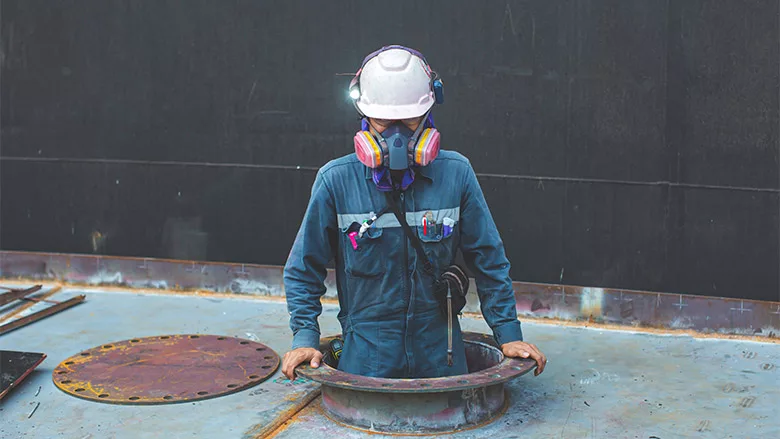
Photo credit: chitsanupong / Getty Images Signature
Across bustling work environments, amidst standard workflows and routine tasks, the dangers of confined spaces are often understated. Whether cleaning storage tanks, servicing furnaces, or repairing pipeline leaks, these essential activities can quickly turn catastrophic without the proper safety protocols and controls.
Despite its critical nature, many employers and safety managers may not fully understand the extensive Occupational Safety and Health Administration (OSHA) guidelines governing confined space work, which can result in hefty fines, legal repercussions, and, most importantly, serious injuries or fatalities.
Below, we walk you through OSHA's key requirements for confined spaces, highlighting the most common violations and providing actionable strategies to keep your workers safe and the businesses compliant.
What is a confined space?
OSHA defines confined spaces as large enough for workers to enter and perform tasks but with limited or restricted means for entry and exit and not designed for continuous occupancy. Common examples include tunnels, equipment housings, pipelines, and storage tanks. However, some confined spaces are more dangerous than others. These “permit-required confined spaces” have one or more of the following characteristics:
- Hazardous atmospheres (toxic gases, lack of oxygen, flammable vapors)
- Engulfment risk (from liquids, substances, or other materials)
- Internal configuration that could trap and asphyxiate a worker (walls that converge inward or floors that slope downward)
- Other serious safety hazards, such as unguarded machinery, exposed live wires, or heat stress
It’s important to note that permit spaces need not contain the above mentioned hazards; they may also be classified as such if they pose these potential dangers. These areas necessitate stringent safety protocols, including obtaining a permit, implementing hazard controls, and ensuring proper training and rescue procedures to protect workers entering these spaces.
Top confined space OSHA violations
Failing to adhere to OSHA's confined space standards can lead to severe consequences, including hefty fines and, tragically, worker fatalities. According to the US Bureau of Labor Statistics, 1,030 workers died from occupational injuries involving confined spaces between 2011 and 2018.
With that said, here are some of the most frequently cited violations:
Lack of proper ventilation
Confined spaces often have poor air circulation, leading to oxygen deficiency, flammable or combustible atmospheres, or toxic gas buildup. OSHA mandates testing and monitoring atmospheric conditions before and during entry and providing continuous forced air ventilation when necessary.
Employers can avoid this violation by:
- Conducting air quality tests using gas detectors before entry
- Using mechanical ventilation systems to maintain safe air levels
- Implementing continuous monitoring for oxygen levels and toxic gases
For reference, LELs (lower explosive limits) are the lowest gas or vapor concentrations in the air that can ignite or explode when exposed to an ignition source. For example, the LEL of methane is 5%, meaning if it makes less than 5% of the air composition, it won’t ignite. Meanwhile, PELs (permissible exposure limits) are the regulatory limits set by OSHA on substance concentration in the air that workers can be exposed to without adverse health effects.
Failing to provide adequate ventilation can result in serious worker illnesses, fatalities, OSHA citations, and fines of up to $15,000 per violation.
Inadequate hazard communication
Many confined space incidents occur due to the lack of proper communication about potential dangers. In 2023, OSHA found 3,227 violations regarding hazard communication. OSHA requires employers to inform workers of the potential hazards within a confined space before entry and provide the necessary training to navigate them safely. This includes information about the space's contents, potential atmospheric hazards, and other relevant safety precautions.
OSHA's Hazard Communication Standard (HCS) requires employers to:
- Identify and document hazards present in confined spaces
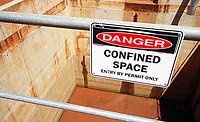
- Mark confined spaces with clear warning signs and provide safety data sheets (SDS)
- Train employees on the risks and necessary precautions before entry
Without proper hazard communication, workers may enter confined spaces unprepared, increasing the likelihood of exposure to toxic environments, flammable or combustible atmospheres, and other life-threatening hazards.
Failure to implement a permit-required confined space program
For areas deemed "permit spaces," OSHA requires employers to establish a written program outlining entry procedures, hazard evaluations, rescue plans, and worker training. These permit space protocols may include pre-entry checklists to ensure all safety measures are in place, atmospheric testing, and lockout/tagout (LOTO) procedures.
OSHA violations often stem from:
- Failing to classify confined spaces correctly
- Not issuing entry permits before workers enter hazardous spaces
- Neglecting to designate an entry supervisor to oversee operations
For reference, a comprehensive permit-required confined space program includes thorough hazard assessments, extensive safety training, and a system for issuing and tracking permits.
Insufficient emergency procedures
Inadequate rescue plans can lead to tragic outcomes. That’s why OSHA mandates having a written plan for all permit-required spaces, outlining the procedures, equipment, and personnel required to safely extricate individuals from confined spaces in the case of an emergency.
The confined space rescue plan must address several key points:
- All identified and potential hazards specific to the confined space
- Detailed self-rescue procedures (for minor incidents), non-entry rescue techniques (for entry is too risky), and full-blown confined space entry and rescue protocols (for when rescuers must enter the confined space)
- Essential equipment for each type of confined space rescue, including personal protective equipment (PPE) like respirators and harnesses, gas detection devices, winches and tripods for lifting, and communication tools
- Identify trained and qualified rescue team members, outlining their roles and responsibilities during an emergency
OSHA’s emphasis on a written confined space rescue plan underscores the importance of documentation and clarity in rescue procedures. Aside from being a concrete reference during emergencies, a documented plan facilitates training, drills, equipment maintenance, and periodic reviews to ensure ongoing preparedness.
Lack of Proper Personal Protective Equipment (PPE)
OSHA mandates that employers provide appropriate PPE for workers entering confined spaces to protect against specific hazards. Depending on the hazards present, these may include respirators, harnesses, retrieval systems, and other specialized PPE. Additionally, employers must provide adequate training for proper PPE use, maintenance, and disposal.
Hierarchy of controls: Proactive prevention
The best way to avoid OSHA violations and protect workers is to implement a robust safety program based on the hierarchy of controls. This strategic framework for mitigating workplace hazards prioritizes hazard elimination and substitution, followed by engineering controls, administrative controls, and lastly, PPE. Remember, safety isn't just about compliance; it's about protecting the lives of your most valuable asset: your employees.
Looking for a reprint of this article?
From high-res PDFs to custom plaques, order your copy today!