ISHN logo
search
cart
facebook twitter linkedin youtube
  • Sign In
  • Create Account
  • Sign Out
  • My Account
ISHN logo
  • NEWS
    • Today's News
    • Global Safety News
    • Government Regulations
  • PRODUCTS
    • Product Innovations
    • Featured Products
  • TOPICS
    • Environmental Health and Safety
    • Facility Safety
    • Workplace Health
    • Occupational Safety
    • PPE
    • More Topics
  • CONSTRUCTION
  • TECHNOLOGY
  • COLUMNS
    • Best Practices
    • Dave Johnson: What’s going on
    • Editorial Comments
    • Leading Safety
  • MULTIMEDIA
    • ISHN Podcast
    • Videos
    • Cold Stress Education Quiz
    • Webinars
    • White Papers
  • MORE
    • Buyer's Guide
    • Newsletters
    • Convention Companion
    • Polls
    • Events
    • ISHN Store
    • Sponsor Insights
  • EMAGAZINE
    • eMagazine
    • Archived Issues
    • Contact
    • Advertise
  • JOIN TODAY!
Columns

PSYCHOLOGY OF SAFETY: Yield the right-of-way

By E. Scott Geller
January 2, 2003
I'd like to suggest a resolution for 2003 - yield the right-of-way. My proposition is quite general, applicable in many circumstances, and relevant to more than a safety mission. I hope to convince you that this resolution is a SMART goal ("S" for specific, "M" for motivational, "A" for achievable, "R" for relevant, and "T" for trackable).

Behaviors related to "yielding the right-of-way" can be stipulated, and occurrences of these behaviors can be tracked until a specific and achievable quantity is reached. This New Year's Resolution is within everyone's capability to achieve. But why should you do this? And how is this relevant to safety?

These two questions address the "motivation" and "relevant" components of SMART goals. Compelling answers should give this simple resolution a top priority for the New Year. Let's first consider the domain typically viewed as most germane to my proposal - driving.

The leading cause

Several years ago the Transportation Research Center at the University of Michigan conducted a comprehensive analysis of more than 1.8 million crash reports in order to prioritize the various contributing driving behaviors. For more than 79 percent of these reports, only one at-risk behavior was recorded. Indeed, "failure-to-yield" was at the top of the list (accounting for 19.3 percent of the total crashes), followed by speeding (16.9 percent), following-too-close (10.3 percent), driver inattention (6.6 percent), careless driving (5.8 percent), and disregarding a traffic signal (5.0 percent). Alcohol or drugs was mentioned in only 3.2 percent of these crash reports.

Failure-to-yield is still a prominent contributor to vehicle crashes. After all, a driver who yields the right-of-way usually avoids any possible conflict with another vehicle. Also, when you let the aggressive driver through, you'll prevent the frustration and negative emotions that can activate "road rage." In some cases a sense of security is gained by knowing a speedy driver is ahead to attract the attention of a radar check.

Listen first

Yield the right-of-way is consistent with the first rule of effective interpersonal communication. When attempting to change at-risk behavior to safe behavior, listen first with empathy to the wrongdoer's position, even when it sounds like only an excuse. Then ask specific behavior-based questions to learn more. Such yielding can lead to an optimum outcome, as when the offender admits to making a personal mistake and yields for your advice on how to improve.

Don't snap back

The other day the telephone rang and my daughter shouted with hostility, "Someone answer the phone; you live here too, don't you?" Now that kind of negative reaction seems to demand an equally unpleasant reply: "Answer the phone yourself, it's probably for you anyway." But what's the benefit?

Sometimes the best response is no response. Yielding provides an opportunity for speakers to reflect on what they said. And the absence of a negative rejoinder prevents the escalation of negative emotions. In other words, don't fuel a fire.

Yielding is not ignoring

Yielding is easy when it's only about answering a telephone. I merely yelled back a genuine "Sorry," and answered the phone, leaving my daughter to think about her inappropriate assertion. Maybe some guilt would trickle in.

Sure, this yielding stuff sounds good for inconsequential behavior. But what about significant action, such as at-risk behaviors that can result in an injury if continued? Surely you can't yield the right-of-way in this situation. Well, it depends on your definition of "yield."

"Yield" is not the same as ignore. A definition of "yield" in The American Heritage Dictionary is "to give way to what is stronger or better." At-risk behavior is not better or stronger than safe behavior, so there's no reason to yield. But remember my earlier point about first actively listening and asking questions. Realize that "punishment" (defined in my dictionary as "a penalty imposed for wrongdoing") is not the same as "corrective action."

Corrective action is not punishment

Corrective action requires developing a specific refinement plan. This includes designating behaviors to change, as well as the environmental, managerial, and social supports needed to initiate and sustain behavioral improvement. Effective corrective action also requires personal commitment, and this can be stifled severely with an unyielding and seemingly uncaring application of negative consequences.

Bottom line: Yield the right-of-way does not mean ignore at-risk behavior. Ask for an immediate behavior change, but resist giving critical commentary. Instead, listen with genuine caring and ask questions relevant for corrective action.

When you yield to learning the other person's perspective, you maximize the chances of attaining the best outcomes - ownership of the mistake and commitment to improve.

NOTE - Search www.ishn.com using keywords "SMART goals" and read four of Dr. Geller's previous columns about goal-setting. Use keyword "punishment" to find more than a dozen of Dr. Geller's articles on discipline and motivation.

SIDEBAR: Principles of yielding when confronted with at-risk behavior

  • Ask for an immediate behavior change.
  • Resist giving critical commentary.
  • Listen with genuine caring.
  • Ask questions relevant for corrective action.
  • Develop a corrective action plan.
  • Maximize chances to attain the best outcomes - ownership of the mistake and commitment to improve.


Links

  • Safety Performance Solutions

Share This Story

Looking for a reprint of this article?
From high-res PDFs to custom plaques, order your copy today!

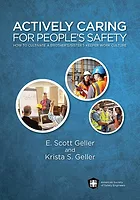
E. Scott Geller, Ph.D., is Alumni Distinguished Professor, Center for Applied Behavior Systems, Virginia Tech, and senior partner with Safety Performance Solutions, Blacksburg, VA. For more information visit www.safetyperformance.com. "Actively Caring for People's Safety: How to cultivate a brother’s/sister’s keeper work culture," co-authored by Scott’s daughter Krista, was recently published by ASSE. Scott’s 15-minute TEDX talk on You Tube can be accessed at: https://www.youtube.com/watch?v=7sxpKhIbr0E


Recommended Content

JOIN TODAY
to unlock your recommendations.

Already have an account? Sign In

  • forklift safety

    Exploring the latest technologies in forklift safety

    With more staff and more stock in warehousing now more...
    Facility Safety
    By: Josh Cramer
  • welding

    All about welder’s flash or arc eye

    A flash burn is a painful inflammation of the cornea,...
    Environmental Health and Safety
  • dangerous jobs

    The 10 most dangerous jobs in the U.S.

    On-the-job deaths have been rising — hitting the highest...
    Transportation Safety
    By: Benita Mehta
Manage My Account
  • eMagazine Subscriptions
  • ISHN Newsletter & Other Newsletter Alerts
  • Online Registration
  • Manage My Preferences
  • Subscription Customer Service

More Videos

Sponsored Content

Sponsored Content is a special paid section where industry companies provide high quality, objective, non-commercial content around topics of interest to the ISHN audience. All Sponsored Content is supplied by the advertising company and any opinions expressed in this article are those of the author and not necessarily reflect the views of ISHN or its parent company, BNP Media. Interested in participating in our Sponsored Content section? Contact your local rep!

close
  • man wearing the the Sundström SR200 Full Face Mask Respirator
    Sponsored byOHD

    5 Fit Testing Mistakes That Could Cost You

  • This image shows Magid AcuSpex polarized blue mirrored safety glasses.
    Sponsored byMagid Glove and Safety

    Construction PPE Guide: What Crews Need for Each Task

  • lone worker in confined space
    Sponsored byAlphasense Ltd.

    GET THE LEAD OUT of your Safety Oxygen Sensors!

Popular Stories

SpaceX 7 launch

OSHA Investigating Fatal Fall at SpaceX Starbase

Worker Impairment

How to Tell When a Co-Worker is Impaired? A Safety Pro’s Challenge

Automated loading dock equipment

After March 2026 Rivian Death, Safety Managers Reassess Loading Dock Systems Under OSHA's Warehouse Emphasis Program

top 10 most dangerous jobs

Poll

Seasonal Readiness

With the federal heat stress prevention rule on the horizon, which area of your safety program needs the most attention?
View Results Poll Archive

Products

Surviving an OSHA Audit A Management Guide, 2nd Edition

Surviving an OSHA Audit A Management Guide, 2nd Edition

See More Products

ISHN Podcasts

Related Articles

  • ASSE

    Hot off the ASSE press: Actively Caring for People’s Safety

    See More
  • Actively Caring for People’s Safety

    4 STEPS to cultivating a brother’s/sister’s keeper culture

    See More
  • actively caring for people, behavior-based safety

    Actively caring for people’s safety

    See More

Related Directories

  • American Society of Safety Professionals (ASSP)

    The American Society of Safety Professionals (ASSP) is a global association of occupational safety and health professionals who are dedicated to workplace safety. We provide education, safety standards, advocacy and a professional community that supports our diverse members and the profession.
  • Alliance of Women’s Safety Apparel Manufacturers (AWSAM)

    The Alliance of Women's Safety Apparel Manufacturers is a collection of specialty manufacturers and distributors committed to providing properly designed and fitted PPE for women. Our foundational pillars are Awareness, Access and Advocacy. Our non-profit organization has 12 Founding Members and aligns the needs of women in the workforce and the companies they work for with specialty manufacturers dedicated to providing appropriate PPE for women. The Founding Members of the organization have made great strides in removing barriers to access that have existed for many years and kept women from being equally protected. Together, we create a platform that increases awareness of products made for women, encourages equal access to appropriately fitting PPE, and advocates for the safety of women in the workforce. In the spirit of co-opetition, we collaborate to envision what is next for women in industry as we work side by side to accomplish our mission, increase our impact, and share the journey with everyone seeking to elevate diversity and equality in their workplace.
×

Become a Leader in Safety Culture

Build your knowledge with ISHN, covering key safety, health and industrial hygiene news, products, and trends.

JOIN TODAY
  • RESOURCES
    • Advertise
    • Contact Us
    • Directories
    • Manufacturing Division
    • Store
    • Want More
  • SIGN UP TODAY
    • Create Account
    • eMagazine
    • Newsletters
    • Customer Service
    • Manage Preferences
  • SERVICES
    • Marketing Services
    • Reprints
    • Market Research
    • List Rental
    • Survey/Respondent Access
  • STAY CONNECTED
    • LinkedIn
    • Facebook
    • YouTube
    • X (Twitter)
  • PRIVACY
    • PRIVACY POLICY
    • TERMS & CONDITIONS
    • DO NOT SELL MY PERSONAL INFORMATION
    • PRIVACY REQUEST
    • ACCESSIBILITY

Copyright ©2026. All Rights Reserved BNP Media, Inc. and BNP Media II, LLC.

Design, CMS, Hosting & Web Development :: ePublishing