ISHN logo
search
cart
facebook twitter linkedin youtube
  • Sign In
  • Create Account
  • Sign Out
  • My Account
ISHN logo
  • NEWS
    • Today's News
    • Global Safety News
    • Government Regulations
  • PRODUCTS
    • Product Innovations
    • Featured Products
  • TOPICS
    • Environmental Health and Safety
    • Facility Safety
    • Workplace Health
    • Occupational Safety
    • PPE
    • More Topics
  • CONSTRUCTION
  • TECHNOLOGY
  • COLUMNS
    • Best Practices
    • Dave Johnson: What’s going on
    • Editorial Comments
    • Leading Safety
  • MULTIMEDIA
    • ISHN Podcast
    • Videos
    • Cold Stress Education Quiz
    • Webinars
    • White Papers
  • MORE
    • Buyer's Guide
    • Newsletters
    • Convention Companion
    • Polls
    • Events
    • ISHN Store
    • Sponsor Insights
  • EMAGAZINE
    • eMagazine
    • Archived Issues
    • Contact
    • Advertise
  • JOIN TODAY!
Columns

PSYCHOLOGY OF SAFETY: Rush to judgment

By E. Scott Geller
December 31, 2001
In this article, the last in a series of four on performance appraisals and how they relate to safety, I want to discuss six psychological factors that prejudice typical performance evaluations. Remember, generic evaluations and rankings won't improve competence - in safety or any other area. Still, becoming aware of these factors can make your evaluations more accurate.

Leniency errors

There's a tendency to evaluate everyone favorably. Why? Because managers want to avoid negative confrontations. They anticipate employees protesting low evaluations as unfair and biased. And unless the evaluation is free from subjective interpretation and based on periodic objective observations of the employee's behaviors, a strong case can usually be made for an unjust and corrupt evaluation.

But if everyone gets a similar above-average score on a generic performance evaluation, the rating process has limited value. This is a prime reason for eliminating the traditional evaluation and ranking component of a performance appraisal system.

Halo effects

These occur when an initial positive impression of an individual leads to perceiving everything the person does in a favorable light. The opposite bias is termed a "devil effect," and occurs after we form a negative overall impression of a person. Then we're more attentive to negative than positive aspects of everything the person does.

This bias occurs because initial impressions usually have the most powerful impact and influence all subsequent observations. In other words, our perceptions of people are often biased by an attempt to confirm our first opinions.

There are two lessons here. First, since first impressions are so influential, work hard to generate a positive one with coworkers. And try to observe others' performance as if you're seeing them for the first time. Recognize that prior assessments predispose the way you see a person today.

Affective reactions

You've likely experienced this prejudice many times. Perhaps you've tried explicitly to separate your personal feelings for an individual from an evaluation of that person's performance. But a large amount of psychological research indicates that this is extremely difficult, even when evaluators are aware of this bias.

Consider that your observations of another person's performance are influenced to some degree by your affective or emotional reaction to this person. Consider, too, that your formal evaluation of this person occurs days, weeks or months after your observations, allowing plenty of time for emotional feelings to distort your memory of what you saw, as well as your interpretation of the relevance, utility, and validity of what you remembered seeing.

Attributional bias

Suppose you need to evaluate two people, and in your judgment both achieved the same performance output. But you believe one of these individuals loafed along at half speed, coasting to the observed performance level. In contrast, the other person is less talented and reached this level of output by working much harder. Would you give both of these individuals the same performance rating?

Research indicates that most people would assign a higher rating to the second individual - the one who put out the most effort and exceeded beyond expectations. But is this fair? Should effort count? If the evaluation is based on external performance output only, subjective judgments you attribute to internal motivations are irrelevant and should not influence the assessment.

Empathy errors

Being human, we appreciate and like people who are similar to us. We can readily put ourselves in these people's shoes, and understand (we think) what motivates them. So it's not uncommon to assign higher ratings to people who are similar to the evaluator in various ways, compared to people who are dissimilar.

This bias links to the prior two factors - affective and attributional prejudice. We are apt to like people who are similar to us. And when these people perform well, we are likely to attribute the behavior to positive internal motivation. After all, these people are similar to us, and we see ourselves as having more self-discipline and internal drive than most others in our work setting, right?

Stereotyping

I wrote about stereotyping in my September 1999 contribution to ISHN, when I discussed the problem of mindless labeling of people and introduced the related concept of "premature cognitive commitment." In that article, I proposed that the key to reducing prejudice is to make more - not fewer - distinctions between people. Becoming more mindful of the numerous differences among individuals and how these differences fluctuate according to time, place, and social context, makes it difficult to attach labels to people.

Yet, let's face it, we do put people in categories. Such discrimination is even facilitated by popular personality tests. This only contributes to this stereotyping bias. Becoming more mindful of the vast differences between individuals helps to reduce the mindless categorization of people.

No easy task

Becoming aware of all six of these psychological factors that bias our evaluations of others can reduce, but not eliminate, their influence. Really, we should try to eliminate the type of generic evaluation and ranking that occurs in the standard end-of-the-year performance appraisal.

An effective performance appraisal customizes behavioral objectives and feedback per each employee, and avoids these prejudicial factors. It's not easy to conduct an effective performance appraisal. There's no quick fix; no middle ground. But when it comes to evaluating human performance in an attempt to improve competence in safety and other areas, don't do it if you can't do it right.

Share This Story

Looking for a reprint of this article?
From high-res PDFs to custom plaques, order your copy today!

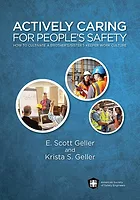
E. Scott Geller, Ph.D., is Alumni Distinguished Professor, Center for Applied Behavior Systems, Virginia Tech, and senior partner with Safety Performance Solutions, Blacksburg, VA. For more information visit www.safetyperformance.com. "Actively Caring for People's Safety: How to cultivate a brother’s/sister’s keeper work culture," co-authored by Scott’s daughter Krista, was recently published by ASSE. Scott’s 15-minute TEDX talk on You Tube can be accessed at: https://www.youtube.com/watch?v=7sxpKhIbr0E


Recommended Content

JOIN TODAY
to unlock your recommendations.

Already have an account? Sign In

  • forklift safety

    Exploring the latest technologies in forklift safety

    With more staff and more stock in warehousing now more...
    Workplace Training Strategies
    By: Josh Cramer
  • welding

    All about welder’s flash or arc eye

    A flash burn is a painful inflammation of the cornea,...
    Environmental Health and Safety
  • dangerous jobs

    The 10 most dangerous jobs in the U.S.

    On-the-job deaths have been rising — hitting the highest...
    Government Safety Regulations
    By: Benita Mehta
Manage My Account
  • eMagazine Subscriptions
  • ISHN Newsletter & Other Newsletter Alerts
  • Online Registration
  • Manage My Preferences
  • Subscription Customer Service

More Videos

Sponsored Content

Sponsored Content is a special paid section where industry companies provide high quality, objective, non-commercial content around topics of interest to the ISHN audience. All Sponsored Content is supplied by the advertising company and any opinions expressed in this article are those of the author and not necessarily reflect the views of ISHN or its parent company, BNP Media. Interested in participating in our Sponsored Content section? Contact your local rep!

close
  • man wearing the the Sundström SR200 Full Face Mask Respirator
    Sponsored byOHD

    5 Fit Testing Mistakes That Could Cost You

  • This image shows Magid AcuSpex polarized blue mirrored safety glasses.
    Sponsored byMagid Glove and Safety

    Construction PPE Guide: What Crews Need for Each Task

  • lone worker in confined space
    Sponsored byAlphasense Ltd.

    GET THE LEAD OUT of your Safety Oxygen Sensors!

Popular Stories

SpaceX 7 launch

OSHA Investigating Fatal Fall at SpaceX Starbase

dust explosion

Tennessee OSHA Issues Record $3.1M Fine After Deadly Explosion at Munitions Plant

Worker Impairment

How to Tell When a Co-Worker is Impaired? A Safety Pro’s Challenge

top 10 most dangerous jobs

Poll

Seasonal Readiness

With the federal heat stress prevention rule on the horizon, which area of your safety program needs the most attention?
View Results Poll Archive

Products

Surviving an OSHA Audit A Management Guide, 2nd Edition

Surviving an OSHA Audit A Management Guide, 2nd Edition

See More Products

ISHN Podcasts

Related Articles

  • ASSE

    Hot off the ASSE press: Actively Caring for People’s Safety

    See More
  • Actively Caring for People’s Safety

    4 STEPS to cultivating a brother’s/sister’s keeper culture

    See More
  • actively caring for people, behavior-based safety

    Actively caring for people’s safety

    See More

Related Products

See More Products
  • Top Ten Pitfalls in OSHA Recordkeeping and How to Avoid Them

See More Products

Related Directories

  • American Society of Safety Professionals (ASSP)

    The American Society of Safety Professionals (ASSP) is a global association of occupational safety and health professionals who are dedicated to workplace safety. We provide education, safety standards, advocacy and a professional community that supports our diverse members and the profession.
  • Alliance of Women’s Safety Apparel Manufacturers (AWSAM)

    The Alliance of Women's Safety Apparel Manufacturers is a collection of specialty manufacturers and distributors committed to providing properly designed and fitted PPE for women. Our foundational pillars are Awareness, Access and Advocacy. Our non-profit organization has 12 Founding Members and aligns the needs of women in the workforce and the companies they work for with specialty manufacturers dedicated to providing appropriate PPE for women. The Founding Members of the organization have made great strides in removing barriers to access that have existed for many years and kept women from being equally protected. Together, we create a platform that increases awareness of products made for women, encourages equal access to appropriately fitting PPE, and advocates for the safety of women in the workforce. In the spirit of co-opetition, we collaborate to envision what is next for women in industry as we work side by side to accomplish our mission, increase our impact, and share the journey with everyone seeking to elevate diversity and equality in their workplace.
×

Become a Leader in Safety Culture

Build your knowledge with ISHN, covering key safety, health and industrial hygiene news, products, and trends.

JOIN TODAY
  • RESOURCES
    • Advertise
    • Contact Us
    • Directories
    • Manufacturing Division
    • Store
    • Want More
  • SIGN UP TODAY
    • Create Account
    • eMagazine
    • Newsletters
    • Customer Service
    • Manage Preferences
  • SERVICES
    • Marketing Services
    • Reprints
    • Market Research
    • List Rental
    • Survey/Respondent Access
  • STAY CONNECTED
    • LinkedIn
    • Facebook
    • YouTube
    • X (Twitter)
  • PRIVACY
    • PRIVACY POLICY
    • TERMS & CONDITIONS
    • DO NOT SELL MY PERSONAL INFORMATION
    • PRIVACY REQUEST
    • ACCESSIBILITY

Copyright ©2026. All Rights Reserved BNP Media, Inc. and BNP Media II, LLC.

Design, CMS, Hosting & Web Development :: ePublishing