Of boiled frogs and the unkind mouse
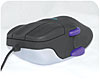
Contrary to the title, this is not an article about weird foods — nor is it about a strain of vicious rodents.
Peter Senge, in his classic book, The Fifth Discipline,1 in a section titled “The Parable Of The Boiled Frog,” describes the need for a systems approach to management of a common problem in business and society. The essence of the parable is that if you try to put a live frog into hot water, it will do everything it can to escape. But if you put the frog into a pot of cold water and put the pot on a heat source, the frog will just sit there until the boiling water kills it.
So it is with many managerial problems: they go unresolved, often ignored, until such time as they reach a critical state, at which time they may be too ingrained to be fixed.
Recent news about the sub-prime lending debacle and the failure of major financial institutions are examples of the boiled-frog syndrome.
Anticipate the boiled frog
So it is with the matter of office ergonomics (OE), specifically that subset of OE that includes human interactions with workstations. Failure to anticipate the boiled-frog phenomena throughout the public and private sectors has surprised managers with a spate of expensive worker injuries and their associated workers’ compensation claims.
The frog was dropped into the pot of cold water in the ’80s with Apple’s introduction of the graphic user interface (GUI)-based Macintosh™ personal computers and introduction of the now-familiar mouse for pointing and clicking operations.
The heat got turned up after the Y2K scare subsided and investment into development of GUI-based, mousing-intensive software applications was seen as an antidote to falling personal productivity.
While many of these new applications were filled with glitz and glamour, few thought to remember that the human anatomy — particularly the hand, wrist, elbow and shoulder — had not evolved in anticipation of the computer mouse.
The mouse takes its toll
In just under 30 years, the increasing demands on body parts, which have evolved slowly over thousands of years, have taken their toll. The repetitive strain injuries (RSI), such as carpal tunnel syndrome (CTS), which were once rarities, have become increasingly common and progressively more expensive in terms of lost productivity, workers’ compensation claims, disability outages, etc. The majority of these can be attributed to “unkind mice.”
Primary causal factors for these sorts of RSI are:
- Improper clicking of poorly-designed commodity mice
- Poor mousing posture, including excessive use of fingertips for clicking
- Software that forces excessive clicking
He said that little thought is typically given in the software engineering process to demands put on human users in terms of amount of time spent using a mouse for pointing and clicking operations. Instead most of the theory and practice of human-computer interaction (HCI)* has not yet reached the application development stages.
As a result, the burden for avoiding the boiled-frog syndrome in mousing-intensive office ergonomic applications rests with professionals in the Industrial Safety and Hygiene (IS&H) arena — and even further levied upon those who are passionate advocates of prevention in preference to remediation.
If the frog dies, then remedial actions fall into the hands of the medical world, the occupational and physical therapists, and, what often is the final arbitrator, to the insurance industry for claims processing.
At a recent symposium in the IS&H field, one of the speakers proclaimed that “…in future sessions we will be devoting more and more time and energy to (IS&H) issues in office ergonomics, particularly computer input.” Of course computer input is only one component of office ergonomics, but it is one that is receiving increased attention, primarily because problems of injuries at the workstation have rapidly become high-visibility costs of doing business in the modern, information-technology predominant world.
The mouse as commodity
Professionals in the IS&H field need to recognize that computer mice that come with purchased desktop computers and workstations are commodity “one-size-fits-all” items.
Users who don’t know better assume the mice are not likely to be “unkind,” and that’s where the problems start. The problems tend to be insidious from the onset. Unless prevented (or caught early), like the boiled-frog syndrome, it’s just a matter of time before the problems become so severe that costly remediation is needed.
There are products on the market that may seem expensive, but are of especially high quality and manifest optimal ergonomic integrity. Investing in such devices, end-users often need to be coached on proper mousing posture, including use of more than just the fingertip for clicking operations.
Some companies make mice that come in both right- and left-handed models and in several sizes. These mice have been scientifically designed and developed, in consultation with a cadre of hand therapists, to conform to the contours of the hand — rather than forcing the hand to conform to the likes of the commodity mice.
Elongated buttons encourage users to use the whole finger, rather than just the fingertip for clicking operations. Also available are central pointing devices that allow end-users to do their mousing with minimal hand movement between their keyboards and the rolling bar that controls the cursor, thus eliminating the reach for the stand-alone mouse, as well as satisfying the desires of many who want “wireless” solutions for traditional mice.
Must the frog expire from hyperthermia? Must the mouse be unkind? We think not.
Reference
1. Senge, Peter M., The Fifth Discipline: The Art & Practice of the Learning Organization, New York: Currency Doubleday, 1990.* HCI or Human-Computer Interaction is growing in awareness and importance, fostered by such professional organizations as HFES, the Human Factors & Ergonomics Society. Currently, much of the HCI work is at the basic research level and is only beginning to appear in journals and textbooks oriented toward applied research and engineering development.
Looking for a reprint of this article?
From high-res PDFs to custom plaques, order your copy today!