Corporate Social Responsibility
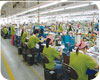
It’s easy to “do the right thing” when times are good. But it’s when times are tough that it counts, and when the truth emerges. The current deepening economic crisis threatens to accelerate to light speed the “race to the bottom” in working conditions that two decades of globalized production has meant for most workers around the world.
But this crisis also has the potential, finally, to recognize and begin addressing the two fatal flaws of Corporate Social Responsibility (CSR) programs: 1) the schizophrenic business model that demands the lowest possible production costs at the same time full compliance with national laws and corporate “codes of conduct;” and 2) the lack of any meaningful participation by workers.
There is good news and bad news as workers, employers and governments around the world attempt to find a way out of the current crisis and to define a “new normal” that can prevent reoccurrences of the same problems.
Relentless search
First, the bad news. Even before the crisis began last fall, transnational corporations (TNCs) and their contractor manufacturers (often Korean, Taiwanese and Hong Kong companies operating throughout the world) continued the relentless search for lower production costs regardless of the attendant social and environmental impacts.
Todd Cheung, the general manager of an export sports shoe factory in China’s Pearl River Delta told the Washington Post in 2008 that “we will either move inland or out of China altogether. It’s not political, it’s economic. A lot of Taiwanese companies are moving to inner provinces because the land is cheap, the labor is cheap and the local governments don’t insist on expensive anti-pollution measures as they do here.”
It’s not just contract factory operators who are moving operations and undermining government efforts at worker protection. Adidas CEO Herbert Hainer told the German business magazine Wirtchaftswoche in July 2008 that “salaries which are set by the government have become too high” in China. “We have already opened our first factory in India. Countries like Laos, Cambodia and Vietnam will be added. Production will also return to former Soviet republics and eastern European countries.”
Contract misbehavior
Since the global economic crisis began in earnest last fall, things have gotten worse still.
In China, there have been dozens of reports of factory managers who literally crawl over the back wall of the plant to waiting cars, fleeing to Hong Kong, while workers are still owed months of wages, and the severance pay set by Chinese law. Managers have abandoned their factories, leaving many of the 20 million unemployed workers without even the back wages needed to return home to the countryside.
Part of the reason for contractor misbehavior, especially in Asia, has been misbehavior on the part of TNCs, many of whom claim to be fully committed to CSR. In addition to abrupt cancellation of contracts (without any payment), the TNCs have demanded longer and longer periods to pay their contractors. Payment periods of 30 to 45 days after delivery have been stretched to 90 and even 120 days. Some TNCs have even imposed a 2-3 percent “settlement fee” on contractors who insist on getting paid on time.
Out of compliance
The United Nation’s all-voluntary, anti-sweatshop initiative “Global Compact” was forced last year to “de-list” 630 companies worldwide who had “signed on” to the compact’s ten principles but were found to be way out of compliance. About 30 percent of these companies — 192 in all — are from China, India and Southeast Asia, with many of them being local contractors for well-known retailers of consumer products in the U.S.
At the same time, there is mounting pressure on governments in the developing world not to “discourage foreign investment” By placing any demands on TNCs or their contractors. During the last six months in China, the government has frozen scheduled increases in minimum wage, reduced or suspended employer payments into the social insurance system, restored export tax credits, and made clear that enforcement of the new 2008 labor laws will be “relaxed” for the foreseeable future.
Beyond reputation control
Now for the good — or at least better — news. There is a growing recognition among leading CSR organizations that the first 15 years has not produced the promised results, and that significant changes will have to be made if CSR is to be anything more than an expensive exercise in “reputational management.”
Last October, Richard Welford, founder of CSR Asia based in Hong Kong, wrote a thoughtful article on “The future for CSR: Issues for the next decade” (www.csr-asia.com, CSR Asia Weekly, V. 4, week 42).
On the current economic and CSR models, Welford noted “we are going to see a deepening of supply chain concerns with first tier audits of factories no longer being enough to satisfy stakeholders worried about sweatshop labour and product safety. This is going to mean new partnerships based on trust rather than inspections and it almost inevitably means the rationalisation of supply chains where large companies with shared CSR values are likely to be preferred over companies that cut corners and find it difficult to comply with the law.”
The importance of workers as part of any genuine effort to improve working conditions in the global economy has been recognized by Dan Rees, director of the UK’s Ethical Trading Initiative (ETI). The ten-year-old ETI is a multi-stakeholder organization involving unions, non-governmental organizations, and 50 transnational companies and their 40,000 suppliers.
Rees recently noted that “CSR in general has become a bit of a victim of its own hype…we have to stop pretending that companies in and of themselves can on their own transform industrial relation in foreign lands.” He also pointed out that “we need much stronger and more robust action on enabling workers to form organizations of their own choosing and to take control into their own hands.”
True empowerment
Workers with the training, skills and authority — as well as paid “release time” from production duties — to conduct facility safety inspections, investigate accidents and exposures, ensure corrective actions are implemented and actually work, and conduct peer training with coworkers are absolutely indispensable for effective OHS programs on a plant level anywhere in the world.
This is all the more true at a time of economic crisis when knowledgeable, active workers can compensate for cutbacks in financial and human resources on a corporate level. In the best of times, safe workplaces are next to impossible without genuinely empowered workers — and are completely impossible at times of economic crisis when downward pressures intensify.
The Chinese word for “crisis” consists of two characters — one is “danger” and the other is “opportunity,” and together they mean “crisis.” The current crisis has painfully obvious dangers for deteriorating working conditions throughout the world. But we also have an opportunity to shift the paradigm to business models that do not fatally undermine workplace safety, and which bring workers to center stage in the efforts to ensure they can go home at night with life and limb intact.
Looking for a reprint of this article?
From high-res PDFs to custom plaques, order your copy today!