ISHN logo
search
cart
facebook twitter linkedin youtube
  • Sign In
  • Create Account
  • Sign Out
  • My Account
ISHN logo
  • NEWS
    • Today's News
    • Global Safety News
    • Government Regulations
  • PRODUCTS
    • Product Innovations
    • Featured Products
  • TOPICS
    • Environmental Health and Safety
    • Facility Safety
    • Workplace Health
    • Occupational Safety
    • PPE
    • More Topics
  • CONSTRUCTION
  • TECHNOLOGY
  • COLUMNS
    • Best Practices
    • Dave Johnson: What’s going on
    • Editorial Comments
    • Leading Safety
  • MULTIMEDIA
    • ISHN Podcast
    • Videos
    • Cold Stress Education Quiz
    • Webinars
    • White Papers
  • MORE
    • Buyer's Guide
    • Newsletters
    • Convention Companion
    • Polls
    • Events
    • ISHN Store
    • Sponsor Insights
  • EMAGAZINE
    • eMagazine
    • Archived Issues
    • Contact
    • Advertise
  • JOIN TODAY!
Today's Safety NewsFacility SafetyWorkplace Health

GAO backs science behind coal dust PEL
August 20, 2012

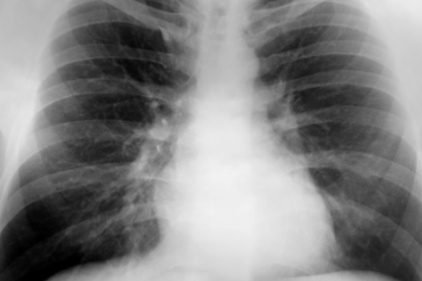
lungsAn Obama administration plan to decrease black lung disease by reducing the amount of respirable dust to which coal miners are exposed has gotten the nod from the United States Government Accountability Office (GAO), which has determined that scientific research behind proposed exposure limits is valid.

In October 2010, the Mine Safety and Health Administration (MSHA)—the federal agency responsible for setting and enforcing mine safety and health standards—proposed revising the existing standard for coal mine dust to lower the permissible exposure limit (PEL)2 from 2.0 milligrams of dust per cubic meter of air (mg/m3) to 1.0 mg/m3.3

Several coal mining companies objected, questioning the evidence and analytical methods used to support the proposed PEL.

House Republicans inserted language into an appropriations bill prohibiting the implementation of the PEL until the GAO evaluated the research used to justify it.

Black lung disease, the term for coal workers’ pneumoconiosis (CWP) and other lung diseases, has killed 75,000 coal miners since 1968, according to NIOSH. The cost of the disease is substantial; since 1970, through the Black Lung Benefits Program, the Department of Labor has paid over $44 billion in benefits to miners (or their survivors) who were totally disabled by respiratory diseases.

“Our evaluation of the reports MSHA used to support its proposal and the key scientific studies on which the reports were based shows that they support the conclusion that lowering the PEL from 2.0 mg/m3 to 1.0 mg/m3 would reduce miners’ risk of disease,” according to a statement by the GAO. “The reports and key studies concluded that miners’ cumulative exposure to coal mine dust at the current PEL over their working lives places them at an increased risk of developing CWP, progressive massive fibrosis, and decreased lung function, among other adverse health outcomes.”

The GAO review found that researchers took "reasonable steps" to mitigate the limitations and biases in the data, such as using multiple x-ray specialists to reduce the risk of misclassifying disease and making adjustments to coal mine dust samples where bias was suspected.

“In addition to addressing the limitations and biases in the data, researchers used appropriate analytical methods to conclude that lowering the existing PEL would decrease miners’ risk of developing black lung disease. For example, in addition to taking steps to precisely estimate a miner’s cumulative exposure, the researchers accounted for several factors in their analyses—such as the age of the miners, the carbon content of the coal (coal rank), and other factors known to be associated with the disease—to better estimate the effect of cumulative exposure to coal mine dust.

“ Further, the other studies we identified generally supported the conclusion that reducing the PEL would reduce miners’ risk of disease.”

KEYWORDS: coal dust health miners

Share This Story

Looking for a reprint of this article?
From high-res PDFs to custom plaques, order your copy today!

Recommended Content

JOIN TODAY
to unlock your recommendations.

Already have an account? Sign In

  • forklift safety

    Exploring the latest technologies in forklift safety

    With more staff and more stock in warehousing now more...
    Workplace Training Strategies
    By: Josh Cramer
  • welding

    All about welder’s flash or arc eye

    A flash burn is a painful inflammation of the cornea,...
    Environmental Health and Safety
  • dangerous jobs

    The 10 most dangerous jobs in the U.S.

    On-the-job deaths have been rising — hitting the highest...
    Occupational Safety
    By: Benita Mehta
Manage My Account
  • eMagazine Subscriptions
  • ISHN Newsletter & Other Newsletter Alerts
  • Online Registration
  • Manage My Preferences
  • Subscription Customer Service

More Videos

Sponsored Content

Sponsored Content is a special paid section where industry companies provide high quality, objective, non-commercial content around topics of interest to the ISHN audience. All Sponsored Content is supplied by the advertising company and any opinions expressed in this article are those of the author and not necessarily reflect the views of ISHN or its parent company, BNP Media. Interested in participating in our Sponsored Content section? Contact your local rep!

close
  • man wearing the the Sundström SR200 Full Face Mask Respirator
    Sponsored byOHD

    5 Fit Testing Mistakes That Could Cost You

  • This image shows Magid AcuSpex polarized blue mirrored safety glasses.
    Sponsored byMagid Glove and Safety

    Construction PPE Guide: What Crews Need for Each Task

  • lone worker in confined space
    Sponsored byAlphasense Ltd.

    GET THE LEAD OUT of your Safety Oxygen Sensors!

Popular Stories

SpaceX 7 launch

OSHA Investigating Fatal Fall at SpaceX Starbase

dust explosion

Tennessee OSHA Issues Record $3.1M Fine After Deadly Explosion at Munitions Plant

Worker Impairment

How to Tell When a Co-Worker is Impaired? A Safety Pro’s Challenge

top 10 most dangerous jobs

Poll

Seasonal Readiness

With the federal heat stress prevention rule on the horizon, which area of your safety program needs the most attention?
View Results Poll Archive

Products

Surviving an OSHA Audit A Management Guide, 2nd Edition

Surviving an OSHA Audit A Management Guide, 2nd Edition

See More Products

ISHN Podcasts

Related Articles

  • GAO report supports science behind black lung rule

    See More
  • work boots

    The science behind workboots

    See More
  • GOP tries to block coal dust rule

    See More

Related Products

See More Products
  • 1119010160.jpg

    Guidelines for Combustible Dust Hazard Analysis

  • 9781482217148.jpg

    Fall Prevention and Protection: Principles, Guidelines, and Practices

See More Products

Related Directories

  • Scientific Dust Collectors

    Scientific Dust Collectors (SDC) began in 1981 when our first patent for improving filter cleaning was issued. Our patented UniFlow Supersonic Nozzle -based cleaning system is where it all starts. Combined with our High Side Inlets, Wide Filter Spacing, and Inlet Baffling, we are able to guarantee performance, efficiency, and filter life. ASHRAE 199 Test Lab on site.
×

Become a Leader in Safety Culture

Build your knowledge with ISHN, covering key safety, health and industrial hygiene news, products, and trends.

JOIN TODAY
  • RESOURCES
    • Advertise
    • Contact Us
    • Directories
    • Manufacturing Division
    • Store
    • Want More
  • SIGN UP TODAY
    • Create Account
    • eMagazine
    • Newsletters
    • Customer Service
    • Manage Preferences
  • SERVICES
    • Marketing Services
    • Reprints
    • Market Research
    • List Rental
    • Survey/Respondent Access
  • STAY CONNECTED
    • LinkedIn
    • Facebook
    • YouTube
    • X (Twitter)
  • PRIVACY
    • PRIVACY POLICY
    • TERMS & CONDITIONS
    • DO NOT SELL MY PERSONAL INFORMATION
    • PRIVACY REQUEST
    • ACCESSIBILITY

Copyright ©2026. All Rights Reserved BNP Media, Inc. and BNP Media II, LLC.

Design, CMS, Hosting & Web Development :: ePublishing