Gas detection advances eliminate worker excuses
Early methods: canaries, candles & oil lamps
In the late 1700s, gas detection was unheard of. It was believed that mine explosions were the result of unsafe conditions throughout the industry, but with no scientific proof, the only clear indication of this was the continued loss of human life within the mine. Regardless if it was one death or many deaths at any given time, the need for some type of gas detection was becoming clear. But with no insight into what was causing the explosions, it was difficult to begin to identify unsafe conditions and train miners on the gas hazards to be aware of.
One of the earliest methods of gas detection was the use of canaries. They were used because they are more susceptible than humans to low oxygen atmospheres and methane gas, and thought to be a more acceptable sacrifice than human life. Depending on how the canary reacted in its cage, the miner would know if the atmosphere was toxic. For example, a “passed out” canary was a sign that a hazardous gas was present. If the canary was “going crazy,” that was an indication of low oxygen atmospheres.
Another early method of gas detection was the use of candles, which were also a valuable source of light within the mines. If you’ve heard anything about the use of candles in a mine, you would know that when a candle burned brighter, methane was present. If the candle flame was low and ready to burn out, a lack of oxygen was present. With the many stories about miners being killed due to lack of oxygen, we know that they unfortunately did not know the facts about candles and gases. Candles were even deemed unsafe in mines with large amounts of gas present. Open flame candles were able to be used in less gassy mines. Mines began to be identified as either “open-light” or “closed-light” depending on whether the mines were considered non-gassy or gassy. In less gassy mines, open flame candles could be used. In mines that were classified as “closed-light,” it was recommended to use an electric light. The electric light was not well received due to poor lighting, weight of the battery, and leakage of the battery. Miners opposed the use of battery cap lamps because they believed that the ventilation would be neglected in the mines since there were no open flames.
In the early 1800s, the introduction of the oil flame safety lamp provided means to detecting methane and low oxygen levels in mines. This was an enclosed oil lamp, providing protection via a glass sleeve and flame arrestor. Just like a candle, the high flame was the result of methane being present and a low flame represented the low oxygen levels. This was a big leap from open-flamed candles on a hat.
Gas sensors debut & evolve
In the early 1900s, four explosions that killed more than 600 miners prompted the U.S. government to focus efforts and study safety in the mining industry. The earlier studies focused mainly on causes of explosions and how to prevent them. There was a common belief that methane/air concentrations would accumulate in areas regardless of the amount of air present. It was believed if the atmosphere was hazardous, ventilation or air flow would somehow help eradicate that explosive atmosphere. Mechanical fans were often used to help with the ventilation of hazardous gases and air flow.
One of the initial outcomes of this research was the introduction of catalytic combustible sensors (LEL) in the late 1920s. They were developed as a means for the oil and gas industries to prevent explosions in storage tanks. The technology, called the wheat-stone bridge, burns or oxidizes the gases, causing a change in temperature which increases the resistance to the platinum wire. The hotter temperature was an indication that more explosive gas was present. The first LEL monitors were bulky, so they were not considered portable. As time went on and with improved technologies, the units became smaller and more easily portable. This began the era when all of the advancements in gas detection were implemented into portable instruments.
In the late 1950s, machine-mounted detectors were being developed to provide continuous monitoring of methane in the mine. These monitors were used to evaluate the ventilation effectiveness for methane control and for governmental compliance. As you can imagine, these monitors were considered ‘hi-tech’ at
the time.
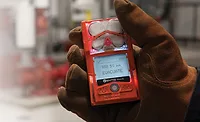
In 1969, the first oxygen and LEL portable multi-gas meter was introduced, providing the capabilities to detect two different gas types with one unit. This was also when the first internal pump was implemented instead of the external hand aspirator. Skipping ahead 10 years to 1979, the first four-gas portable instrument with audible alarms was introduced. At this point, most instruments being designed were portable with the capability of detecting up to four gases.
Embrace advanced technologies
Today, instruments are more portable, affordable and have advanced technologies. Unfortunately, there are companies that still do not want to upgrade equipment because their older equipment is still functional. By choosing not to embrace newer technologies, maintenance costs of the older equipment increases and further, companies miss out on opportunities to keep their workers safer.
No matter the industry, some technologies are embraced more quickly than others. As you can see, gas detection has come a long way since its inception but generally, these technologies have been embraced more slowly. The statement, “This is how we’ve always done it,” cannot be acceptable anymore if we are looking to reduce injury rates and eliminate death in the workplace completely. All workers, from the health and safety directors to the instrument users,
should be impatient in the evolution of gas detection and demand those technologies that will keep them safer. When companies with strong safety cultures regularly seek out the latest gas detection technologies, their employees will be kept safer and will go home to their families at the end of each day.
Looking for a reprint of this article?
From high-res PDFs to custom plaques, order your copy today!