ISHN logo
search
cart
facebook twitter linkedin youtube
  • Sign In
  • Create Account
  • Sign Out
  • My Account
ISHN logo
  • NEWS
    • Today's News
    • Global Safety News
    • Government Regulations
  • PRODUCTS
    • Product Innovations
    • Featured Products
  • TOPICS
    • Environmental Health and Safety
    • Facility Safety
    • Workplace Health
    • Occupational Safety
    • PPE
    • More Topics
  • CONSTRUCTION
  • TECHNOLOGY
  • COLUMNS
    • Best Practices
    • Dave Johnson: What’s going on
    • Editorial Comments
    • Leading Safety
  • MULTIMEDIA
    • ISHN Podcast
    • Videos
    • Cold Stress Education Quiz
    • Webinars
    • White Papers
  • MORE
    • Buyer's Guide
    • Newsletters
    • Convention Companion
    • Polls
    • Events
    • ISHN Store
    • Sponsor Insights
  • EMAGAZINE
    • eMagazine
    • Archived Issues
    • Contact
    • Advertise
  • JOIN TODAY!
Today's Safety NewsEnvironmental Health and SafetyColumnsSafety Industry White PapersWorkplace Training Strategies

Breaking the chains of conformity

Don’t follow the ignorance of the crowd

By Dr. John Kello
July 9, 2013
Many of us, if not most, like to see ourselves as independent-minded, willing to stand up for what we believe, not automatically going along with the crowd. But the social need to fit in and be part of the group makes conformity highly likely, even in situations where individuals protest that they are non-conformists.

Research in social psychology reveals again and again that people are much more influenced by the presence of others than they expect. And that influence can be surprisingly negative.

Some of the best known, and most amazing, experiments conducted in the history of behavioral science were devised and carried out by the late Stanley Milgram. In the 1970s, he led participants in his studies to believe that they were delivering extremely painful, even debilitating electric shocks to other participants. In a rigged “learning experiment”, when a “learner” participant in another room signaled an incorrect response in a verbal memory task, the “teacher” participant was to press a button which would deliver to the learner a shock, and progressively increase the level of the shock, step by step, to a maximum of 450 volts for incorrect responses. Of course no actual shocks were ever delivered, and the learner was in cahoots with the experimenter. The point was, the teacher was the only true subject in this ruse, and thought that he/she was blasting “the guy in the other room.”                                         

Feeling less responsible

If you are in the presence of others, and see a potentially hazardous condition, or potentially unsafe acts, or a near-miss, will you speak up? What if your boss says “don’t worry about it – it’s OK...”? Those in the EHS community are likely to say they would speak up, and expect that any/all workers in their organization seeing the same conditions or behaviors would do so as well. But either of two group phenomena will likely kick in, actually reducing the likelihood that an individual would in fact speak up.

First, in the presence of others, any individual feels less personal responsibility to act, as a function of the number of others present (the so-called “diffusion of responsibility”). The more of us who are there, the less personal responsibility any of us feels.

The other factor is called “pluralistic ignorance.” We look around. Are others taking risks seriously?  Some strong-willed individuals buck peer pressure and show the courage to be that “stand up” guy. But they are a small percentage. Like it or not (and probably not), research clearly shows most of us go along with the group, don’t speak up, and in the EHS context, make it more likely that an accident can occur.

How far will you fall?

I am struck by the number of accidents that happen in plain view of others, who do not speak up to correct the hazardous condition or to stop the unsafe behavior. The invisible social-psychological forces that make us fall in line are powerful indeed. But they are not worth dying for.

These pressures to conform, to obey when we know it’s not right, to feel less personal responsibility, to judge others’ inaction as evidence that it must be OK, all can be overcome.

One of the most powerful ways of inoculating people against the inertial effects of social pressure, is simply to teach them about such research. Tell a class about the diffusion of responsibility and pluralistic ignorance. Then expose them to an ambiguous emergency situation just outside of class (such as someone lying on the ground), and watch them all spring into action!

In the Milgram experiments, the most effective technique for reducing  obedience was to have  members of a “group of teachers” (who were in cahoots with the experimenter) refuse at some point to go on. Having social support for disobeying the demands of the experimenter so weakened the invisible but powerful bonds of social pressure that the vast majority of true subjects (as many as 90 percent) also refused to keep administering shocks (so they thought) to the learner.

If one person stands up and breaks the chains of conformity, bad outcomes can be avoided. The lessons for those of us in the EHS community and those we support in our daily work are very clear. 

KEYWORDS: behavior based safety

Share This Story

Looking for a reprint of this article?
From high-res PDFs to custom plaques, order your copy today!

Dr. John Kello is a Professor Emeritus of Industrial-Organizational Psychology at Davidson College, with a Graduate Faculty Associate appointment to the Doctoral Program in Organizational Science at the University of North Carolina-Charlotte. Additionally, John is President and Senior Consultant with John E. Kello & Associates, Inc., an Organization Development (OD) consulting firm which serves a national list of clients. Visit www.kelloandassociates.com


Recommended Content

JOIN TODAY
to unlock your recommendations.

Already have an account? Sign In

  • forklift safety

    Exploring the latest technologies in forklift safety

    With more staff and more stock in warehousing now more...
    Facility Safety
    By: Josh Cramer
  • welding

    All about welder’s flash or arc eye

    A flash burn is a painful inflammation of the cornea,...
    Environmental Health and Safety
  • dangerous jobs

    The 10 most dangerous jobs in the U.S.

    On-the-job deaths have been rising — hitting the highest...
    Government Safety Regulations
    By: Benita Mehta
Manage My Account
  • eMagazine Subscriptions
  • ISHN Newsletter & Other Newsletter Alerts
  • Online Registration
  • Manage My Preferences
  • Subscription Customer Service

More Videos

Sponsored Content

Sponsored Content is a special paid section where industry companies provide high quality, objective, non-commercial content around topics of interest to the ISHN audience. All Sponsored Content is supplied by the advertising company and any opinions expressed in this article are those of the author and not necessarily reflect the views of ISHN or its parent company, BNP Media. Interested in participating in our Sponsored Content section? Contact your local rep!

close
  • man wearing the the Sundström SR200 Full Face Mask Respirator
    Sponsored byOHD

    5 Fit Testing Mistakes That Could Cost You

  • This image shows Magid AcuSpex polarized blue mirrored safety glasses.
    Sponsored byMagid Glove and Safety

    Construction PPE Guide: What Crews Need for Each Task

  • lone worker in confined space
    Sponsored byAlphasense Ltd.

    GET THE LEAD OUT of your Safety Oxygen Sensors!

Popular Stories

SpaceX 7 launch

OSHA Investigating Fatal Fall at SpaceX Starbase

Worker Impairment

How to Tell When a Co-Worker is Impaired? A Safety Pro’s Challenge

psychology in the workplace

Most Workplaces Measure Psychological Safety, Ignoring Psychosocial Risks

top 10 most dangerous jobs

Poll

Seasonal Readiness

With the federal heat stress prevention rule on the horizon, which area of your safety program needs the most attention?
View Results Poll Archive

Products

Surviving an OSHA Audit A Management Guide, 2nd Edition

Surviving an OSHA Audit A Management Guide, 2nd Edition

See More Products

ISHN Podcasts

Related Articles

  • ISEA announces public review of conformity assessment standard

    See More
  • Legal issues

    Breaking the chain of “substantial continuity” — Tenth Circuit clarifies test for repeat OSHA violations

    See More
  • Burnout raises the risks

    How to Reduce the Risk of Burnout

    See More

Related Products

See More Products
  • 1119906652.webp

    Alive and Well at the End of the Day: The Supervisor's Guide to Managing Safety in Operations, 2E

  • fearless world.jpg

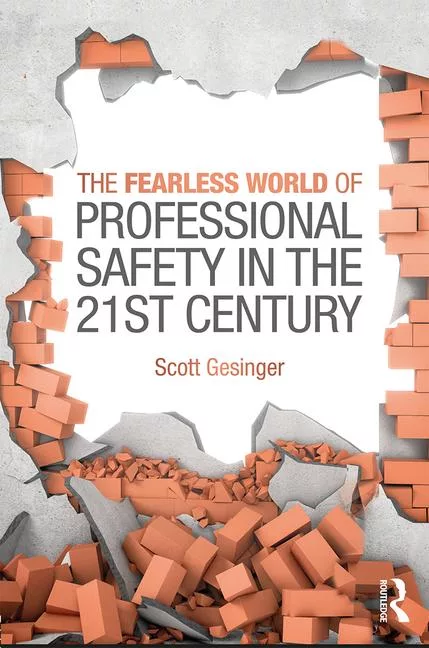
    The Fearless World of Professional Safety in the 21st Century

See More Products

Related Directories

  • Association of American Railroads (AAR)

    Since 1934, AAR has been the leading voice for the U.S. freight rail industry, driving policy, research, and technology to enhance safety and efficiency. Freight rail is a cornerstone of the U.S. economy, powering industries, facilitating trade, and supporting some of America’s safest and highest paid jobs—all while operating on a privately funded infrastructure that eases congestion on taxpayer-funded roads. From bulk commodities to intermodal freight, rail ensures the seamless movement of goods nationwide, serving as a vital link in global supply chains.
×

Become a Leader in Safety Culture

Build your knowledge with ISHN, covering key safety, health and industrial hygiene news, products, and trends.

JOIN TODAY
  • RESOURCES
    • Advertise
    • Contact Us
    • Directories
    • Manufacturing Division
    • Store
    • Want More
  • SIGN UP TODAY
    • Create Account
    • eMagazine
    • Newsletters
    • Customer Service
    • Manage Preferences
  • SERVICES
    • Marketing Services
    • Reprints
    • Market Research
    • List Rental
    • Survey/Respondent Access
  • STAY CONNECTED
    • LinkedIn
    • Facebook
    • YouTube
    • X (Twitter)
  • PRIVACY
    • PRIVACY POLICY
    • TERMS & CONDITIONS
    • DO NOT SELL MY PERSONAL INFORMATION
    • PRIVACY REQUEST
    • ACCESSIBILITY

Copyright ©2026. All Rights Reserved BNP Media, Inc. and BNP Media II, LLC.

Design, CMS, Hosting & Web Development :: ePublishing