ISHN logo
search
cart
facebook twitter linkedin youtube
  • Sign In
  • Create Account
  • Sign Out
  • My Account
ISHN logo
  • NEWS
    • Today's News
    • Global Safety News
    • Government Regulations
  • PRODUCTS
    • Product Innovations
    • Featured Products
  • TOPICS
    • Environmental Health and Safety
    • Facility Safety
    • Workplace Health
    • Occupational Safety
    • PPE
    • More Topics
  • CONSTRUCTION
  • TECHNOLOGY
  • COLUMNS
    • Best Practices
    • Dave Johnson: What’s going on
    • Editorial Comments
    • Leading Safety
  • MULTIMEDIA
    • ISHN Podcast
    • Videos
    • Cold Stress Education Quiz
    • Webinars
    • White Papers
  • MORE
    • Buyer's Guide
    • Newsletters
    • Convention Companion
    • Polls
    • Events
    • ISHN Store
    • Sponsor Insights
  • EMAGAZINE
    • eMagazine
    • Archived Issues
    • Contact
    • Advertise
  • JOIN TODAY!
Today's Safety NewsEnvironmental Health and SafetyColumnsSafety Industry White PapersOSHA Workplace Training Strategies

Who runs the rule mill?

The best bet is when workers create the rules

By Timothy Ludwig Ph.D.
November 4, 2013
Rules, they are so easy to make.  So easy that safety offices are often accused of being a “Rule Mill” because they continuously produce their rule-of-the month.  As easy as rules are to make, they are just as hard to enforce.  Rules are designed to keep us safe and are made by well-meaning folks thinking through potential risks in the face of hazards.  Rules are good for all of us… so why do people break the rules when those rules are there to protect them?

 I guess the more pertinent question is “how do we get people to follow the rules?”

The mill is always the worst

A good friend of mine and I were traveling around the world assessing the safety culture of mining sites within a gold mining company.  We saw a lot of variance between one site and another within this company, but one consistent finding was that the “mill” always had the worst safety record associated with the most challenged safety culture.

For those of you unacquainted with mining, there are two main areas of operation.  You have the folks that drive big trucks down into holes that have been dug out through explosives and shovels.  You can literally see the hazards as you ride down into these pits and respect the rules that keep you from being buried, crushed, or otherwise blown to bits. 

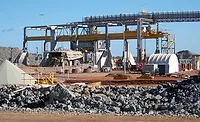
After the earth is exposed, dug, and brought to the surface, it is dropped on a conveyer and carried to the mill where huge grinding machines tear up the rock until its processed into the end product.  So the mill consists mostly of operators and maintenance folks doing dirty loud work.  And brother, when equipment in the mill goes down, all production stops and there is hell to pay.

One of the questions we were asking as we conducted confidential interviews of employees was “do your fellow employees follow the safety rules?”  The answer from the pit was generally “yes” with some complaints about how the rules slow down production or are a pain in the ass.  However, without fail, across the world, the answer from the mill was basically “no.” 

What a surprise…

Until we visited a site outside of Perth, Australia where mining is a way of life.  The pit employees painted a picture of a decent safety culture.  Our afternoon was to be with the mill employees.

We found ourselves across a lunch table from five gentlemen and we pulled out their injury and survey data.  To our amazement, they had one of the best safety records we had seen in our travels.  Their safety culture survey data was equally amazing.  Compared to the company norms, they were in the top percentile in employee perceptions of everything safety culture. 

My friend and I were skeptical when we asked our stock question, “Do your fellow employees follow the safety rules?”  Their answer: “YES”.  

“Really?”

 “Yes.” 

“You know this is confidential and no one can get in trouble, you can tell the truth.”

“Yes.” 

True story; they looked at us with straight faces telling us something we knew was highly unlikely for a mill setting.

Let’s get real

Finally my friend threw in our cards, leaned forward and said accusingly, “We’ve been to almost every one of your company’s sites, all over the world, and no one, not one person interviewed from the mill said they always followed the company safety rules. Yet… here you are looking us in the eyes telling us that you do?  Why should we believe you? 

I still remember their faces expressing a touch of puzzlement until one of them ever-so-calmly replied “Why would we break the rules?  We created them.”

Dramatic pause.

They went on to tell us of how their safety manager would meet with groups of them quarterly, 30 minutes a shot, and help them create and revise rules around the mill’s hazards.  In the end we found out their rules were more stringent than those we saw at other sites… but, in their case, the rules were followed and the workforce was safer; the data showed it.

Rules turn us into police officers easily compelled to run around to “catch” people.  I’ve seen safety managers and operations supervisors intoxicated by this power.  But when I think about that crew in the mill exactly on the other side of the globe from my home, I think a new approach to safety rules are in order. 

And the answer is as simple as asking a question.

KEYWORDS: behavior based safety rulemaking safety professionals

Share This Story

Looking for a reprint of this article?
From high-res PDFs to custom plaques, order your copy today!

Timothy Ludwig’s website is Safety-Doc.com where you can read more safety culture stories and contribute your own. Dr. Ludwig consults and serves as a commissioner for Behavioral Safety Accreditation at the non-profit Cambridge Center for Behavioral Studies (CCBS: behavior.org) and teaches behavioral psychology at Appalachian State University, in Boone, NC. If you want Tim to share his stories at your next safety event you can contact him at TimLudwig@Safety-Doc.com.

Recommended Content

JOIN TODAY
to unlock your recommendations.

Already have an account? Sign In

  • forklift safety

    Exploring the latest technologies in forklift safety

    With more staff and more stock in warehousing now more...
    Workplace Training Strategies
    By: Josh Cramer
  • welding

    All about welder’s flash or arc eye

    A flash burn is a painful inflammation of the cornea,...
    Environmental Health and Safety
  • dangerous jobs

    The 10 most dangerous jobs in the U.S.

    On-the-job deaths have been rising — hitting the highest...
    Government Safety Regulations
    By: Benita Mehta
Manage My Account
  • eMagazine Subscriptions
  • ISHN Newsletter & Other Newsletter Alerts
  • Online Registration
  • Manage My Preferences
  • Subscription Customer Service

More Videos

Sponsored Content

Sponsored Content is a special paid section where industry companies provide high quality, objective, non-commercial content around topics of interest to the ISHN audience. All Sponsored Content is supplied by the advertising company and any opinions expressed in this article are those of the author and not necessarily reflect the views of ISHN or its parent company, BNP Media. Interested in participating in our Sponsored Content section? Contact your local rep!

close
  • man wearing the the Sundström SR200 Full Face Mask Respirator
    Sponsored byOHD

    5 Fit Testing Mistakes That Could Cost You

  • This image shows Magid AcuSpex polarized blue mirrored safety glasses.
    Sponsored byMagid Glove and Safety

    Construction PPE Guide: What Crews Need for Each Task

  • lone worker in confined space
    Sponsored byAlphasense Ltd.

    GET THE LEAD OUT of your Safety Oxygen Sensors!

Popular Stories

SpaceX 7 launch

OSHA Investigating Fatal Fall at SpaceX Starbase

Worker Impairment

How to Tell When a Co-Worker is Impaired? A Safety Pro’s Challenge

psychology in the workplace

Most Workplaces Measure Psychological Safety, Ignoring Psychosocial Risks

top 10 most dangerous jobs

Poll

Seasonal Readiness

With the federal heat stress prevention rule on the horizon, which area of your safety program needs the most attention?
View Results Poll Archive

Products

Surviving an OSHA Audit A Management Guide, 2nd Edition

Surviving an OSHA Audit A Management Guide, 2nd Edition

See More Products

ISHN Podcasts

Related Articles

  • Workers help craft the best safety rules

    Workers help craft the best safety rules

    See More
  • Chemical, electrical, mechanical: Hair product plant runs the gamut of hazards

    See More
  • Trolling for rule-breaking behavior

    See More

Related Products

See More Products
  • 1119906652.webp

    Alive and Well at the End of the Day: The Supervisor's Guide to Managing Safety in Operations, 2E

  • fearless world.jpg

    The Fearless World of Professional Safety in the 21st Century

  • 9781498773416.jpg

    The Legal Aspects of Industrial Hygiene and Safety

See More Products

Related Directories

  • The Back School

    The Back School facilitates reducing work-related injuries; increasing employee productivity, safety, efficiency and job satisfaction; and reducing absenteeism.
×

Become a Leader in Safety Culture

Build your knowledge with ISHN, covering key safety, health and industrial hygiene news, products, and trends.

JOIN TODAY
  • RESOURCES
    • Advertise
    • Contact Us
    • Directories
    • Manufacturing Division
    • Store
    • Want More
  • SIGN UP TODAY
    • Create Account
    • eMagazine
    • Newsletters
    • Customer Service
    • Manage Preferences
  • SERVICES
    • Marketing Services
    • Reprints
    • Market Research
    • List Rental
    • Survey/Respondent Access
  • STAY CONNECTED
    • LinkedIn
    • Facebook
    • YouTube
    • X (Twitter)
  • PRIVACY
    • PRIVACY POLICY
    • TERMS & CONDITIONS
    • DO NOT SELL MY PERSONAL INFORMATION
    • PRIVACY REQUEST
    • ACCESSIBILITY

Copyright ©2026. All Rights Reserved BNP Media, Inc. and BNP Media II, LLC.

Design, CMS, Hosting & Web Development :: ePublishing