ISHN logo
search
cart
facebook twitter linkedin youtube
  • Sign In
  • Create Account
  • Sign Out
  • My Account
ISHN logo
  • NEWS
    • Today's News
    • Global Safety News
    • Government Regulations
  • PRODUCTS
    • Product Innovations
    • Featured Products
  • TOPICS
    • Environmental Health and Safety
    • Facility Safety
    • Workplace Health
    • Occupational Safety
    • PPE
    • More Topics
  • CONSTRUCTION
  • TECHNOLOGY
  • COLUMNS
    • Best Practices
    • Dave Johnson: What’s going on
    • Editorial Comments
    • Leading Safety
  • MULTIMEDIA
    • ISHN Podcast
    • Videos
    • Cold Stress Education Quiz
    • Webinars
    • White Papers
  • MORE
    • Buyer's Guide
    • Newsletters
    • Convention Companion
    • Polls
    • Events
    • ISHN Store
    • Sponsor Insights
  • EMAGAZINE
    • eMagazine
    • Archived Issues
    • Contact
    • Advertise
  • JOIN TODAY!
ColumnsSafety & Health Best Practices

Age-friendly safety strategies

By Dan Markiewicz MS, CIH, CSP, RMP
June 2, 2014
One in every five American workers will be over the age of 65 by 2015, and one in four Americans will be over 55 by 2020, according to NIOSH’s webpage “Healthy Aging at Work” established in March 2014.1

So what’s the concern?

Normal physiological and biological change occurs as people age.  Strength begins to decline at age 30.  Eye sight and hearing diminish. Reflexes slow. Coordination slows. Metabolism slows. Oxygen utilization is less efficient. Bladder control is less efficient. Bones are more brittle. The immune system is weaker. Chronic impairments e.g. arthritis increase. Stability is less. 

Old-age conditions may increase the likelihood of injury, injury severity and recovery time. The leading cause of fatalities for older U.S. workers is crashes on public highways. The second leading cause for fatalities among older workers is falls.  

Ideal worker

Australian employers believe (2013 research) that an “ideal worker” is one that is “young, male, and unattached.”2 U.S. employers have historically embraced this ideal worker profile, too, with the added characteristics of being healthy and devoted to the job – think Mad Men. 

Risk management

Older workers are a risk.  Before you think negative, under ISO 31000 risk management “risk” may also be positive.  There are positives to older workers, such as leadership, that may offset injury risk. Safety pros may be eager to jump into injury risk assessment and treatment for older workers. But under ISO 31000, “context” precedes and is integral throughout risk assessment.

NIOSH’s new webpage for older worker safety is timely but the topic was defined with guidance for action a decade ago in the National Academies Press book (2004) “Health and Safety Needs of Older Workers” (2004).3 Visit the link in the references below to download a free PDF of the book.  Read the book to help frame risk context for older workers.

Reasonable accommodations

NIOSH provides 10 strategies for an “age-friendly workplace.”  You can boil these strategies down into the key risk treatment for older workers: Employers must voluntarily provide reasonable safety accommodations, using hierarchy of controls, on an individual basis to address normal conditions of aging. 

Many voluntary workplace safety accommodations for older workers are “easy to make and inexpensive,” according to NIOSH.

Many employers believe safety accommodation means transferring a worker to a desk job or providing light duty work, such as counting parts in inventory. This happens because HR managers, who may not be familiar the principle of hierarchy of controls, establish accommodations, usually within the context of workers’ compensation return-to-work programs, rather than the safety pro.

In reality, many employers are reluctant to change workplace conditions and practices unless compelled, particularly by law, to act. Reasonable accommodations for older workers are beyond OSHA requirements and old-age conditions often do not rise to the level of impairments considered disabilities required to be addressed within the Americans with Disabilities Act Amendment Act (ADAAA).  

The good Trojan horse

There is an interesting solution to the dilemma of keeping older workers safe in their current job.  The solution is to advocate for reasonable accommodation rights for a class of predominately young workers. Reasonable safety accommodations for a pregnant worker are nearly identical to the accommodation needs of the older worker.

Since December 2012, local laws that impact annually more than one-half million pregnant workers — or nearly one in every five pregnant workers in the U.S. — have been enacted.  The objective: provide reasonable accommodations to keep the pregnant worker safe at her current job. 

Employers must respond to trends and stakeholder interests. In March 2014, Walmart — the U.S.’s largest employer — changed its policy on pregnant workers. The policy now goes beyond current law to accommodate pregnant workers’ safety needs because Walmart says “it’s the right thing to do.”4

Other are likely to follow Walmart’s lead, even those outside the retail industry. Reasonable workplace safety accommodations which were a rare in the past will become more common in the future. 

Do the right thing

Safety pros won’t achieve the highest level of performance locked in an OSHA compliance mindset.  And when safety pros venture beyond OSHA, risk management strategies must focus on ISO 31000 context before they embark on risk assessment and risk treatment.  The ADEA prohibits employer age discrimination beginning at 40 years. The risk context that impacts nearly all safety pros is that they are now or will be an older worker and may eventually need a reasonable safety accommodation themselves.

Again, reasonable safety accommodations are generally beyond OSHA requirements and must be tailored to individual needs rather than to the single class of “worker.”  Safety pros must understand the normal physiological and biological changes that occur with aging but not prejudge an “old” worker’s abilities and willingness to work. Age is just a number. Many older workers will not require an individualized safety accommodation. The older worker themselves should initiate the process to implement accommodations.

Under the good Trojan Horse strategy, laws are effective now in California, Maryland, Philadelphia, New Jersey, New York City, Central Falls (Rhode Island) and West Virginia (effective June 4, 2014).  If your workplace is in one of these locations, initiate a discussion with your employer to determine how reasonable accommodation requirements may be voluntarily applied to the safety needs of older workers. If your workplace is located in New York, Iowa, Wisconsin, Pennsylvania, Georgia, Illinois, Missouri, Minnesota, or Providence, Rhode Island, be aware that similar legislation is pending


References:
1. http://www.cdc.gov/niosh/topics/healthyagingatwork/
2. http://www.kronos.com.au/pr/australian-employers-fixated-on-ideal-worker-profile.aspx
3. http://www.nap.edu/openbook.php?record_id=10884
4. http://www.businessweek.com/articles/2014-04-07/walmart-swears-its-new-pregnancy-policy-has-nothing-to-do-with-outside-pressure
KEYWORDS: aging workforce baby boomers ergonomics risk assessments

Share This Story

Looking for a reprint of this article?
From high-res PDFs to custom plaques, order your copy today!

Dan Markiewicz, MS, CIH, CSP, RMP, is an independent environmental health and safety consultant and a long-time columnist. He can be reached at (419) 356-3768 or by email at dan.markiewicz@gmail.com.

Recommended Content

JOIN TODAY
to unlock your recommendations.

Already have an account? Sign In

  • forklift safety

    Exploring the latest technologies in forklift safety

    With more staff and more stock in warehousing now more...
    Facility Safety
    By: Josh Cramer
  • welding

    All about welder’s flash or arc eye

    A flash burn is a painful inflammation of the cornea,...
    Environmental Health and Safety
  • dangerous jobs

    The 10 most dangerous jobs in the U.S.

    On-the-job deaths have been rising — hitting the highest...
    Construction Industry Safety and Health
    By: Benita Mehta
Manage My Account
  • eMagazine Subscriptions
  • ISHN Newsletter & Other Newsletter Alerts
  • Online Registration
  • Manage My Preferences
  • Subscription Customer Service

More Videos

Sponsored Content

Sponsored Content is a special paid section where industry companies provide high quality, objective, non-commercial content around topics of interest to the ISHN audience. All Sponsored Content is supplied by the advertising company and any opinions expressed in this article are those of the author and not necessarily reflect the views of ISHN or its parent company, BNP Media. Interested in participating in our Sponsored Content section? Contact your local rep!

close
  • man wearing the the Sundström SR200 Full Face Mask Respirator
    Sponsored byOHD

    5 Fit Testing Mistakes That Could Cost You

  • This image shows Magid AcuSpex polarized blue mirrored safety glasses.
    Sponsored byMagid Glove and Safety

    Construction PPE Guide: What Crews Need for Each Task

  • lone worker in confined space
    Sponsored byAlphasense Ltd.

    GET THE LEAD OUT of your Safety Oxygen Sensors!

Popular Stories

SpaceX 7 launch

OSHA Investigating Fatal Fall at SpaceX Starbase

Worker Impairment

How to Tell When a Co-Worker is Impaired? A Safety Pro’s Challenge

Automated loading dock equipment

After March 2026 Rivian Death, Safety Managers Reassess Loading Dock Systems Under OSHA's Warehouse Emphasis Program

top 10 most dangerous jobs

Poll

Seasonal Readiness

With the federal heat stress prevention rule on the horizon, which area of your safety program needs the most attention?
View Results Poll Archive

Products

Surviving an OSHA Audit A Management Guide, 2nd Edition

Surviving an OSHA Audit A Management Guide, 2nd Edition

See More Products

ISHN Podcasts

Related Articles

  • Toyota president describes safety strategies to regain consumer trust after recall (2/11)

    See More
  • employee engagement

    Seven safety strategies to re-engage disengaged employees

    See More
  • Elevating construction equipment safety: Strategies that deliver

    See More

Related Products

See More Products
  • safety law.jpg

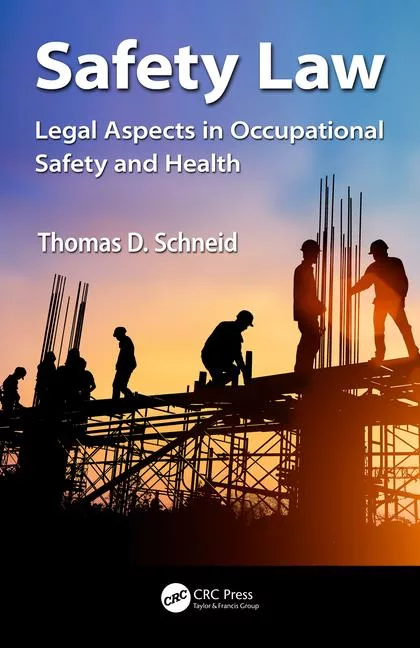
    Safety Law: Legal Aspects in Occupational Safety and Health

  • download (1).jpg

    Safety Rebels Real-World Transformations in Health and Safety

  • 9780367861148.jpg

    LEAD Safety A Practical Handbook for Frontline Supervisors and Safety Practitioners

See More Products

Events

View AllSubmit An Event
  • June 7, 2017

    Ergonomics webinar offered by ORCHSE Strategies

    For the first time ever, ORCHSE Strategies is opening its webinars to the public. Ergonomic Design for a Multi-Generational Workforce Webinar will be led by Josh Kerst, CIE, CSP, on June 7, 2017 from 10-11:30 am.
View AllSubmit An Event

Related Directories

  • Specialized Safety Products

    Protect your workers and stay OSHA-compliant! The Jet-Kleen Series of Personnel Blow-off & De-Dusting Systems is manufactured in the US by Specialized Safety Products and provides safe, economical, and effective removal of residues – such as dust, fiber, water – from people, surfaces, or environments. The Jet-Kleen Series provides a safe, efficient alternative to compressed air, consuming less energy and emitting less noise.
  • Florida Chamber Safety Council

    With vision and strategy guided by a Statewide Leadership Advisory Board, the Florida Chamber Safety Council is creating national standards for workplace safety, implementing first-in-the-nation programs to prevent injuries, reduce operational costs, and improve production, performance, and corporate safety culture.
×

Become a Leader in Safety Culture

Build your knowledge with ISHN, covering key safety, health and industrial hygiene news, products, and trends.

JOIN TODAY
  • RESOURCES
    • Advertise
    • Contact Us
    • Directories
    • Manufacturing Division
    • Store
    • Want More
  • SIGN UP TODAY
    • Create Account
    • eMagazine
    • Newsletters
    • Customer Service
    • Manage Preferences
  • SERVICES
    • Marketing Services
    • Reprints
    • Market Research
    • List Rental
    • Survey/Respondent Access
  • STAY CONNECTED
    • LinkedIn
    • Facebook
    • YouTube
    • X (Twitter)
  • PRIVACY
    • PRIVACY POLICY
    • TERMS & CONDITIONS
    • DO NOT SELL MY PERSONAL INFORMATION
    • PRIVACY REQUEST
    • ACCESSIBILITY

Copyright ©2026. All Rights Reserved BNP Media, Inc. and BNP Media II, LLC.

Design, CMS, Hosting & Web Development :: ePublishing