ISHN logo
search
cart
facebook twitter linkedin youtube
  • Sign In
  • Create Account
  • Sign Out
  • My Account
ISHN logo
  • NEWS
    • Today's News
    • Global Safety News
    • Government Regulations
  • PRODUCTS
    • Product Innovations
    • Featured Products
  • TOPICS
    • Environmental Health and Safety
    • Facility Safety
    • Workplace Health
    • Occupational Safety
    • PPE
    • More Topics
  • CONSTRUCTION
  • TECHNOLOGY
  • COLUMNS
    • Best Practices
    • Dave Johnson: What’s going on
    • Editorial Comments
    • Leading Safety
  • MULTIMEDIA
    • ISHN Podcast
    • Videos
    • Cold Stress Education Quiz
    • Webinars
    • White Papers
  • MORE
    • Buyer's Guide
    • Newsletters
    • Convention Companion
    • Polls
    • Events
    • ISHN Store
    • Sponsor Insights
  • EMAGAZINE
    • eMagazine
    • Archived Issues
    • Contact
    • Advertise
  • JOIN TODAY!
Global Safety NewsWorkplace Health

Ebola Hemorrhagic Fever prevention
August 10, 2014
Medical staff
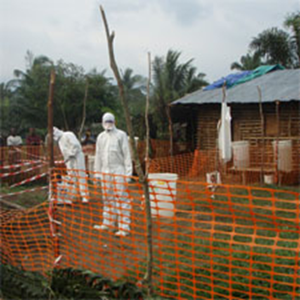
MSF (Médecins Sans Frontières) health staff in protective clothing constructing perimeter for isolation ward.

The prevention of Ebola HF presents many challenges. Because it is still unknown how exactly people are infected with Ebola HF, there are few established primary prevention measures.

When cases of the disease do appear, there is increased risk of transmission within health care settings. Therefore, health care workers must be able to recognize a case of Ebola HF and be ready to employ practical viral hemorrhagic fever isolation precautions or barrier nursing techniques. They should also have the capability to request diagnostic tests or prepare samples for shipping and testing elsewhere.

MSF (Médecins Sans Frontières) health staff in protective clothing constructing perimeter for isolation ward.

Barrier nursing techniques include:

  • wearing of protective clothing (such as masks, gloves, gowns, and goggles)
  • the use of infection-control measures (such as complete equipment sterilization and routine use of disinfectant)
  • isolation of Ebola HF patients from contact with unprotected persons.

The aim of all of these techniques is to avoid contact with the blood or secretions of an infected patient. If a patient with Ebola HF dies, it is equally important that direct contact with the body of the deceased patient be prevented.

CDC, in conjunction with the World Health Organization, has developed a set of guidelines to help prevent and control the spread of Ebola HF. Entitled Infection Control for Viral Hemorrhagic Fevers In the African Health Care Setting, the manual describes how to:

  • recognize cases of viral hemorrhagic fever (such as Ebola HF)
  • prevent further transmission in health care setting by using locally available materials and minimal financial resources.

Source: Centers for Disease Control and Prevention   1600 Clifton Rd. Atlanta, GA 30333, USA
800-CDC-INFO (800-232-4636) TTY: (888) 232-6348 - Contact CDC–INFO

KEYWORDS: health and wellness health care workers infectious disease

Share This Story

Looking for a reprint of this article?
From high-res PDFs to custom plaques, order your copy today!

Recommended Content

JOIN TODAY
to unlock your recommendations.

Already have an account? Sign In

  • forklift safety

    Exploring the latest technologies in forklift safety

    With more staff and more stock in warehousing now more...
    Workplace Training Strategies
    By: Josh Cramer
  • welding

    All about welder’s flash or arc eye

    A flash burn is a painful inflammation of the cornea,...
    Environmental Health and Safety
  • dangerous jobs

    The 10 most dangerous jobs in the U.S.

    On-the-job deaths have been rising — hitting the highest...
    Transportation Safety
    By: Benita Mehta
Manage My Account
  • eMagazine Subscriptions
  • ISHN Newsletter & Other Newsletter Alerts
  • Online Registration
  • Manage My Preferences
  • Subscription Customer Service

More Videos

Sponsored Content

Sponsored Content is a special paid section where industry companies provide high quality, objective, non-commercial content around topics of interest to the ISHN audience. All Sponsored Content is supplied by the advertising company and any opinions expressed in this article are those of the author and not necessarily reflect the views of ISHN or its parent company, BNP Media. Interested in participating in our Sponsored Content section? Contact your local rep!

close
  • man wearing the the Sundström SR200 Full Face Mask Respirator
    Sponsored byOHD

    5 Fit Testing Mistakes That Could Cost You

  • This image shows Magid AcuSpex polarized blue mirrored safety glasses.
    Sponsored byMagid Glove and Safety

    Construction PPE Guide: What Crews Need for Each Task

  • lone worker in confined space
    Sponsored byAlphasense Ltd.

    GET THE LEAD OUT of your Safety Oxygen Sensors!

Popular Stories

SpaceX 7 launch

OSHA Investigating Fatal Fall at SpaceX Starbase

Worker Impairment

How to Tell When a Co-Worker is Impaired? A Safety Pro’s Challenge

psychology in the workplace

Most Workplaces Measure Psychological Safety, Ignoring Psychosocial Risks

top 10 most dangerous jobs

Poll

Seasonal Readiness

With the federal heat stress prevention rule on the horizon, which area of your safety program needs the most attention?
View Results Poll Archive

Products

Surviving an OSHA Audit A Management Guide, 2nd Edition

Surviving an OSHA Audit A Management Guide, 2nd Edition

See More Products

ISHN Podcasts

Related Articles

  • Hand protection vital part of OSHA control and prevention measures to protect workers from Ebola virus

    See More
  • Infection prevention for Ebola patients in U.S. hospitals

    See More
  • New Ebola web page tells how to protect workers

    See More

Related Products

See More Products
  • 9781482217148.jpg

    Fall Prevention and Protection: Principles, Guidelines, and Practices

  • 9781138072824.jpg

    Accident/Incident Prevention Techniques, Second Edition

See More Products

Events

View AllSubmit An Event
  • May 23, 2017

    Zika Virus: An Emerging Infectious Disease, Epidemiology, Risks and Prevention in the Workplace

    Zika Virus: An Emerging Infectious Disease, Epidemiology, Risks and Prevention in the Workplace will present the history and evolution of the Zika Virus including understanding the geographic areas and populations at risk, the epidemiology of the disease, modes of transmission, case definitions, clinical presentation, health effects, surveillance and prevention in the workplace and in the community.
View AllSubmit An Event

Related Directories

  • Crisis Prevention Institute

    CPI equips organizations with training and resources on preventing and de-escalating difficult behavior.
×

Become a Leader in Safety Culture

Build your knowledge with ISHN, covering key safety, health and industrial hygiene news, products, and trends.

JOIN TODAY
  • RESOURCES
    • Advertise
    • Contact Us
    • Directories
    • Manufacturing Division
    • Store
    • Want More
  • SIGN UP TODAY
    • Create Account
    • eMagazine
    • Newsletters
    • Customer Service
    • Manage Preferences
  • SERVICES
    • Marketing Services
    • Reprints
    • Market Research
    • List Rental
    • Survey/Respondent Access
  • STAY CONNECTED
    • LinkedIn
    • Facebook
    • YouTube
    • X (Twitter)
  • PRIVACY
    • PRIVACY POLICY
    • TERMS & CONDITIONS
    • DO NOT SELL MY PERSONAL INFORMATION
    • PRIVACY REQUEST
    • ACCESSIBILITY

Copyright ©2026. All Rights Reserved BNP Media, Inc. and BNP Media II, LLC.

Design, CMS, Hosting & Web Development :: ePublishing