ISHN recently visited Honeywell’s Industrial Life Safety Training Center/Customer Experience Center in Pasadena, TX, to get some first-hand fall protection training and updates on the company’s hearing protection and gas detection lines.
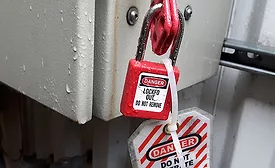
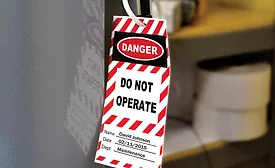
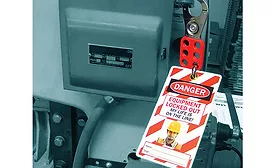
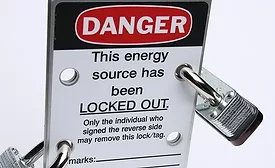
Each year when OSHA reports its most frequently violated standards, the control of hazardous energy, also known as lockout tagout (1910.147) consistently appears high on the list of greatest offenders.
A Wisconsin company that produces aluminum and steel castings has been cited by OSHA for continually exposing employees to machine hazards at its facility in Niagara, Wisconsin. The company faces $ 206,291 in penalties.
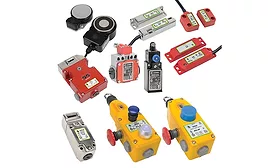
Safety circuits used in machine guarding applications incorporate devices such as sensors and relays to de-energize equipment if any hazardous condition is detected. These conditions normally involve a machine guard not being closed, a presence sensor detecting personnel in an unsafe area or the triggering of an emergency stop function.
It was déjà vu all over again for Choice Products USA LLC. Back in 2016, the Eau Claire, Wisconsin cookie dough manufacturer had been cited by OSHA for a number of machine hazards that potentially exposed workers to hazardous energy.
During their latest inspection, OSHA found similar machine hazards, along with a host of others.
Each year when OSHA reports its most frequently violated standards, the control of hazardous energy, also known as lockout tagout (1910.147) consistently appears high on the list of greatest offenders. In fact, citations for improper lockout tagout procedures ranked fifth on OSHA’s 2018 top 10 most frequently cited standards list, with nearly 3,000 violations.
The most important machine design step is ensuring operator safety. During the design process, hazards are often identified that can be removed, but when a hazard cannot be removed, then various levels of safeguarding must be provided. These typically take the form of machine access guarding and point-of-operation guarding.
An amputation injury at an ice cream manufacturing facility in Lakewood, New Jersey has earned an employer $103,476 in proposed penalties. The citations issued by OSHA against Mister Cookie Face LLC for machine safety hazards followed an incident in which a sanitation employee suffered a fingertip amputation and a fractured finger when the machine he was attempting to unjam, activated.
OSHA’s General Industry’s standard for the Control of Hazardous Energy (LOTO) 29 CFR 1910.147 addresses one of the most important safety regulations to protect workers from injury: lockout/tagout. The standard requires workers to isolate energy during servicing and maintenance of machines and equipment to prevent the unexpected startup or release of energy.
Temporary workers should be protected from the sudden release of stored energy just as permanent workers are.
That reminder from OSHA comes in a newly issued bulletin on lockout/tagout that explains the joint responsibility of host employers and staffing agencies to ensure that temporary employees are properly protected against this serious – potentially fatal - workplace hazard.