Your employees are your greatest asset, and every time they use a ladder in your facility, they put themselves at risk. Fortunately, the OSHA- and ANSI-compliant Ladder Safety Gate from PS Safety Access™ provides proven protection, minimizing the chances of a fall on elevated platforms, mezzanines or ladderways.
A new and improved Protecting America’s Workers Act (PAWA) has been introduced into the House of Representatives by Congressman Joe Courtney (D-CT). Similar versions of this bill has been introduced every year for over a decade. The bill number is H.R.1074.
On July 3, 2015, an employee of Tyson Foods was preparing for work at the line 4B tender clipping station at the company’s poultry processing plant in Sedalia, Missouri.
The stand slipped, pinching her middle finger between the frame and the processing line. Her finger was amputated between the nail-bed and first knuckle.
A 44 year-old construction worker’s right arm was ripped off during an industrial-related accident in Hillsboro Beach. Fla.
Broward Sheriff Fire Rescue responded to the scene just after 10 a.m. Witnesses told rescue works that the man was working with an industrial auger, a tool used for boring holes into the ground, when his right arm got trapped in the drill bit.
A worker received a permanent injury while assessing a sugar-filling line at the company's industrial facility in Scarborough, Ontario.
Prior to the accident date, the employer had installed temporary perimeter fencing around the sugar-filling line as an interim measure while a long-term guarding solution was being designed and manufactured by a third-party engineering company.
A compact, six-day course is available for anyone in the construction field who wants to learn about safety requirements related to electrical contracting work. The 30-hour course covers safety training that meets the standards of OSHA. It will be offered over three weekends in March by the Hunterdon County (NJ) Electrical Contractors Association (HCECA).
The manufacturing industry requires workers to engage in high-risk activities, such as soldering, welding, metal cutting, raw material assembling, and heavy lifting and rigging. Moreover, magnetic fields, compressed gases, and harmful radiations can negatively impact a worker’s health. In fact, workplace hazards lead to nearly 150 deaths per day in the US.
Compressed air is integral in nearly every industry, from powering tools and providing pressure for robotic assembly arms to inflating tires and even cleaning off dusty surfaces.
Companies might offer training on how to use compressed air and its related tools, but does any of this include how to use them safely? Why should companies offer compressed air safety training, and what negative repercussions could they face for not providing it?
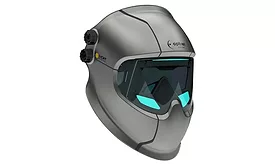
Welders can help bring sight to the blind with the purchase of a limited-edition, specially designed panoramaxx welding helmet from optrel, the leading manufacturer of active eye protection products. Partnering with the global non-profit, Light for the World, optrel will donate the entire purchase price of 200 special-edition panoramaxx welding helmets to fund 3,000 restorative eye surgeries around the world.
If your employees wear small, wearable devices powered by lithium batteries – such as body cameras – they are potentially at risk from burns or other injuries if the devices catch fire or explode. Those outcomes may occur if the batteries are defective or become damaged. There were more than 25,000 overheating or fire incidents involving lithium battery-powered consumer products over a recent five-year-period, according to the U.S. Consumer Product Safety Commission.