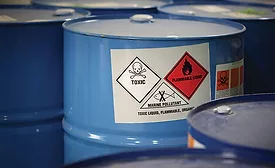
OSHA’s Hazardous Waste Operations and Emergency Response (HAZWOPER 29 CFR 1910.120, 1926.65, EPA 40 CFR 311), aims at preventing or minimizing worker exposure to hazards during operations and emergency response to unplanned events such as releases or spills. It mandates training for various categories of workers including the First Responder.
The U.S. Department of Labor's Occupational Safety and Health Administration has announced it will issue an emergency temporary standard to protect healthcare workers from contracting coronavirus. The standard focuses on healthcare workers most likely to have contact with someone infected with the virus. OSHA announced the new standard alongside new general industry guidance, both of which are aligned with Centers for Disease Control and Prevention guidance
On June 3, 2021, the Cal/OSHA Occupational Safety & Health Standards Board finally passed revised Emergency Temporary Standards (ETS) that now take into account employee vaccination status and loosening restrictions from the Centers for Disease Control (CDC) and California’s elimination of the colored Tier system. The revised ETS will go into effect on June 15, 2021 and creates additional employer obligations beginning on July 31, 2021.
Construction and demolition sites are among the most hazardous work environments, especially when multiple contractors and employers introduce operational complexities to a job site. A newly revised standard from the American Society of Safety Professionals (ASSP) and American National Standards Institute (ANSI) helps employers keep construction workers safe by describing best practices they can implement to take safety programs to the next level.
Facility safety inspections are important for all businesses, regardless of their size. The objective of these internal audits is to identify hazards, monitor Occupational Safety and Health Administration (OSHA) standards, and ensure that corrective actions are taken appropriately.
According to the U.S. Bureau of Labor Statistics, almost 120,000 injuries to hands and fingers in 2016 involved days away from work – 13 percent of the total injury toll.
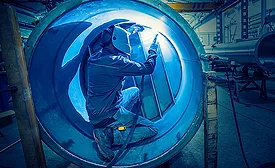
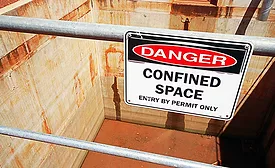
In construction and industry, some potential hazards visibly manifest, such as the risk of falls from heights. Others are more hidden. A confined space may not look dangerous, but workers perish each year because someone assumed the air inside was safe to breathe when testing would have revealed that is wasn’t.