OSHA yesterday published a final rule that clarifies certification requirements for crane operators, and maintains the employer’s duty to ensure that crane operators can safely operate the equipment. The agency says the regulation will maintain safety and health protections for workers while reducing compliance burdens.
Over 2400 nurses are victims of workplace violence every year and the number increased 30% since 2012 according to the Bureau of Labor Statistics. Hospitals consider attacks and threats against health care workers to be “part of the job.”
When OSHA revised the walking-working surface standard in 2016, part of the goal was to make the general industry standard more consistent with existing construction standards.
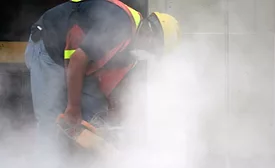
If you’re in construction, maritime, hydraulic fracturing, or other general industries using silica, the new silica standard and silica dust should matter to you. Chances are, you could be getting exposed to dangerous respirable silica dust that you can’t even see. And, what you can’t see, can hurt you.
Respiratory protection is arguably the most vital, potentially life-saving personal protective equipment (PPE), along with fall protection gear. And protecting your employees against respiratory hazards is challenging.
Working together shapes community. This summer Midwest Special Instruments (MSI) hosted Kendra Palmer Anderson and Lance Anderson from Palmer Associates, who taught a NIOSH spirometry course in Savage, MN.
By its directive, the electrical safety standard, NFPA 70E®, calls upon employers, contractors and employees to work together and, through an expanded risk assessment, clearly define a means by which compliance can be achieved for the protection of all involved.
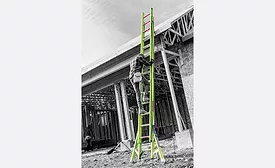
Every day 2,000 people are injured in a ladder-related accident. One hundred of those people suffer a long-term or permanent disability. And every day, one person dies; the numbers are continuing to rise.
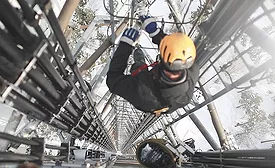
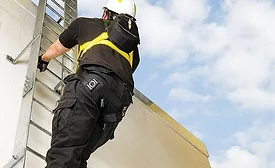
If you could prevent 29 worker deaths and 5,842 lost-workday injuries each year1, would you? Those estimates were a major reason OSHA updated 1971’s General Industry CFR 1910 regulations for Walking-Working Surfaces and Personal Fall Protection Systems at the end of 2016.