Because using a ladder is such a familiar skill, it can be easy to overlook the need for safe operating procedures in the workplace. However, ladders continue to be a contributing factor in more than 150 fatalities and 20,000 non-fatal workplace injuries each year.
In May of 2016, the Occupational Safety and Health Administration (OSHA) issued a final rule “Improve Tracking of Workplace Injuries and Illnesses” to revise its recording and reporting occupational injuries and illnesses regulation.
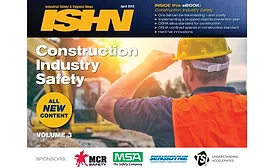
This exclusive ISHN ebook – Volume 3 – identifies the most serious construction hazards and provides protection tips and best practices. We pay particular attention to falls – the number one killer on construction sites.
The messages to OSHA from the Chamber of Commerce at this week’s House hearing were clear:
1. Don’t (miss)use the General Duty Clause as a substitute for issuing OSHA standards.
2. Don’t issue any OSHA standards.
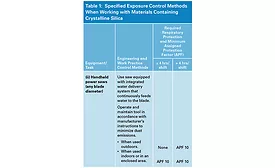
Exposure to respirable crystalline silica is nothing new for employees on construction sites. However, this exposure can cause serious health issues. In response to these concerns, OSHA issued a new rule on exposure to silica in construction.
The articles in this eBook have one aim: to protect your workers from the wear, tear and long-term punishment their hands might have to endure: sprains, strains, tears, soreness, pain, cuts, lacerations, punctures, bruises, contusions, fractures and amputations.
Slip resistance testing is a complex process, and an effective slip test machine needs to control and measure a number of key criteria reproducing the critical factors relating to slip when walking. ASTM F2913-11 provides a quantitative assessment of the safety of footwear for the U.S. market.
The U.S. Court of Appeals for the D.C. Circuit has dismissed industry challenges to OSHA’s new silica dust exposure standard, ruling that the agency’s decision to lower permissible worker exposure from 250 micrograms to 50 micrograms per cubic meter of air over an average of eight hours was reasonable.
The Walking-Working Surfaces; Personal Protective Equipment standard, 29 CFR 1910.22, was published in the Federal Register on November 18, 2016, at pages 82494-83006. Most of the rule became effective Jan. 18, 2017, but some provisions have delayed effective dates.
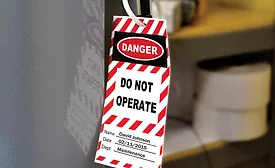
The Control of Hazardous Energy (Lockout/Tagout), 29 CFR 1910.147, standard was promulgated on September 1, 1989, at Federal Register, Volume 54, No. 169, and was effective January 2, 1990, as announced at Federal Register, Volume 54, No. 213, November 6, 1989.