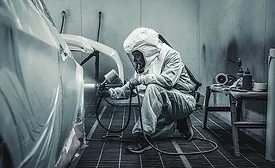
In March, 2016, OSHA issued a final rule to protect workers exposed to RCS in general industry and maritime. The agency will begin enforcing most provisions of the standard on June 23, 2018.
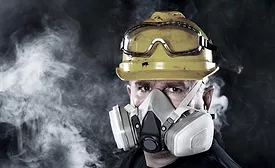
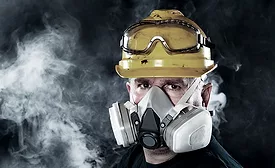
Certain respirators, known as tight-fitting respirators, must form a tight seal with your face or neck to work properly, according to OSHA. If your respirator doesn't fit your face properly, contaminated air can leak into your respirator facepiece, and you could breathe in hazardous substances.
Changes in safety and health approaches are needed both in and outside of government. Many established beliefs and assumptions concerning government operations currently are being re-evaluated and questioned. This reset presents an opportunity.
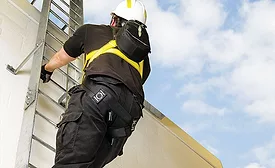
Falling from height is one of the leading causes of work-related injuries and death. The U.S. Bureau of Labor Statistics documents nearly 750 fall-related fatalities a year and another 300,000 nonfatal falls. More surprising than even that? Every single fall is 100-percent preventable.
OSHA has cut deals with employers and industry associations ever since the agency’s beginning. About one-third of cited employers don’t take OSHA’s deal. They just correct and pay. Will more of this group deal with OSHA in the future?
Scott Mugno, President Trump’s choice to head the Occupational Safety and Health Administration, will go before the Senate Health, Education, Labor and Pensions Committee next Tuesday at 10:00 am for his confirmation hearing. Mugno is Vice President for Safety, Sustainability and Vehicle Maintenance at FedEx Ground in Pittsburgh and was formerly Managing Director for FedEx Express Corporate Safety, Health and Fire Protection in Memphis. You can watch it LIVE here.
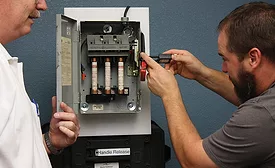
Unfortunately, as with many OSHA requirements, they inform you “what” to do, but not “how” do it, and leave this part up to the employer. The challenge for many employers is the lack of knowledge or experience to effectively implement the OSHA lockout guidelines.
Secretary of Labor Alex Acosta testified last Thursday at a hearing before the full House Education and Workforce Committee, and although I take great pleasure in (deservedly) criticizing Trump administration appointees, he wasn’t terrible — as Trump appointees go. Now let me qualify a bit. I’m focusing only on workplace safety issues, not on any wage and hour, apprenticeship or other labor issues that were addressed during the hearing. Second, his performance varied from fairly decent (regarding enforcement issues) to pretty bad (regarding standard setting and staffing.)
Reviews continue to pour in about President Trumps long delayed nomination of Scott Mugno to be the next Assistant Secretary of Labor for OSHA. In addition to my original post, we have already checked in with Katie Tracy at the Center for Progressive Reform and on the business side, Eric Conn of the law firm Conn Maciel Carey.
Senator Patty Murray (D-WA), ranking member of the Senate Health, Education, Labor, and Pensions (HELP) Committee, which will consider Mugno’s nomination, issued a rather cautious statement:
Keeping employees safe can be a huge expense to your company. But when you consider what’s at stake, human lives and life’s best moments, personal safety is invaluable.