Providing clean, safe walkways in public facilities is essential for preventing costly slip, trip and fall (ST&F) accidents. Falls on the same level were the second leading cause of all workplace injuries in 2013 at 16.4 percent of all workplace injuries and resulted in $10.1 billion in direct costs (Liberty Mutual, 2016).
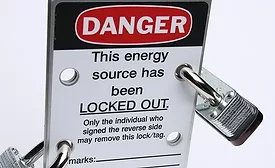
OSHA’s General Industry’s standard for the Control of Hazardous Energy (LOTO) 29 CFR 1910.147 addresses one of the most important safety regulations to protect workers from injury: lockout/tagout. The standard requires workers to isolate energy during servicing and maintenance of machines and equipment to prevent the unexpected startup or release of energy.
How confident are you that a costly, serious safety event isn’t just around the next corner? If your organization has ever been surprised or caught off-guard by a sudden deterioration in its safety performance, it may be that you’re simply not getting the whole picture when it comes to operational risk.
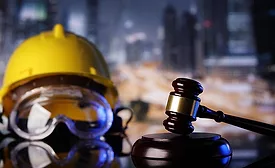
A tricky thing, disciplining employees. Every safety pro has a story about discipline:“I had to terminate a woman in 1987 because her body odor was so repulsive, affecting other workers (and her boss… me),” says a pro who requested anonymity. “I remember progressive discipline... You bet I asked the HR manager for assistance.”
Not long ago gloves were considered just another uncomfortable piece of PPE that one was obliged to wear. Leather was the material of choice for premium protection, while less expensive fabric offered basic hand coverage.
Like so many things in life, our most productive work experiences are often a result of our willingness to try something new. In his 1962 book “Diffusion of Innovations,” Everett Rodgers popularized a theory outlining how innovation moves through a social system.
Impacting organizational culture is a long-term, never-ending endeavor. Many companies struggle with maintaining and sustaining cultural initiatives because their impact may not be felt for several years. Culture, as an organizational construct, is a subjective factor not directly measurable by any instrument, survey or metric. Yet, everyone is impacted by culture and can describe when it turns bad.
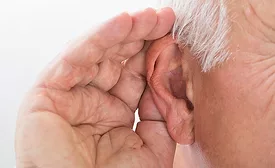
Did you know that more people have hearing loss than diabetes, cancer or vision trouble? According to the Centers for Disease Control and Prevention, occupational hearing loss, which is caused by exposure at work to loud noise or chemicals that damage hearing, is the most common work-related illness.
For operations that produce toxic or explosive dusts, it is a priority to keep the workplace safe and compliant. Industrial dust collectors equipped with integrated safety monitoring filters (iSMFs) can isolate dust particulates to ensure that no measurable weight of emissions is discharged.
Although it’s an intricate piece of equipment with a number of components — including a facepiece, a breathing tube and a blower that passes contaminated air through a HEPA filter — a powered air purifying respirator (PAPR) depends heavily on something fairly ordinary in order to function well: a battery.