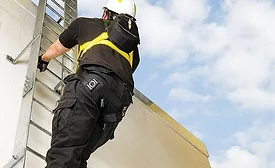
If you could prevent 29 worker deaths and 5,842 lost-workday injuries each year1, would you? Those estimates were a major reason OSHA updated 1971’s General Industry CFR 1910 regulations for Walking-Working Surfaces and Personal Fall Protection Systems at the end of 2016.
About 22 million workers are exposed to hazardous noise each year, according to a recent report from the International Safety Equipment Association (ISEA), making hearing loss the third-most common chronic physical condition among adults.
According to the National Safety Council, occupational injuries occur every seven seconds in the United States. Stringent regulation for the health and well-being of employees has led to advancements in processes, safety procedures, and first aid protocols to treat the injured.
Falling objects are a common risk for injuries, even when dropped from only a few feet. Safety boots are important in many work environments, and depending upon the severity of the risk of foot injury, work boots with a metguard component should be part of an employee’s PPE.
There is an ongoing debate on how incentives are being used. Incentives should enhance a functional safety program that contains such areas as: return-to-work (RTW), accident investigations, and safety committees.
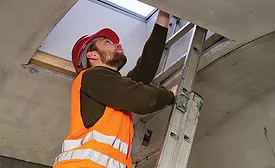
Because using a ladder is such a familiar skill, it can be easy to overlook the need for safe operating procedures in the workplace. However, ladders continue to be a contributing factor in more than 150 fatalities and 20,000 non-fatal workplace injuries each year.
In recent years, many firms have started to take safety and health more seriously, yet the number of critical violation cases reached a new high in 2017. With 866 cases in which the offender was charged $40,000 or more, it’s clear that compliance is still far from a priority for many businesses.
When you’re looking to protect workers from a common job hazard, your course is clear. You call your safety sales rep, or maybe even just jump on the internet to look for what you need.
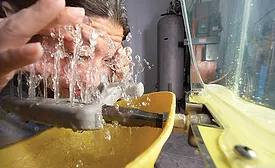
Emergency eyewash systems and drench showers should be easy to access and readily available with tepid water. But as many safety facility managers will attest, these potentially life-saving fixtures aren’t always easy to provide in locations where they are required.
On average, excessive heat causes 650 deaths in the United States every year. Thirty-nine of those took place on the job in 2016 – double the amount that occurred only two years prior.