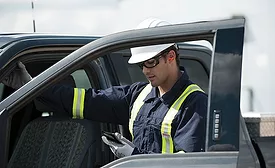
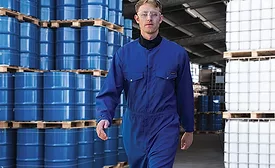
Safety managers must ensure that workers of all ages stay safe. However, millennials — those born between 1982 and 1997, and expected to make up half the world’s workforce by 2020 — pose a special challenge.
Internal audits are a fact of life for many environment, health and safety professionals -- especially those working for large companies. I recently had a discussion with a long-time Phylmar client about internal safety audits. There is a lot of guidance and advice available on how to prepare for such audits and how to create corrective action plans to respond to audit findings.
Recently, I did some health and safety “due diligence” consulting work for a client who wanted to acquire a small, 65-employee business. I thoroughly enjoyed meeting with supervisors and employees and touring the facility and was struck by two important findings: this small company didn’t have much by way of written programs that supported health and safety regulatory compliance AND it had a remarkably good safety record -- one that much larger companies would envy.
Depending on the level of exposure, chemical burns can cause permanent skin and tissue damage, and even death. And a chemical burn injury can cost your company millions of dollars in OSHA fines, hospital fees, legal costs, lost productivity, increased insurance premiums and reputation damage.
When activity levels increase or people are exposed to extreme environments, water is lost more rapidly and needs to be replaced more frequently. Maintaining adequate hydration levels in the body can help avoid both acute and chronic health problems ranging from minor headaches to death.
One of this year’s highlights: Employers are struggling with the active shooter problem. Experts from the Department of Homeland Security, law enforcement, corporate risk management and employee assistance programs will address the topic in a general session.
What are the risks of not calibrating your test and measurement equipment on time?
Having an instrument that is not properly calibrated can affect all the aspects of your business, right from the quality of work that you do to your productivity and safety. I’m sure that all of these factors tend to affect your company’s performance which makes them all the more important to be calibrated.
If you work in safety then you likely know how valuable toolbox talks can be. Short, timely discussions can boost awareness of important safety issues, increase employee engagement and have a positive effect on safety culture.
But toolbox talks don’t just happen on their own—there are several critical steps that contribute to executing a successful talk.
Occupational hazards are broadly defined as “a risk accepted as a consequence of a specific profession,” and in many instances, the construction and industrial sectors top the list of dangerous professions. While strides have been made in the realm of worker safety over the past several decades, many underlying risks still remain prevalent in the workplace.
Though many types of safety equipment exist, one of the most effective and economical approaches is preventing collisions with special industrial safety mirrors and domes that are shatter resistant, weatherproof and can be customized to fit the unique needs of the industrial environment.
 RSS
RSS