Funds will go toward helping women pursue safety careers and advancing those already in the field
November 4, 2019
The National Safety Council (NSC) has received a $125,000 sponsorship from Amazon to support women in safety. The sponsorship will go toward bolstering three NSC initiatives: the Council’s Marion Martin Award, Women in Safety Scholarship program and Women’s Division.
Although women make up nearly half of the U.S. workforce, they comprise only 19% of employees within the safety industry.
Google “safety culture” and you get about 1,600,000,000 results in 0.95 seconds. Safety and health managers have long known the importance of culture – the organization’s values, beliefs and leadership - on safety, morale, productivity, engagement, presenteeism and absenteeism. Culture has been at the top of safety and health issues for the past ten years at least.
Our company has been roofing/remodeling injury-free since inception in 2004. The behavior of people is the predominant cause of accidents and the variable that is most easily changed. Although this article is based on our roofing experiences, the principles are easily applied to any industry, especially those that involve hard labor, high turnover, or dangerous conditions.
If your facility has confined spaces on site, it is critically important that you evaluate those spaces to determine if you need to have a permit-required confined space program.
Safety professionals work diligently to engage both leaders and employees. But there is often a challenge: leaders wish their employees would just "be careful" without doing diligence to hazard identification, assessment and control. The result: workers claim leaders are only concerned with productivity and budgets.
Whether you use ISO 45001, ANSI Z10, OSHA’s Voluntary Protection Program or another management system, there are common elements. The most important are management commitment and leadership, and employee acceptance and participation in the system.
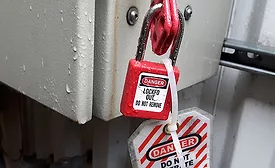
Each year when OSHA reports its most frequently violated standards, the control of hazardous energy, also known as lockout tagout (1910.147) consistently appears high on the list of greatest offenders.
It is called the Batter’s Eye. You can find one in every Major League Baseball park and stadium. But the question is, where are they located? And the next question is, how do they work?
A rather simple description of culture is: That’s just the way we do things around here. From a safety & health perspective, the way things are done stays the same until someone or some group, with the competency and power to make change, becomes dissatisfied with the S&H status quo.
Whether in mining, construction, fabrication and assembly, equipment installation and repair, or other industries, there is a shortage of skilled tradesmen/ technicians to do essential work.
 RSS
RSS