Whether you agree or not with the increasing ESG scrutiny on companies, your business and bottom line are in jeopardy if you are not as attentive to ESG as you are ensuring your workers and contractors are safe.
ESG ratings, rankings and grades have been around for some years, and the whole “ESG industry” is growing, driven by Wall Street investors, media coverage, consumer and employee demands for responsible corporate behavior, and the need for both public and private companies – though primarily at this point public entities – to be able to access capital by scoring well on ESG scorecards.
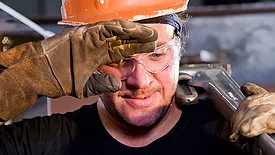
It’s paramount to know the exact temperature on your jobsite to protect workers in hot conditions. At higher temperatures, a change of even a few degrees can be a warning sign.
Companies such as GPS Insight that were bestowed with the Sustainability Leadership Award are those that have made sustainability a central aspect of their operations and goals.
It is important, as part of pre-construction protocols to identify hazardous building materials before beginning a restoration or remediation project. Although there are many hazardous building materials, the most common include asbestos, lead, mercury, polychlorinated biphenyls (PCB), chlorofluorocarbons, and radioactive sources.
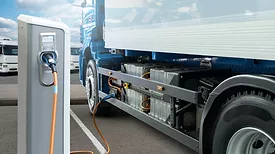
Electric vehicles are most commonly advertised as passenger vehicles, designed to help the average commuter reduce their carbon footprint and pay less at the pump. But they're making their way into the commercial sector in the form of heavy equipment electric vehicles. How are EVs changing material handling?
By now, most people are aware of just how essential fleets are to our daily lives — we have the pandemic to thank for that. Click-and-collect culture met with the supply chain fiasco of 2022 has compounded the need for fleets to keep the supply and demand chain moving, enable technicians to deliver field services, and transport both the niceties and essentials of modern life.
Opinions are most divisive over a risk-related question: will climate change harm you personally? A 2021 Yale poll found a split (47 percent yes – 45 percent no). OK, so maybe baby boomers and older adults get a pass. But their kids?
Perfluoroalkyl and polyfluoroalkyl substances, or PFAS, are so-called “forever chemicals” because they don’t easily break down in the environment and can remain indefinitely in air, soil and water, including sources of drinking water.
Our industrial activities have a significant effect on the environment. We have become cognizant of the impact in recent decades and concluded that going along this course is disastrous for the environment and ourselves. This has prompted initiatives to reduce the amount of carbon emissions we generate. The manufacturing sector, being a major contributor to carbon emissions, has to take drastic steps to combat emissions.
 RSS
RSS