ISHN logo
search
cart
facebook twitter linkedin youtube
  • Sign In
  • Create Account
  • Sign Out
  • My Account
ISHN logo
  • NEWS
    • Today's News
    • Global Safety News
    • Government Regulations
  • PRODUCTS
    • Product Innovations
    • Featured Products
  • TOPICS
    • Environmental Health and Safety
    • Facility Safety
    • Workplace Health
    • Occupational Safety
    • PPE
    • More Topics
  • CONSTRUCTION
  • TECHNOLOGY
  • COLUMNS
    • Best Practices
    • Dave Johnson: What’s going on
    • Editorial Comments
    • Leading Safety
  • MULTIMEDIA
    • ISHN Podcast
    • Videos
    • Cold Stress Education Quiz
    • Webinars
    • White Papers
  • MORE
    • Buyer's Guide
    • Newsletters
    • Convention Companion
    • Polls
    • Events
    • ISHN Store
    • Sponsor Insights
  • EMAGAZINE
    • eMagazine
    • Archived Issues
    • Contact
    • Advertise
  • JOIN TODAY!
Workplace Safety Culture

You can’t measure all safety’s intangibles

By E. Scott Geller
June 1, 2015

Managers are typically accountable for outcome numbers. They use outcome numbers to direct the behavior of those who report to them. Most followers or subordinates of managers are assigned their subordinate responsibilities and did not choose their manager. In safety, outcome numbers are based on the relatively rare occurrence of an injury.  These numbers (e.g., total recordable injury rate or TRIR) are reactive, reflect failure, and are not diagnostic for prevention. 

ROI myopia

Managers focus on numbers. In safety this means injury records and workers’ compensation costs.  When I discuss people-based safety principles and procedures with managers, inevitably the question arises, “What’s the ROI or return on investment?” Managers focus on how much a process will cost and how long will it take for the numbers (as in TRIR) to improve. This approach is reflected by the popular management maxim, “You can only manage what you can measure.”

This numbers-based analytical mindset has caused behavior-based safety (BBS) to become much less effective than it could be and should be. All too often, the focus of BBS is on numbers. Managers want to see the number of behavioral observations and completed checklists continue to increase. This ignores the real purpose of BBS — to engage employees in meaningful behavior-based communication about how to work more safely and achieve a vision of “zero harm” (Geller &Veazie, 2014). 

A BBS focus on collecting numbers for a computer database and a statistical analysis leads to the repeated use of the same behavioral checklist per work area, and workers “pencil whip” checklist completion. The critical purpose of the observation-and-feedback process — an actively-caring-for-people (AC4P) conversation — is missing. Managers celebrate invalid and inflated “percent-safe scores,” rather than recognize the more important engagement of workers giving on-the-job feedback to prevent injuries. 

Safety’s intangibles

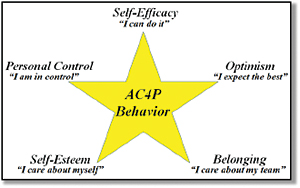
Leaders surely appreciate the need to hold people accountable with numbers. They also understand you can’t measure everything. Some things you do and ask others to do because it’s the right thing to do. Leaders believe it’s important to increase things you can’t put a number on — self-esteem, self-efficacy, personal control, optimism, and a sense of belonging. These five intangibles are person-states that influence people’s tendency to perform or go beyond the call of duty on behalf of another person’s safety, health, or well-being (see Figure 1).
ISHN0615_F4_inBoby_fig1.jpg

Figure 1: Five person-states that influence propensity to perform AC4P behavior

Everyday leadership

Leaders do things on a regular basis to inspire these person-states in employees throughout a work culture. They don’t worry about measuring their own direct impact on these intangibles. They have confidence in the research that indicates promoting these five states is important for increasing one’s propensity to perform AC4P behavior (e.g., Geller, 2001, 2014a, b). Think of how people take vitamin pills daily even though they don’t notice any measurable, direct impact on how they feel.

It’s a good idea to occasionally assess whether certain actions influence people’s subjective feelings or person-states in the desired direction. This can be done informally through personal interviews, unaided by a score card. It is also a given that certain interpersonal and group activities are useful. Genuine one-to-one recognition increases self-esteem and self-efficacy; behavior-based goal-setting builds personal control and optimism; and group celebrations facilitate a sense of belonging or interpersonal relatedness. Leaders perform and support these sorts of activities with patience. They don’t expect to see an immediate change in the numbers of an accountability system.

Leaders don’t need a monitoring scheme to facilitate their attempts to help people feel valuable and part of an important team effort.  Leaders are self-directed and self-motivated, and this helps inspire self-motivation in others. Leaders set an AC4P example knowing full well the positive impact it has on cultivating an injury-free work culture.

Intuitive safety

Bottom line: safety management by policy, directive and regulation is necessary at times to motivate people to do the right things for injury prevention. But this alone will not achieve an injury-free workplace. Safety managers need to know – in an intuitive sense — when it is time to step up and become safety leaders. Circumstances dictate that it’s time to build self-accountability rather than holding people accountable. 

And here is the most important takeaway: you do not have to occupy a safety management position to be a safety leader. You can, through empathy, actively caring and listening, help people transition from an other-directed to a self-directed motivational state. Few manage, but many must lead. 


This article is excerpted from Scott Geller’s forthcoming book, “Applied Psychology: Actively Caring for People.”

KEYWORDS: safety management safety metrics

Share This Story

Looking for a reprint of this article?
From high-res PDFs to custom plaques, order your copy today!

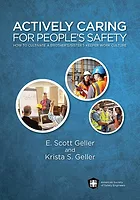
E. Scott Geller, Ph.D., is Alumni Distinguished Professor, Center for Applied Behavior Systems, Virginia Tech, and senior partner with Safety Performance Solutions, Blacksburg, VA. For more information visit www.safetyperformance.com. "Actively Caring for People's Safety: How to cultivate a brother’s/sister’s keeper work culture," co-authored by Scott’s daughter Krista, was recently published by ASSE. Scott’s 15-minute TEDX talk on You Tube can be accessed at: https://www.youtube.com/watch?v=7sxpKhIbr0E


Recommended Content

JOIN TODAY
to unlock your recommendations.

Already have an account? Sign In

  • forklift safety

    Exploring the latest technologies in forklift safety

    With more staff and more stock in warehousing now more...
    Workplace Training Strategies
    By: Josh Cramer
  • welding

    All about welder’s flash or arc eye

    A flash burn is a painful inflammation of the cornea,...
    Environmental Health and Safety
  • dangerous jobs

    The 10 most dangerous jobs in the U.S.

    On-the-job deaths have been rising — hitting the highest...
    Government Safety Regulations
    By: Benita Mehta
Manage My Account
  • eMagazine Subscriptions
  • ISHN Newsletter & Other Newsletter Alerts
  • Online Registration
  • Manage My Preferences
  • Subscription Customer Service

More Videos

Sponsored Content

Sponsored Content is a special paid section where industry companies provide high quality, objective, non-commercial content around topics of interest to the ISHN audience. All Sponsored Content is supplied by the advertising company and any opinions expressed in this article are those of the author and not necessarily reflect the views of ISHN or its parent company, BNP Media. Interested in participating in our Sponsored Content section? Contact your local rep!

close
  • man wearing the the Sundström SR200 Full Face Mask Respirator
    Sponsored byOHD

    5 Fit Testing Mistakes That Could Cost You

  • This image shows Magid AcuSpex polarized blue mirrored safety glasses.
    Sponsored byMagid Glove and Safety

    Construction PPE Guide: What Crews Need for Each Task

  • lone worker in confined space
    Sponsored byAlphasense Ltd.

    GET THE LEAD OUT of your Safety Oxygen Sensors!

Popular Stories

SpaceX 7 launch

OSHA Investigating Fatal Fall at SpaceX Starbase

Worker Impairment

How to Tell When a Co-Worker is Impaired? A Safety Pro’s Challenge

Automated loading dock equipment

After March 2026 Rivian Death, Safety Managers Reassess Loading Dock Systems Under OSHA's Warehouse Emphasis Program

top 10 most dangerous jobs

Poll

Seasonal Readiness

With the federal heat stress prevention rule on the horizon, which area of your safety program needs the most attention?
View Results Poll Archive

Products

Surviving an OSHA Audit A Management Guide, 2nd Edition

Surviving an OSHA Audit A Management Guide, 2nd Edition

See More Products

ISHN Podcasts

Related Articles

  • ASSE

    Hot off the ASSE press: Actively Caring for People’s Safety

    See More
  • Actively Caring for People’s Safety

    4 STEPS to cultivating a brother’s/sister’s keeper culture

    See More
  • actively caring for people, behavior-based safety

    Actively caring for people’s safety

    See More

Related Products

See More Products
  • Top Ten Pitfalls in OSHA Recordkeeping and How to Avoid Them

See More Products

Related Directories

  • Magid Glove and Safety

    As your true partner in safety, our mission is to provide the expertise and revolutionary innovations in PPE that help you keep your workers safe. The relationships we build with our customers drive everything we do as we get to know you and your unique needs. Our skilled manufacturing provides the latest innovations and technologies in PPE that you can’t get anywhere else. Our worldwide network of suppliers gives you access to the top brands in safety. We have everything you need to increase safety, reduce spend, and supercharge your workers! Since 1946, fourth generation and family-owned, safety isn't just a job, it's our legacy.
×

Become a Leader in Safety Culture

Build your knowledge with ISHN, covering key safety, health and industrial hygiene news, products, and trends.

JOIN TODAY
  • RESOURCES
    • Advertise
    • Contact Us
    • Directories
    • Manufacturing Division
    • Store
    • Want More
  • SIGN UP TODAY
    • Create Account
    • eMagazine
    • Newsletters
    • Customer Service
    • Manage Preferences
  • SERVICES
    • Marketing Services
    • Reprints
    • Market Research
    • List Rental
    • Survey/Respondent Access
  • STAY CONNECTED
    • LinkedIn
    • Facebook
    • YouTube
    • X (Twitter)
  • PRIVACY
    • PRIVACY POLICY
    • TERMS & CONDITIONS
    • DO NOT SELL MY PERSONAL INFORMATION
    • PRIVACY REQUEST
    • ACCESSIBILITY

Copyright ©2026. All Rights Reserved BNP Media, Inc. and BNP Media II, LLC.

Design, CMS, Hosting & Web Development :: ePublishing