ISHN logo
search
cart
facebook twitter linkedin youtube
  • Sign In
  • Create Account
  • Sign Out
  • My Account
ISHN logo
  • NEWS
    • Today's News
    • Global Safety News
    • Government Regulations
  • PRODUCTS
    • Product Innovations
    • Featured Products
  • TOPICS
    • Environmental Health and Safety
    • Facility Safety
    • Workplace Health
    • Occupational Safety
    • PPE
    • More Topics
  • CONSTRUCTION
  • TECHNOLOGY
  • COLUMNS
    • Best Practices
    • Dave Johnson: What’s going on
    • Editorial Comments
    • Leading Safety
  • MULTIMEDIA
    • ISHN Podcast
    • Videos
    • Cold Stress Education Quiz
    • Webinars
    • White Papers
  • MORE
    • Buyer's Guide
    • Newsletters
    • Convention Companion
    • Polls
    • Events
    • ISHN Store
    • Sponsor Insights
  • EMAGAZINE
    • eMagazine
    • Archived Issues
    • Contact
    • Advertise
  • JOIN TODAY!
Workplace Safety Culture

Create an urgent need for change

For starters, you need these seven essential EHS pre-conditions

By Todd Hohn CSP
June 1, 2015

Note: this is the first in a series of excerpts from the eBook, “Through the Eyes of the Executive: Creating a Healthier and Safer Workforce.”

When I look at the landscape of health and safety today in the U.S. and globally, it reminds me of a Henry Ford quote I heard long ago — “If you always do what you’ve always done, you’ll always get what you’ve always got.”

Our workforce is getting older and less healthy; organizations are experiencing massive brain drain as our baby boomers retire; and workplace accidents have remained stagnant — but the costs associated with them are increasing annually. I would argue that if we are going to improve, then something has to change. 

This series of articles for ISHN is based on a UL roundtable assembled in 2014. A diverse group of thought leaders, experts and executives explored this question of how to create a sense of urgency and provided a roadmap that will help organizations improve outcomes rather than continue to compound the problem.  Each attendee brought a unique perspective on workplace health, safety and learning. Combined, these perspectives have a direct influence on the final result. The responsibility to establish a workplace culture in which health and safety are paramount lies with CEOs – but its delivery can be delegated. Collaboration among all stakeholders, top to bottom, leads to real change in organizations.

As occupational health and safety experts, we face a huge challenge. Ideally, the framework for change presented in the eBook resulting from the roundtable will result in the next big thing for health and safety – the thing that helps all organizations achieve excellence and ensure improvements are sustainable for generations to come. 

Precursors to success

The roundtable participants collectively identified the following top seven necessary conditions that must exist in organizations to achieve and sustain health and safety integration:

1. Use a holistic approach: Align safety and health; they are not disparate functions. Design initiatives to incorporate both health protection (safety) and health promotion (well-being).

2. Make a commitment: Position integrated health and safety activities as key contributors to an organization’s value system and sustainability, not as a cost of doing business.

3. Present the business case: Express value in terms senior executives understand. Adopt
common terminology for key performance indicators. Senior executives know intuitively that healthy workers are more productive workers, but they need empirical evidence to justify an investment in comprehensive workplace health and safety programs. Reduce ambiguity.

4. Create an overarching management structure: Create lines of authority and reporting to encourage effective communication among all parties. For example, when safety, health and risk management individually report to different senior executives or department heads, experience shows that opportunities for collaboration are likely to be impeded by competing priorities, resource constraints, logistical challenges and cultural barriers.

5. Prepare for a new profession: Redesign undergraduate and graduate school curricula to incorporate health and safety concepts in business courses. Similarly, introduce more business management concepts into environment, health and safety (EHS) education. Redefine professional roles and responsibilities to better meet current and anticipated business, safety and health management needs and trends.

6. Support a culture of continuous learning:  By learning, we refer to an organization’s ability to shift its focus from past accidents (lagging indicators) in order to include behaviors and conditions that create risk (leading indicators). When behavior change permeates an organization, it creates a sense of urgency. By looking for deviations and responding with vigilance, organizations can stimulate meaningful changes in systems and processes that help reduce the likelihood of accidents. 

7. Get everyone involved:  Whether it be participation rates in health and wellness initiatives, at-risk reporting or learning teams, the involvement of the entire organization cannot be understated or underestimated in the impact it has on performance improvement. The more successes can be measured and reported, the more holistic response by management.

Roundtable background

UL (Underwriters Laboratories), in collaboration with the Owen Graduate School of Management at Vanderbilt University and the Center for Catastrophic Risk Management (CCRM) at the University of California, Berkeley, sponsored this two-day Leadership Roundtable on June 20-21, 2014, in Nashville, Tenn.

The agenda was designed to reach consensus on these issues:

  • real and perceived barriers to the successful integration of workplace health and safety interventions;
  • case studies and best practices at companies with integrated occupational health and safety service delivery models;
  • efforts to embed a culture of health and safety in organizations; and
  • metrics used to measure the impact of coordinated workplace health and safety programs and benchmark performance across multiple locations and/or by industry type.

Organizations and the workers they employ benefit from the integration of health and safety programs. Incremental movement toward improved coordination and synergistic endeavors serves the best interests of all stakeholders in the nation’s personal health care, benefits and workers’ compensation delivery systems.


Part 2 in this series, “Enhancing Organizational Capabilities for Noticing and Anticipating,” will appear in ISHN’s July issue.

KEYWORDS: safety leadership safety management

Share This Story

Looking for a reprint of this article?
From high-res PDFs to custom plaques, order your copy today!

Todd Hohn, CSP, is the Global Workplace Health and Safety Director for Underwriters Laboratories Inc. He is a U.S Delegate for the creation of the new ISO 45001 global standard for Occupational Health and Safety. Todd received his B.S. degree in Safety from Illinois State University and completed the Advanced Executive Education Program at the University of Pennsylvania’s Wharton School of Business, as well as the Executive Development Program at Northwestern University’s Kellogg School of Management.

Recommended Content

JOIN TODAY
to unlock your recommendations.

Already have an account? Sign In

  • forklift safety

    Exploring the latest technologies in forklift safety

    With more staff and more stock in warehousing now more...
    Facility Safety
    By: Josh Cramer
  • welding

    All about welder’s flash or arc eye

    A flash burn is a painful inflammation of the cornea,...
    Environmental Health and Safety
  • dangerous jobs

    The 10 most dangerous jobs in the U.S.

    On-the-job deaths have been rising — hitting the highest...
    Government Safety Regulations
    By: Benita Mehta
Manage My Account
  • eMagazine Subscriptions
  • ISHN Newsletter & Other Newsletter Alerts
  • Online Registration
  • Manage My Preferences
  • Subscription Customer Service

More Videos

Sponsored Content

Sponsored Content is a special paid section where industry companies provide high quality, objective, non-commercial content around topics of interest to the ISHN audience. All Sponsored Content is supplied by the advertising company and any opinions expressed in this article are those of the author and not necessarily reflect the views of ISHN or its parent company, BNP Media. Interested in participating in our Sponsored Content section? Contact your local rep!

close
  • man wearing the the Sundström SR200 Full Face Mask Respirator
    Sponsored byOHD

    5 Fit Testing Mistakes That Could Cost You

  • This image shows Magid AcuSpex polarized blue mirrored safety glasses.
    Sponsored byMagid Glove and Safety

    Construction PPE Guide: What Crews Need for Each Task

  • lone worker in confined space
    Sponsored byAlphasense Ltd.

    GET THE LEAD OUT of your Safety Oxygen Sensors!

Popular Stories

SpaceX 7 launch

OSHA Investigating Fatal Fall at SpaceX Starbase

dust explosion

Tennessee OSHA Issues Record $3.1M Fine After Deadly Explosion at Munitions Plant

Worker Impairment

How to Tell When a Co-Worker is Impaired? A Safety Pro’s Challenge

top 10 most dangerous jobs

Poll

Seasonal Readiness

With the federal heat stress prevention rule on the horizon, which area of your safety program needs the most attention?
View Results Poll Archive

Products

Surviving an OSHA Audit A Management Guide, 2nd Edition

Surviving an OSHA Audit A Management Guide, 2nd Edition

See More Products

ISHN Podcasts

Related Articles

  • Employee Safety Incentives

    How to create an effective safety incentive program

    See More
  • arc flash analysis plans

    Steps to create an effective arc flash analysis plan

    See More
  • How to create an effective arc flash training program

    How to create an effective arc flash training program

    See More

Related Products

See More Products
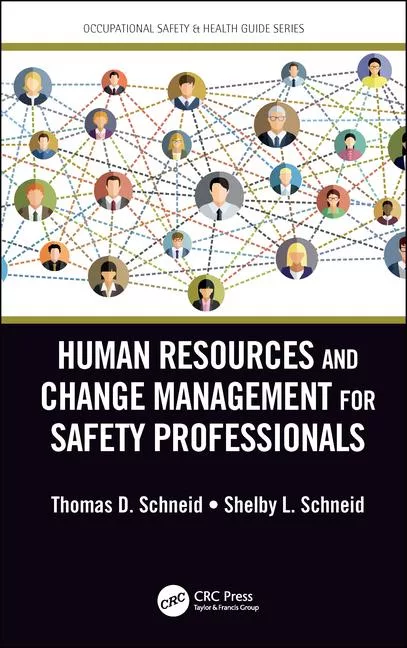
  • human resources.jpg

    Human Resources and Change Management for Safety Professionals

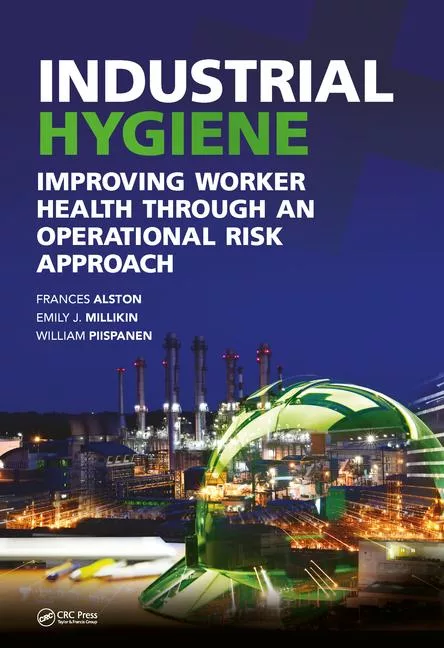
  • industrial hy.jpg

    Industrial Hygiene: Improving Worker Health through an Operational Risk Approach

See More Products

Events

View AllSubmit An Event
  • October 18, 2017

    ACGIH® TLV® For Audible Sound – Understanding the Proposed Notice of Intended Change to The Acgih® Tlv® for Noise

    Occupational noise exposures represent an important but under-recognized cause of disease and disability in the United States. Now titled as Audible Sound, the ACGIH® Threshold Limit Values for Physical Agents (TLV®-PA) Committee has proposed a revision to the TLV® for Noise.
View AllSubmit An Event
×

Become a Leader in Safety Culture

Build your knowledge with ISHN, covering key safety, health and industrial hygiene news, products, and trends.

JOIN TODAY
  • RESOURCES
    • Advertise
    • Contact Us
    • Directories
    • Manufacturing Division
    • Store
    • Want More
  • SIGN UP TODAY
    • Create Account
    • eMagazine
    • Newsletters
    • Customer Service
    • Manage Preferences
  • SERVICES
    • Marketing Services
    • Reprints
    • Market Research
    • List Rental
    • Survey/Respondent Access
  • STAY CONNECTED
    • LinkedIn
    • Facebook
    • YouTube
    • X (Twitter)
  • PRIVACY
    • PRIVACY POLICY
    • TERMS & CONDITIONS
    • DO NOT SELL MY PERSONAL INFORMATION
    • PRIVACY REQUEST
    • ACCESSIBILITY

Copyright ©2026. All Rights Reserved BNP Media, Inc. and BNP Media II, LLC.

Design, CMS, Hosting & Web Development :: ePublishing