Insurgent behaviors in a safety culture
Many organizations find themselves in a recurring cycle of a game of proverbial whack-a-mole in trying to constantly identify and mitigate unsafe conditions and behaviors while both consistently reappear. Could it be that these organizations are inadvertently creating a culture that possibly allows or even encourages this? If organizations set expectations, why would anyone dare not follow them?
The situation resembles the scene in “A Few Good Men” where Tom Cruise chastises Jack Nicholson as to his supposed ability to command authority while Marines haze and assault each other. Could it be that, as in that particular film, the problem is manifested from within and not from a supposed rogue element?1 Is the issue that employees and leaders are simply going rogue or that the organization itself is balking on its own supposed safety culture?
Dr. Kilcullen’s “Accidental Guerilla”
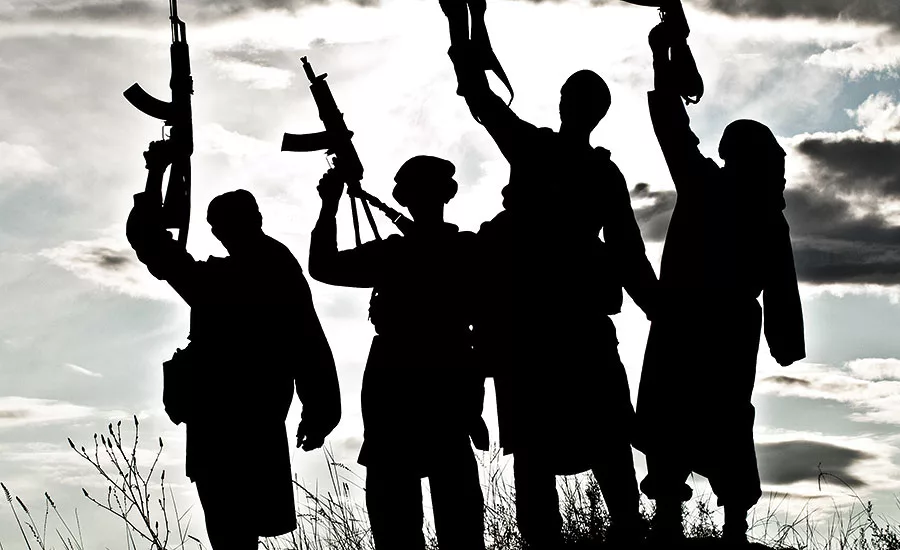
We can ask: why are “insurgent” behaviors and conditions manifesting in our workplaces and what can be done to mitigate them? Does the workforce support the “insurgency” because of a fear of reprisal should they not? If so, why does this fear exist in a supposed safety culture? Ultimately, a counterinsurgency operation exists in every workplace safety program and an analysis must be made of the organizational culture to understand whether or not the organization is creating its own safety issues.
In his research, Dr. David Kilcullen developed a theory he called “The Accidental Guerilla.” If the military enters an area to counter violence within the population to stabilize the area and garner support, why would the local population choose violence by supporting insurgent forces with the propensity to harm them? Dr. Kilcullen’s theory states that indigenous populations in hostile areas don’t actively choose to combat Americans or pursue violence, but instead find themselves in these situations through environmental turns of events.
For example, when an insurgent force (such as al-Qaeda or the Viet Cong) move/moved into an area, they would use this area as a base to conduct terror operations. With this, American forces would then move into this area to disrupt and combat these insurgent forces to halt their operations. During this intervention, however, the civilian population already in the area will have been stuck in between the insurgency and the counterinsurgency; should the population perceive this position unfavorably, they could, despite violence and unfavorable consequences stemming from it, choose to side with the insurgency over the — in this case — foreign element, even when this element seeks to benefit them with freedom, public works, education, medical care and more. In this case, the civilian population has inadvertently, through environmental situations, become guerilla forces by default, or “accidental guerillas.”2
Unintended consequences
Dr. Kilcullen’s accidentally unsafe model provides insight into how negative situations arise out of good intentions. In the case of the military, even with good intentions and a noble cause, the fact that the counterinsurgent force has entered the civilian population and, in engaging with the insurgency, placed them in the middle of the conflict can cause the civilian population to instead reject the counterinsurgency and become insurgent combatants. This same phenomenon can explain how and why unsafe behaviors and conditions exist despite supposed safety cultures.
Within the context of workplace safety, the “insurgent” can be considered unsafe behaviors and conditions. These are the elements that seek to integrate into the workplace and cause damages. In Dr. Kilcullen’s model, “infection” takes place when operations become valued over safety and employees become pressured to work harder and faster; this is the equivalent of an insurgent force entering a civilian population. Employees, seeking ways to meet the spoken demand for expediency and productivity, may begin to bypass hazard controls. This would be the “contagion” phase, the equivalent of an insurgent force beginning to do harm in the area.
From this point, organizational leaders may seek to hold employees accountable for these safety violations despite having indirectly – or directly – encouraged them through demands for expediency over safety. This would the “intervention” phase, the equivalent of a counterinsurgent force entering the area and placing the civilian population in the middle of the fight with the insurgency, the point at which the civilian population begins to negatively perceive the counterinsurgents despite good intentions.
Finally, in the unfortunate “rejection” phase, employees have negatively perceived their leadership’s actions as having unjustly held them accountable for safety violations that were actually sanctioned by the organization’s demands for expediency. At this point, should the organization continue to place a premium on productivity over safety, unsafe behaviors will persist due to the perception that, while safety violations may not be caught, lacks in productivity certainly will.
Additionally, should employees feel unjustly reprised against for safety issues, especially without leadership diligence in developing and promoting a safety culture, whistleblower complaints to OSHA and regulatory agencies could begin, a certain indicator of the “rejection” of a safety culture.
In this case, despite never having intended to work unsafely, organizational and environmental factors have now led employees to become and remain unsafe. Despite their leaders’ intentions to create and account for a safety culture, these “accidentally unsafe” employees and their “rejection” of the culture will continue to override it and leave leaders wondering why incidents continue to occur.
Seeing the contradiction
Like an insurgent force entering an area to do harm, misplaced organizational values veering towards productivity at the expense of safety allow the “insurgents” of unsafe behaviors and conditions to enter the workplace. They become “contagions” when employees seek to meet productivity demands by disavowing safety. Leaders may seek to enforce standards in safety without realizing the need for due diligence in providing, promoting and setting the example in safety behaviors. Without this cultural pretense, leaders are seeking to hold employees accountable for safety while inadvertently asking them to bypass it, a contradiction that invalidates their “invention” on unsafe behaviors and conditions.
Seeing this contradiction, employees may “reject”’ the safety culture altogether as hypocrisy and misplaced values. This can explain how incidents continue to occur despite good intentions in a workplace. Likewise, this phenomenon can be mitigated when understood. Although its development stemmed from large-scale, combat-centric military counterinsurgency operations, its application to cultural dynamics is without question.
References
1. Brown, D., Reiner, R & Scheinman, A. (1992). A few good men. USA: Columbia Pictures.
2. Kilcullen, D. (2009). The accidental guerrilla. New York, NY: Oxford University Press.
Looking for a reprint of this article?
From high-res PDFs to custom plaques, order your copy today!