ISHN logo
search
cart
facebook twitter linkedin youtube
  • Sign In
  • Create Account
  • Sign Out
  • My Account
ISHN logo
  • NEWS
    • Today's News
    • Global Safety News
    • Government Regulations
  • PRODUCTS
    • Product Innovations
    • Featured Products
  • TOPICS
    • Environmental Health and Safety
    • Facility Safety
    • Workplace Health
    • Occupational Safety
    • PPE
    • More Topics
  • CONSTRUCTION
  • TECHNOLOGY
  • COLUMNS
    • Best Practices
    • Dave Johnson: What’s going on
    • Editorial Comments
    • Leading Safety
  • MULTIMEDIA
    • ISHN Podcast
    • Videos
    • Cold Stress Education Quiz
    • Webinars
    • White Papers
  • MORE
    • Buyer's Guide
    • Newsletters
    • Convention Companion
    • Polls
    • Events
    • ISHN Store
    • Sponsor Insights
  • EMAGAZINE
    • eMagazine
    • Archived Issues
    • Contact
    • Advertise
  • JOIN TODAY!
Transportation Safety

A FairWarning story

Unbelted rider in the back could kill someone in the front
By Cheryl Jensen
accident
August 4, 2017

Posted with permission from Fairwarning.org:

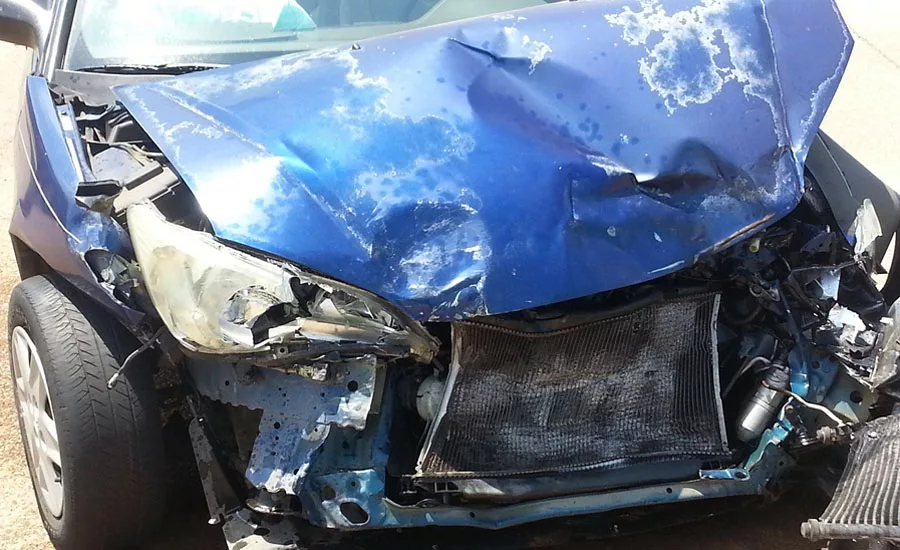
People who don’t buckle up when they ride in the rear seat because they think it’s safer back there are wrong. Instead, they pose a serious danger to themselves and those riding up front, according to a new study and crash test video by the Insurance Institute for Highway Safety.

The video of that crash at 35 mph shows the unbelted test dummy flying forward and slamming into the rear of the front seat, which then forces the belted driver dummy into the air bag and steering wheel.

“That absolutely can have fatal consequences for both the rear seat passenger and the driver,” said Jessica Jermakian, a study co-author and senior research engineer with the insurance institute. Safety research shows that drivers are more than two times as likely to be killed in a crash if the occupant behind them is not wearing a seat belt, she said.

Seat belt use in the rear has consistently been lower than in the front seat for the last decade, Jermakian said.

Seat belts are proven lifesavers: When lap/shoulder belts are used, they reduce the risk of death to front seat occupants in a car by 45 percent. That increases to 60 percent in a light truck such as an SUV, pickup or van, according to the National Highway Traffic Safety Administration. Similar figures are not available for the back seat.

However, almost half (400) of the 883 deaths of rear-seat passengers who were not wearing their seat belts could have been prevented by buckling up, estimates a 2015 study by the Governors Highway Safety Association.

‘The front seat is there to stop me’

It hasn’t been clear why fewer people buckle up in the rear seat because most research has focused on attitudes of people in front who don’t wear their seat belts. To find out, the insurance institute conducted a telephone survey of 1,172 people who had been rear-seat passengers in the past six months.

Of those, 91 percent said they always buckled up in the front seat, but only 72 percent said they always buckled up in the rear. The study focused on the 28 percent who said they used seat belts in the rear only some of the time or never.

The number one reason that people gave for not wearing their seat belt was that the back seat is safer so they don’t need to wear it, Jermakian said. Some surveyed said, “The front seat is there to stop me.” Others said, “I’m not going to go through the windshield.”

“When that front seat is stopping you, it’s also the front seat occupant that is stopping you,” Jermakian said. Historically, it has been safer in the back seat, she said, but that’s if people are belted in. “We did the simulated crash test because we wanted to show people what happens when you’re not belted. It not only puts them at risk, but it also impacts other people in the vehicle.”

Shrinking safety advantage

In the last few years some studies have shown that the relative safety advantage of riding in the back has begun to shrink, particularly for adults and in newer vehicles.

The reason the safety advantage is shrinking is that improvements have focused on the front seat, where most people ride. These include changes to front seat belts that reduce chest injuries, the addition of seat belt reminder chimes and structural improvements to better protect passengers in a frontal crash.

Some of the same improvements could migrate to the back but progress has been slow. Seat belt reminder systems, for example, have been credited with helping to increase belt use in the front. They are not required by the federal government for the rear seat, however, and few vehicles have them.

In the telephone survey, about three out of five people said they would be more likely to buckle up in back if there were an audible or visual reminder system like the one in front.

Yet it has been seven years since safety advocates petitioned the National Highway Traffic Safety Administration to require rear seat reminders, and five years since Congress directed the agency to develop a rule that would require the safety feature. Federal regulators have yet to begin that process.

“This is part of our ongoing regulatory review,” NHTSA said in an email to FairWarning. “The safe movement of the traveling public remains our top priority.”

About FairWarning

This story was reported by FairWarning (www.fairwarning.org), a nonprofit news organization based in Pasadena, Calif., that focuses on public health, safety and environmental issues.

KEYWORDS: accident investigation injuries motor vehicle accident prevention motor vehicle accidents

Share This Story

Looking for a reprint of this article?
From high-res PDFs to custom plaques, order your copy today!

Recommended Content

JOIN TODAY
to unlock your recommendations.

Already have an account? Sign In

  • forklift safety

    Exploring the latest technologies in forklift safety

    With more staff and more stock in warehousing now more...
    Workplace Training Strategies
    By: Josh Cramer
  • welding

    All about welder’s flash or arc eye

    A flash burn is a painful inflammation of the cornea,...
    Environmental Health and Safety
  • dangerous jobs

    The 10 most dangerous jobs in the U.S.

    On-the-job deaths have been rising — hitting the highest...
    Transportation Safety
    By: Benita Mehta
Manage My Account
  • eMagazine Subscriptions
  • ISHN Newsletter & Other Newsletter Alerts
  • Online Registration
  • Manage My Preferences
  • Subscription Customer Service

More Videos

Sponsored Content

Sponsored Content is a special paid section where industry companies provide high quality, objective, non-commercial content around topics of interest to the ISHN audience. All Sponsored Content is supplied by the advertising company and any opinions expressed in this article are those of the author and not necessarily reflect the views of ISHN or its parent company, BNP Media. Interested in participating in our Sponsored Content section? Contact your local rep!

close
  • man wearing the the Sundström SR200 Full Face Mask Respirator
    Sponsored byOHD

    5 Fit Testing Mistakes That Could Cost You

  • This image shows Magid AcuSpex polarized blue mirrored safety glasses.
    Sponsored byMagid Glove and Safety

    Construction PPE Guide: What Crews Need for Each Task

  • lone worker in confined space
    Sponsored byAlphasense Ltd.

    GET THE LEAD OUT of your Safety Oxygen Sensors!

Popular Stories

SpaceX 7 launch

OSHA Investigating Fatal Fall at SpaceX Starbase

Automated loading dock equipment

After March 2026 Rivian Death, Safety Managers Reassess Loading Dock Systems Under OSHA's Warehouse Emphasis Program

psychology in the workplace

Most Workplaces Measure Psychological Safety, Ignoring Psychosocial Risks

top 10 most dangerous jobs

Poll

Seasonal Readiness

With the federal heat stress prevention rule on the horizon, which area of your safety program needs the most attention?
View Results Poll Archive

Products

Surviving an OSHA Audit A Management Guide, 2nd Edition

Surviving an OSHA Audit A Management Guide, 2nd Edition

See More Products

ISHN Podcasts

Related Articles

  • What happens in the boardroom affects the front line

    What happens in the boardroom affects the front line

    See More
  • Injuries are like getting shot in the back

    See More
  • A company that was bound to kill someone

    See More

Related Products

See More Products
  • fearless world.jpg

    The Fearless World of Professional Safety in the 21st Century

  • 1119906652.webp

    Alive and Well at the End of the Day: The Supervisor's Guide to Managing Safety in Operations, 2E

See More Products

Related Directories

  • The Back School

    The Back School facilitates reducing work-related injuries; increasing employee productivity, safety, efficiency and job satisfaction; and reducing absenteeism.
×

Become a Leader in Safety Culture

Build your knowledge with ISHN, covering key safety, health and industrial hygiene news, products, and trends.

JOIN TODAY
  • RESOURCES
    • Advertise
    • Contact Us
    • Directories
    • Manufacturing Division
    • Store
    • Want More
  • SIGN UP TODAY
    • Create Account
    • eMagazine
    • Newsletters
    • Customer Service
    • Manage Preferences
  • SERVICES
    • Marketing Services
    • Reprints
    • Market Research
    • List Rental
    • Survey/Respondent Access
  • STAY CONNECTED
    • LinkedIn
    • Facebook
    • YouTube
    • X (Twitter)
  • PRIVACY
    • PRIVACY POLICY
    • TERMS & CONDITIONS
    • DO NOT SELL MY PERSONAL INFORMATION
    • PRIVACY REQUEST
    • ACCESSIBILITY

Copyright ©2026. All Rights Reserved BNP Media, Inc. and BNP Media II, LLC.

Design, CMS, Hosting & Web Development :: ePublishing